
Isabela Island completely surprised us—in the best way. It’s quieter, less developed, and feels more raw than the rest of the Galápagos Islands. We came for a couple of days and ended up staying longer. In this guide, I’m sharing our 5 day Isabela Island itinerary, including the best things to do, unforgettable snorkeling spots like Concha de Perla, top tours like Los Túneles, and practical tips to help you plan your trip.
We almost rushed through it. But after hearing other travelers rave about spending days snorkeling at Concha de Perla, we extended our stay—and it ended up being one of the highlights of our entire trip.

5 Days in Isabela Island
What Makes Isabela Island So Special?
Unlike Santa Cruz Island or San Cristóbal Island, Isabela feels quieter, more remote, and less developed.
It’s also geologically unique.
Isabela was formed by the merging of six shield volcanoes, including Sierra Negra Volcano and Volcán Chico. This gives the island its dramatic landscapes—lava fields, black rock coastlines, and wide open terrain that feels almost otherworldly.
Instead of packed streets and busy restaurants, you’ll find:
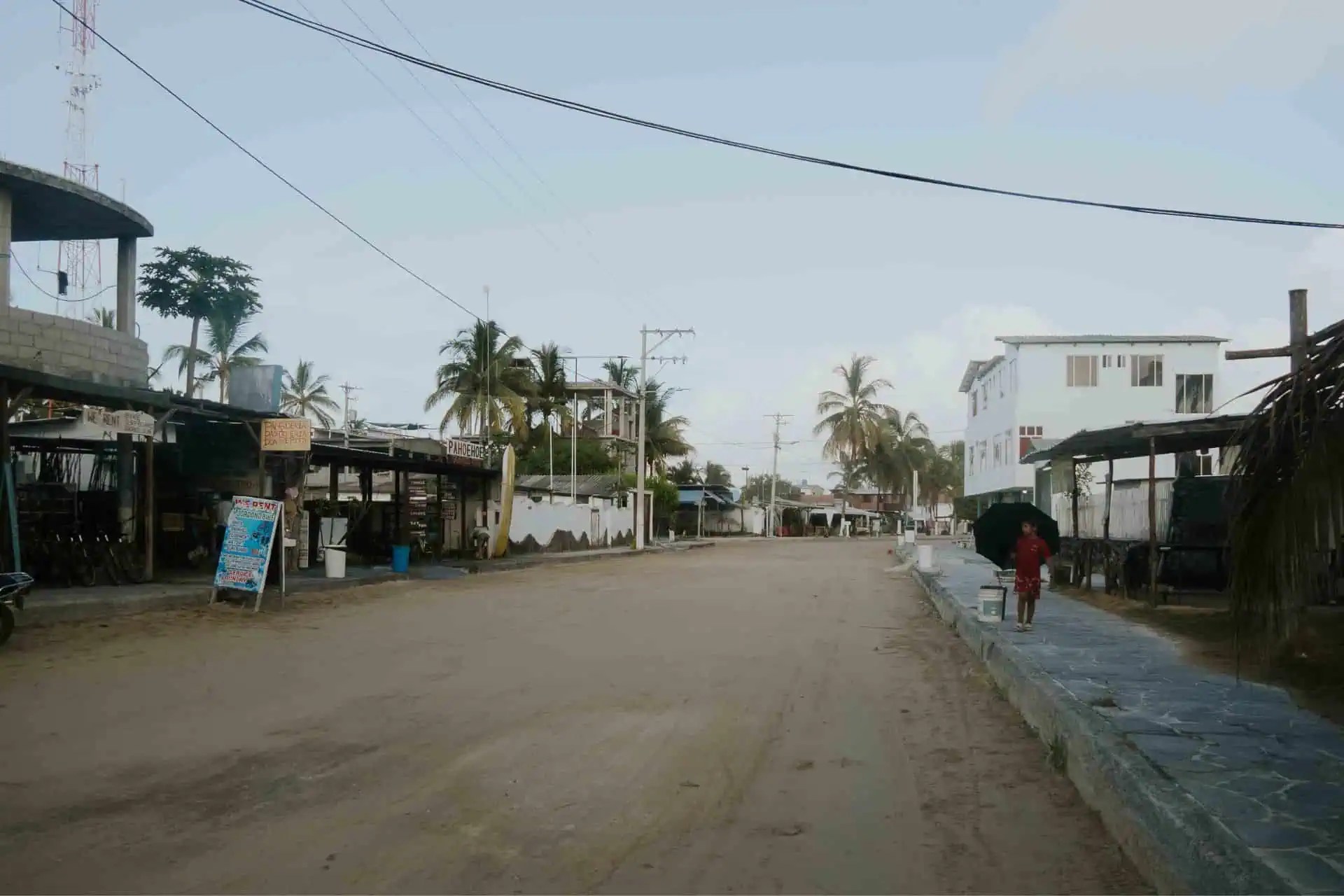
- One main dirt road in the center of town
- Empty beaches stretching for miles
- Wildlife casually existing alongside you
At first, it can feel quiet—almost too quiet. But that simplicity is exactly what makes Isabela so memorable.
A Slower, More Intentional Travel Style
Isabela is not about rushing from tour to tour.
We only booked two tours in five days, and spent the rest of our time:
- Snorkeling daily
- Watching wildlife
- Biking along the coast
- Relaxing at our lodge
And somehow… those “simple” days ended up being our favorites.
Best Things to Do in Isabela Island (Beyond the Tours)
Snorkeling at Concha de Perla (Over and Over Again)
Concha de Perla is one of the best free snorkeling spots in the Galápagos—and easily one of the most accessible.
A short boardwalk through a tunnel of mangrove trees leads you into a calm, protected cove where visibility is usually great.
What makes it special is how consistent the wildlife is. Every time we went, we saw something new:
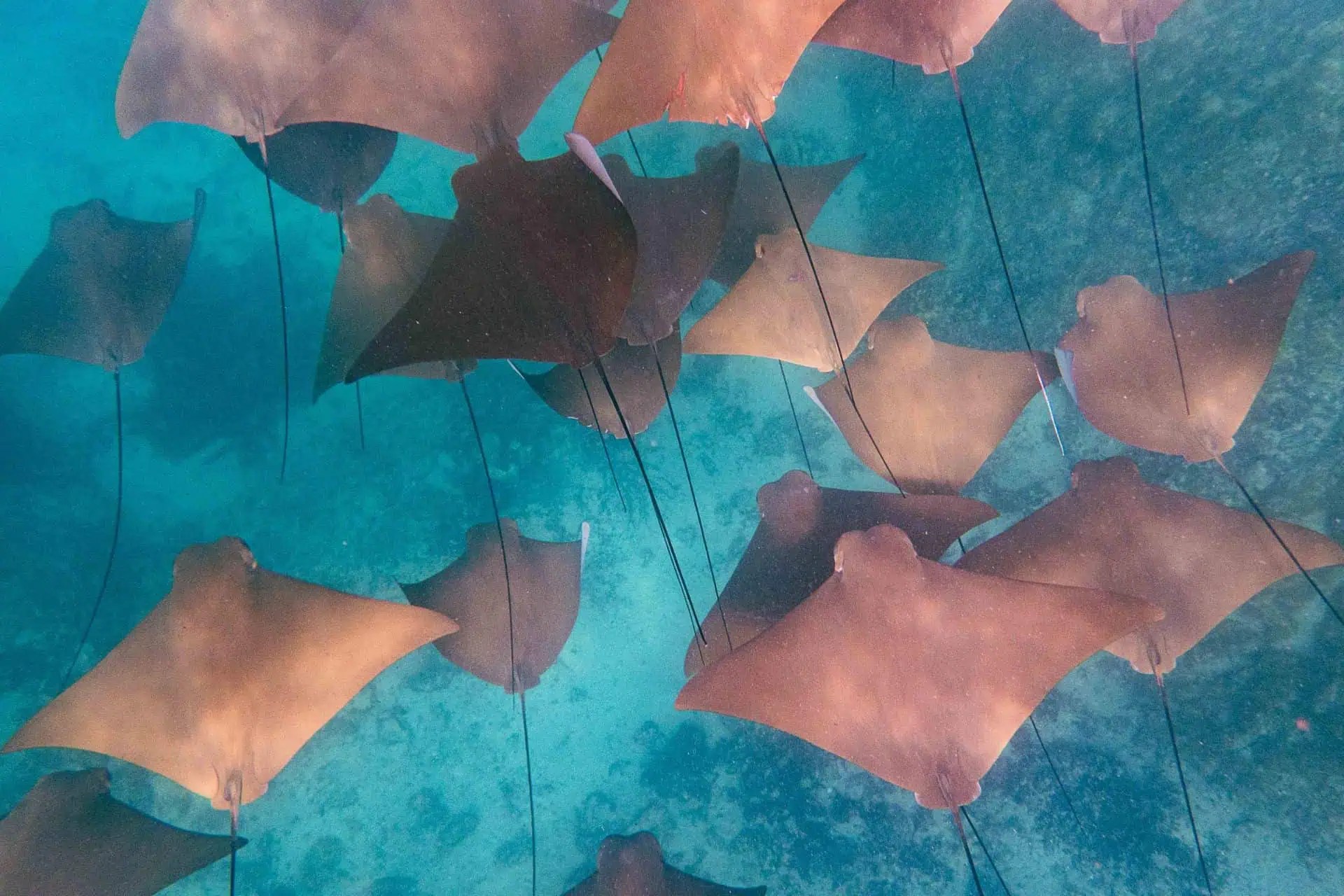
- A school of golden rays gliding through the lagoon
- If you see a group of people gathering in the lagoon its probably because they’ve found the rays
- Sea turtles casually swimming past and eating the grass on the coral
- Reef sharks swimming out by the buoys
- Sea lions darting through the water
It became part of our daily routine—and never got old.


Bike Ride to the Wall of Tears
One of the most memorable things we did on Isabela Island was renting bikes and riding out to the Wall of Tears.
Bike rentals are easy to find in town and cost around $10 per day, making this one of the best budget-friendly activities on the island.
But this isn’t just a bike ride—it’s an experience that blends nature with a much heavier piece of history.
The ride itself follows the coastline and is incredibly scenic. Along the way, you’ll pass:
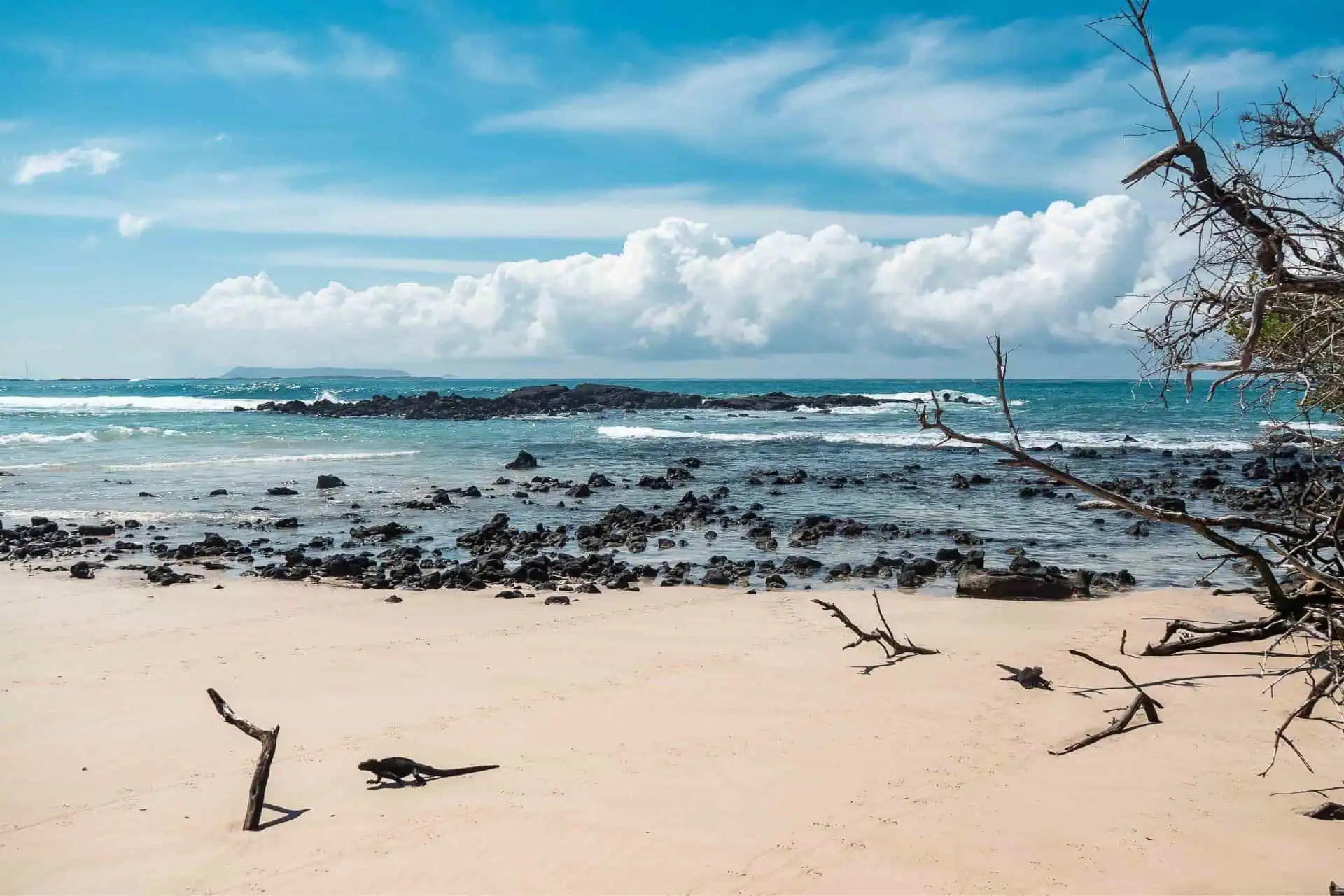
- Quiet white sand beaches like La Playita
- Black volcanic rock stretching into the ocean
- Marine iguanas lounging in the sun
- Bright red Sally Lightfoot crabs scattered along the shore
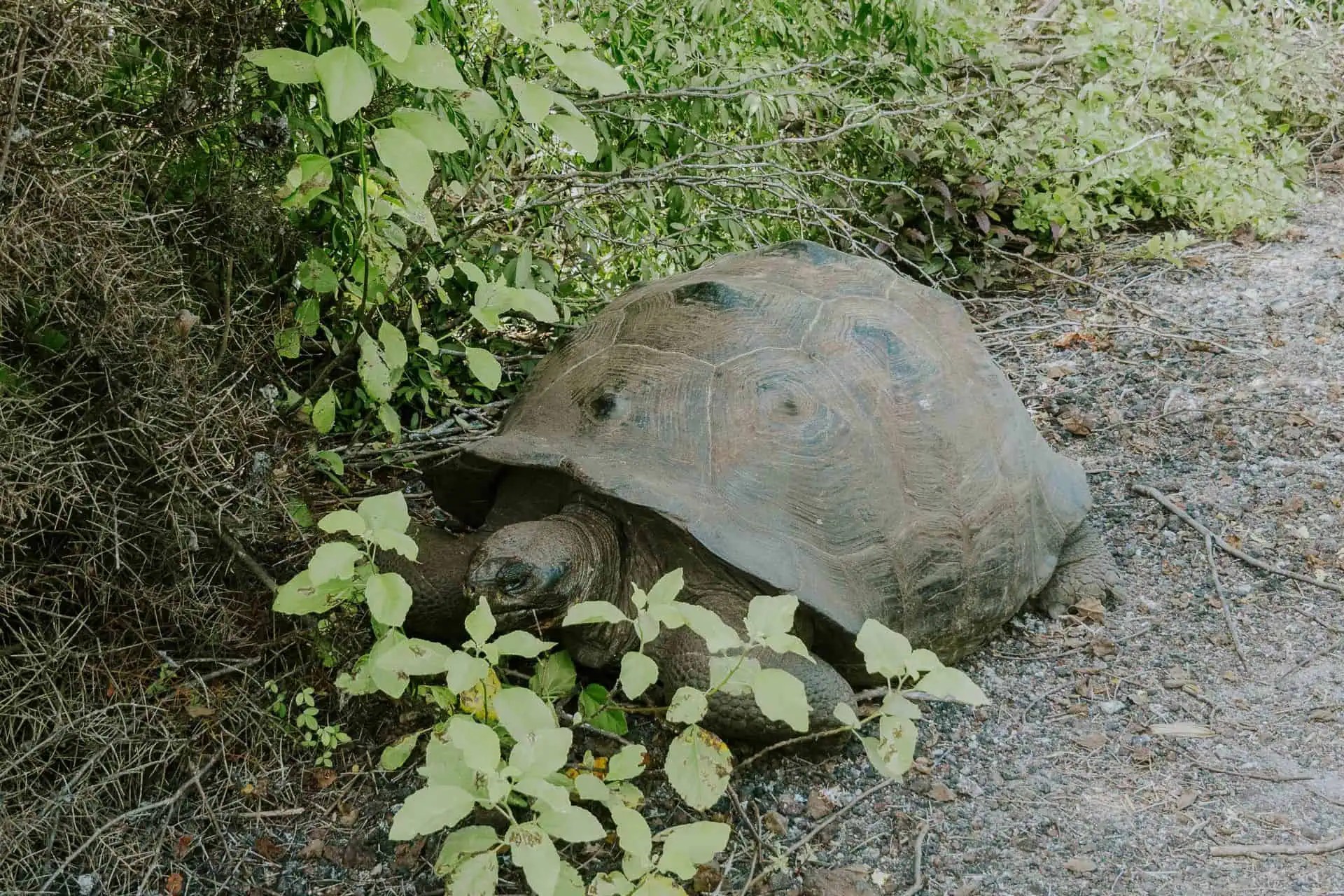
- Lagoons where you might spot birds—or even wild giant tortoises
It feels remote and untouched, like you have the entire coastline to yourself.
But then you arrive at the Wall.
The Story Behind the Wall of Tears
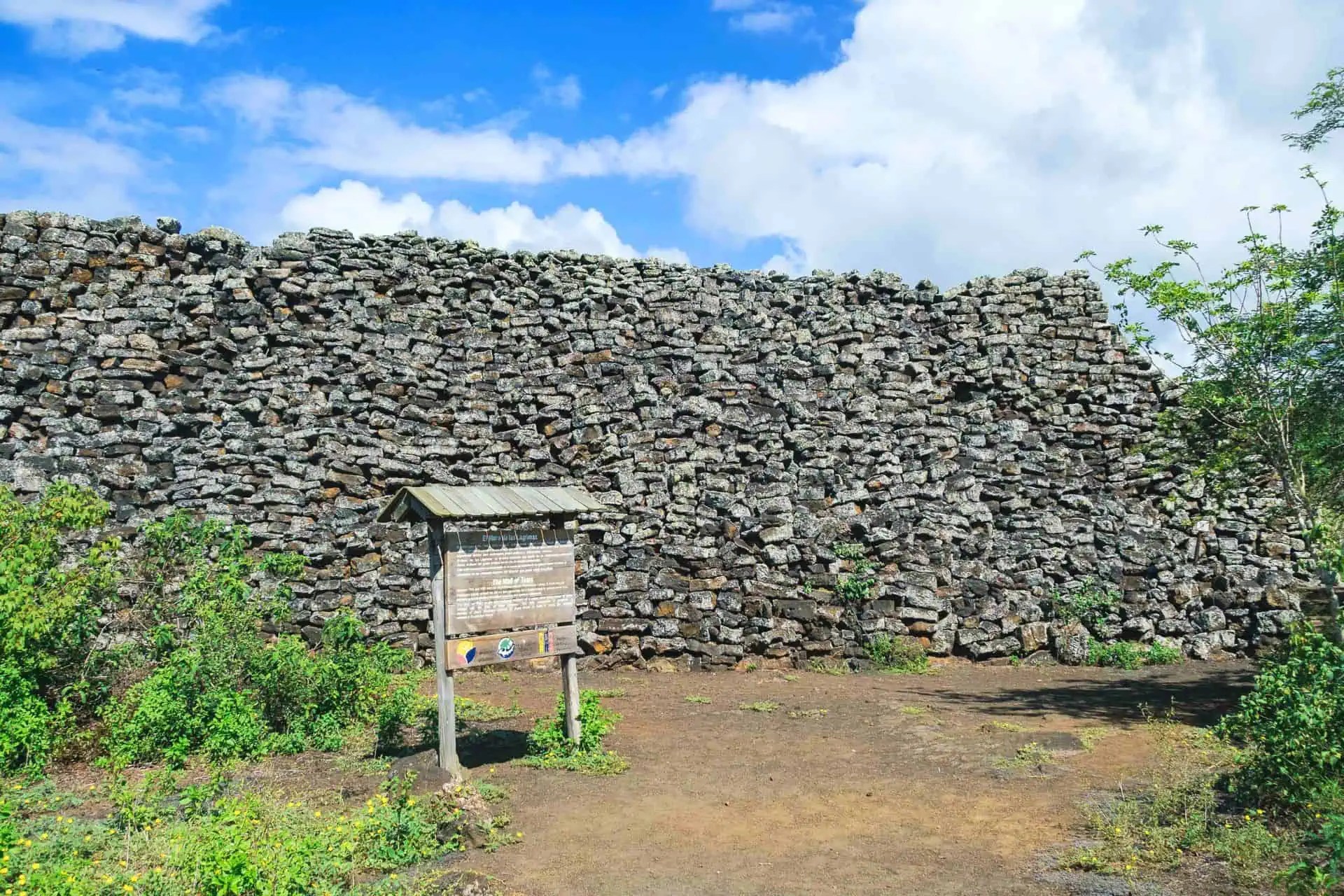
The Wall of Tears is one of the most important—and haunting—historical sites in the Galápagos.
Between 1945 and 1959, Isabela Island was used as a penal colony by Ecuador. Prisoners were sent here to serve their sentences in extreme isolation.
During that time, inmates were forced to build this massive wall out of volcanic الصخور—some sections reaching up to 25 meters (82 feet) high.
And the most unsettling part?
It had no real purpose.
The wall wasn’t functional—it was simply a form of punishment. Prisoners carried heavy lava rocks by hand under the intense equatorial sun, often in brutal conditions.
Many are believed to have died during its construction.
Standing there today, surrounded by silence and nature, it feels completely at odds with the rest of the island. Peaceful—but heavy.
Visiting Today
Now, the wall stands as a quiet memorial.
There are no crowds, no big displays—just a towering structure of dark volcanic rock in the middle of an otherwise beautiful landscape.
Most people spend some time walking around, taking it in, before continuing on to nearby viewpoints and beaches.
And somehow, the contrast is what makes it so memorable—one moment you’re biking past empty beaches and wildlife, the next you’re standing in a place with such a difficult history.
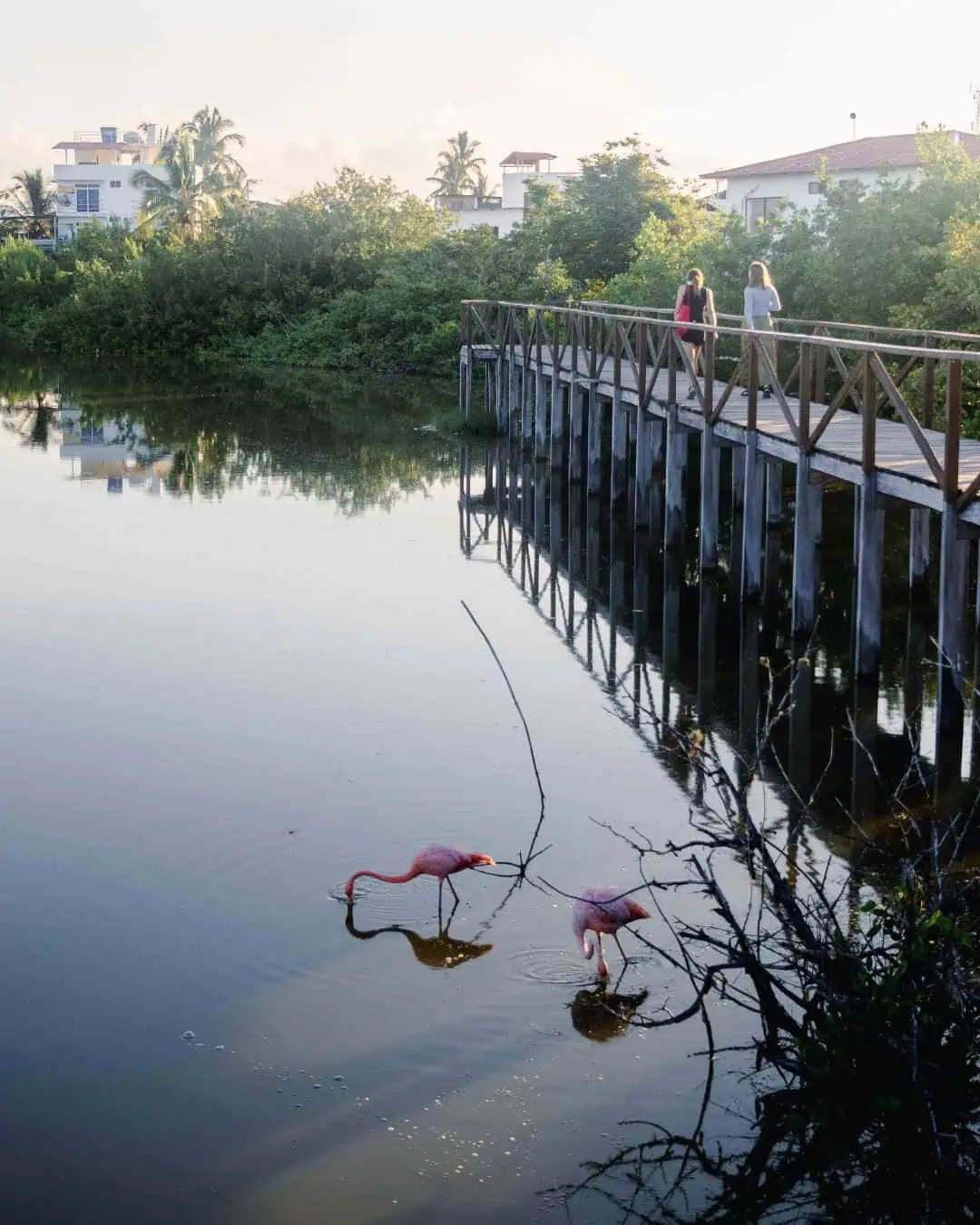
Flamingos at Poza de los Flamingos
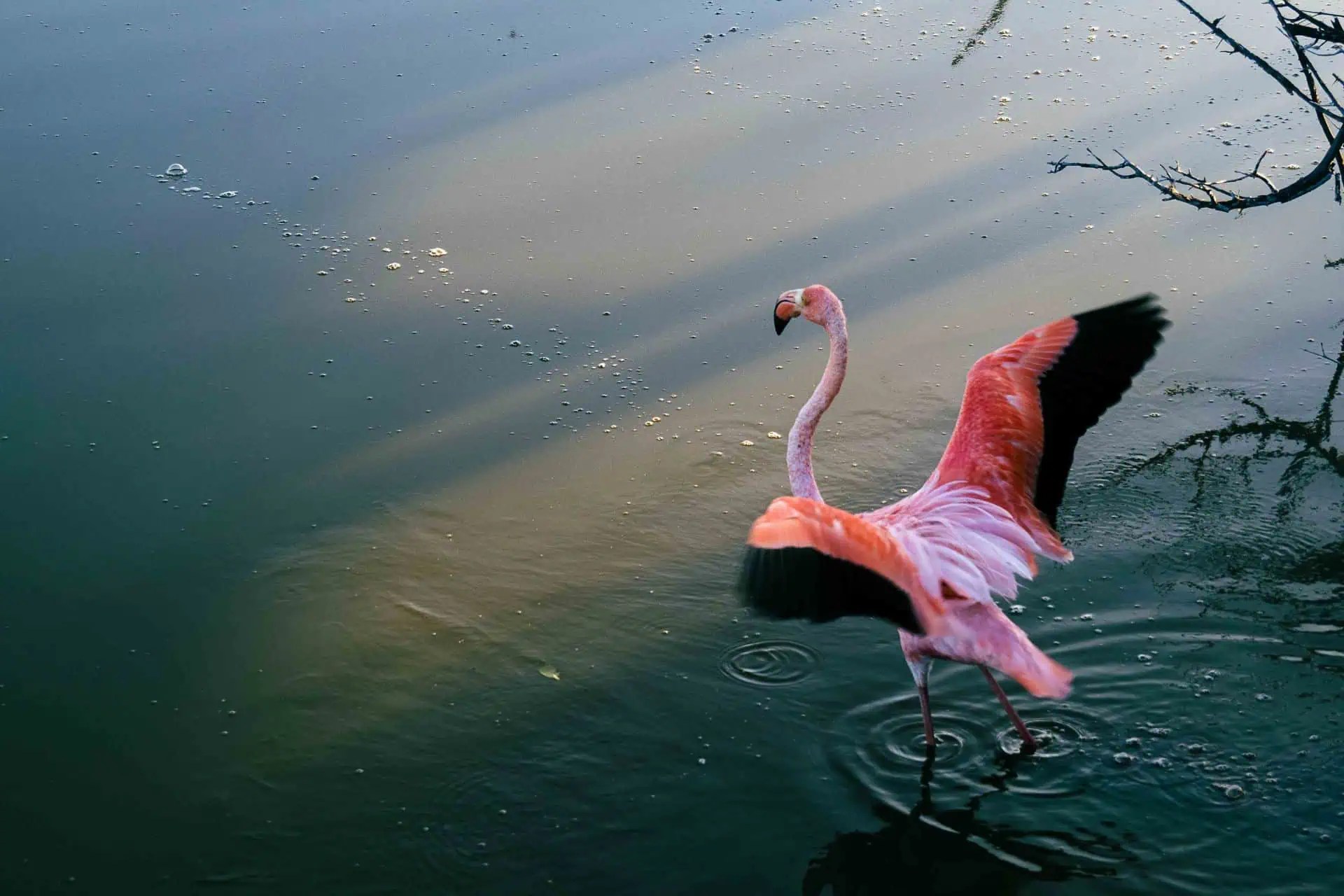
Poza de los Flamingos is a peaceful lagoon just outside town where you can spot wild flamingos.
It’s a quiet, reflective stop—especially at sunrise or sunset when the light softens and the birds are most active.
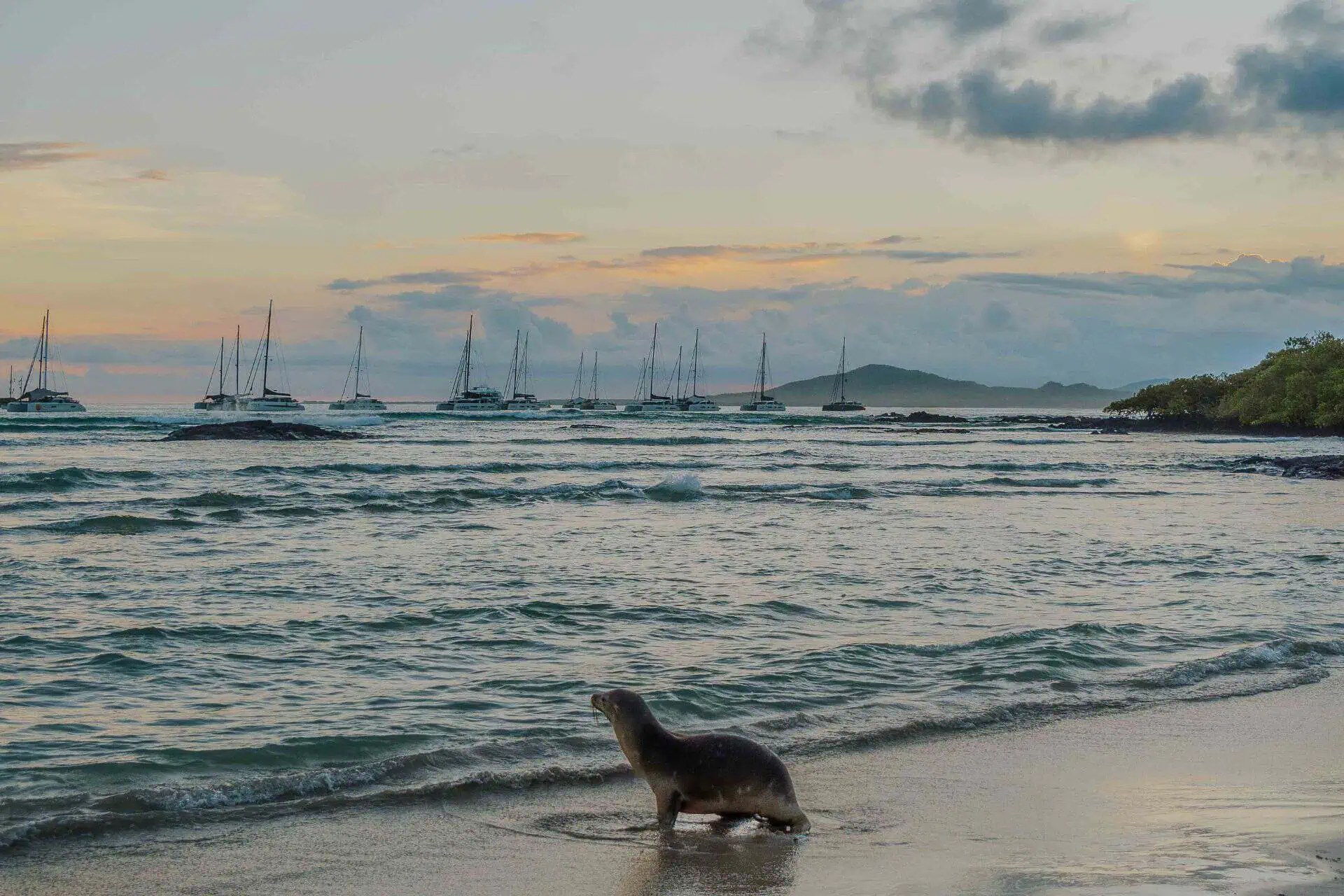
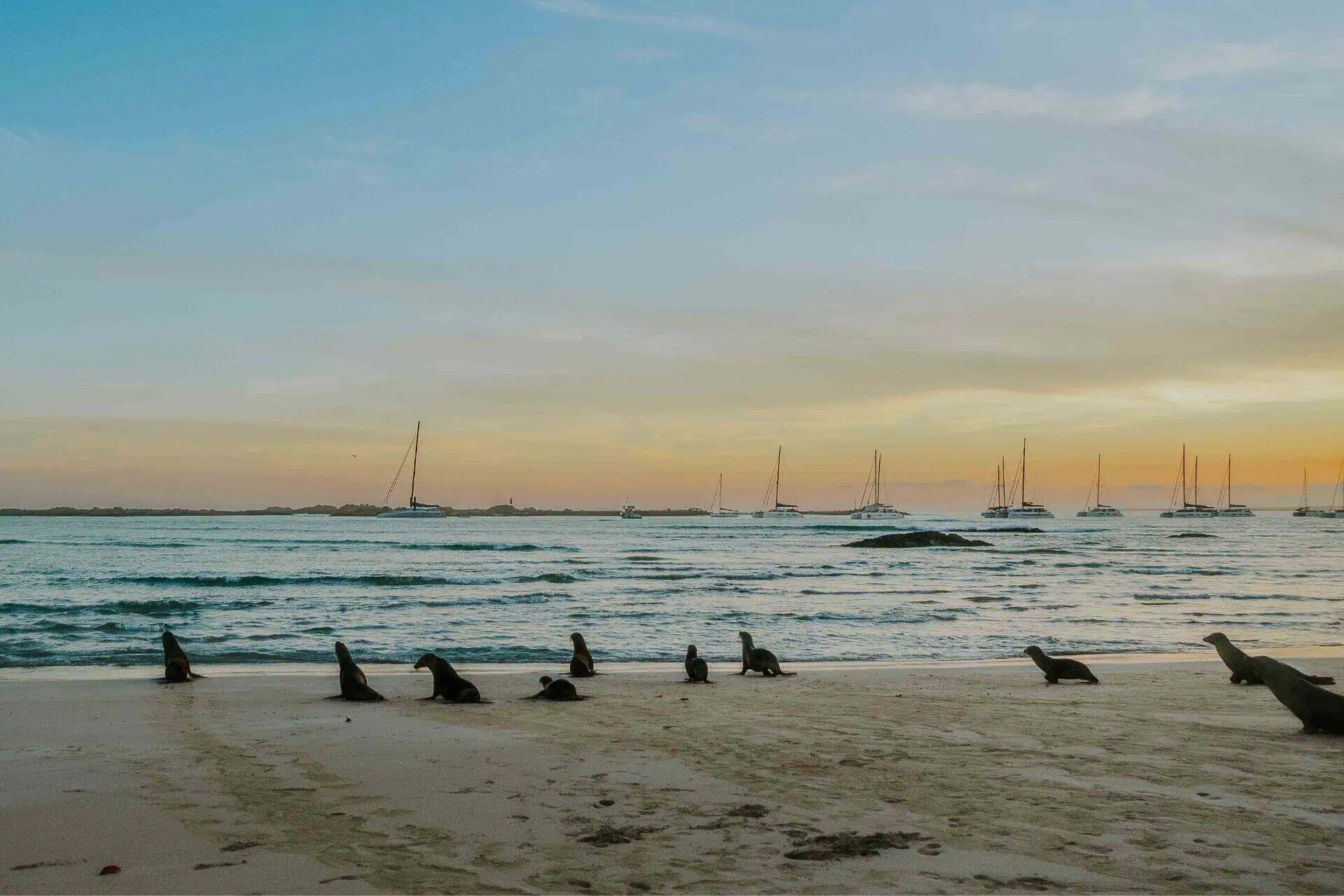
Sunset with Sea Lions (A Daily Ritual)
One of the most unexpectedly memorable experiences?
Just sitting on the beach at sunset.
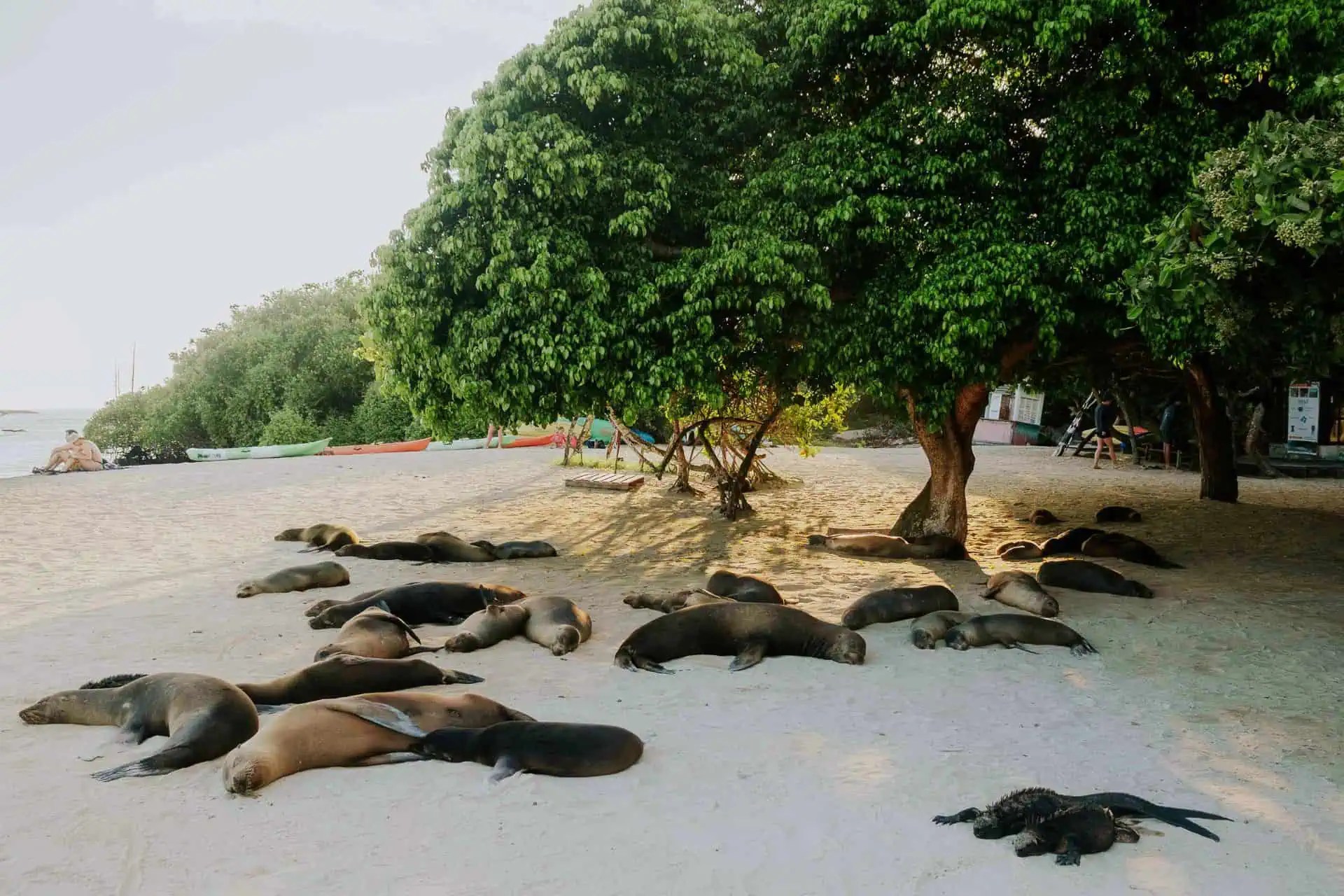
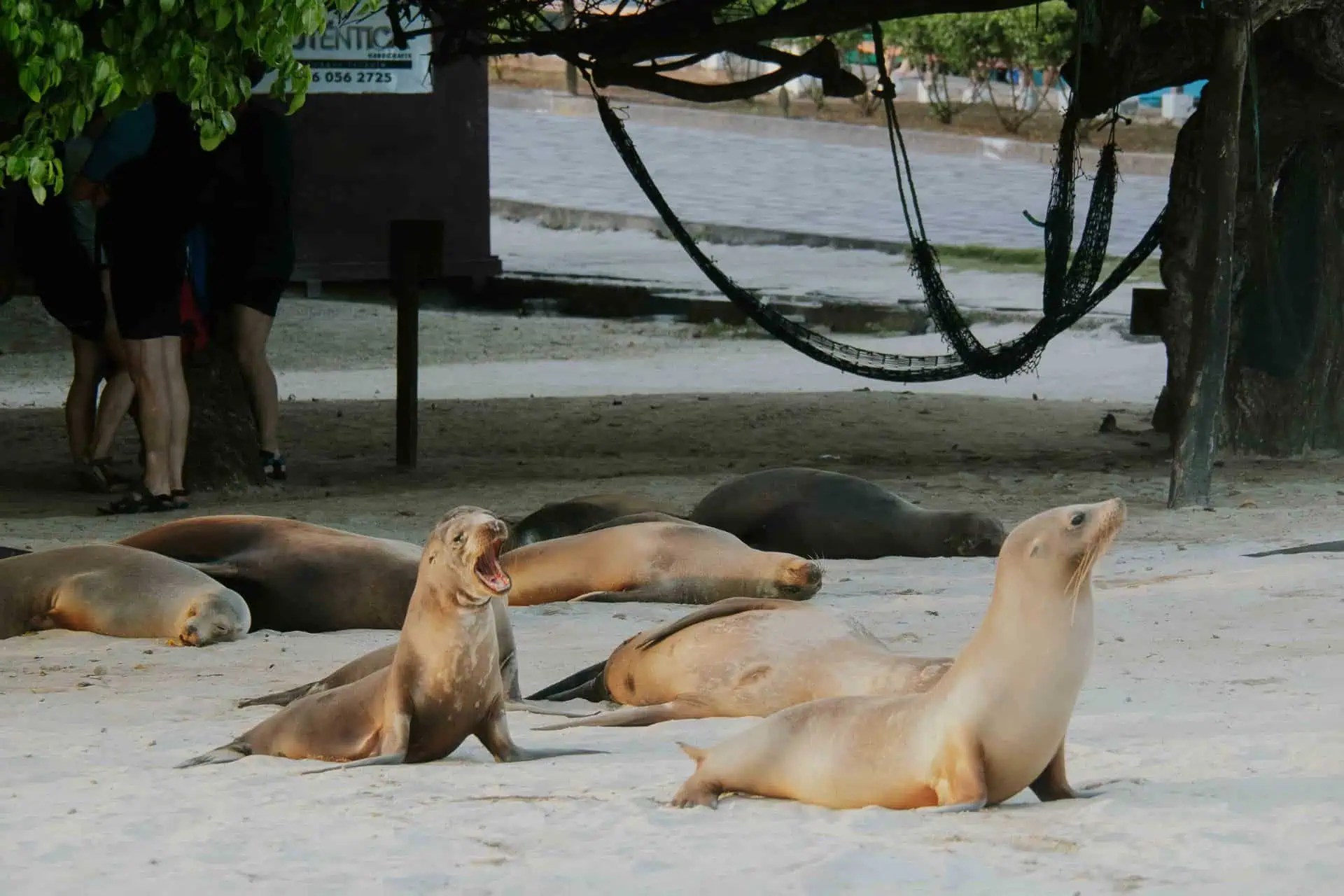
Around golden hour, the sea lions that have been sleeping all day slowly wake up and begin making their way back into the ocean.
It’s not a quick process.
They stretch, shuffle, nap again, roll over, and eventually—very eventually—make it to the water. Some take 20+ minutes to move just a few feet.
It’s chaotic, funny, and oddly calming all at once.
Best Tours in Isabela Island (Detailed Guide)
Los Túneles (Cabo Rosa) Snorkeling Tour
Los Túneles is easily one of the most popular tours in Isabela—and absolutely worth it.
This area is formed by lava flows that created natural arches, tunnels, and shallow pools. The landscape above water is stunning, but what’s below is even better.
What to expect:
- A boat ride along the coast (can be a bit bumpy depending on conditions)
- Multiple snorkeling stops in calm, shallow water
- Short walks across lava formations
Wildlife highlights:
- Huge numbers of sea turtles (this is why it’s called a “turtle highway”)
- White-tip reef sharks resting under ledges
- Galápagos penguins (if you’re lucky!)
- Seahorses tucked into the rocks
- Blue-footed boobies nesting on the lava
Because the water is shallow and protected, visibility is usually excellent—making it great even if you’re not an advanced snorkeler.
Tip: Book this in advance—it often sells out days ahead.


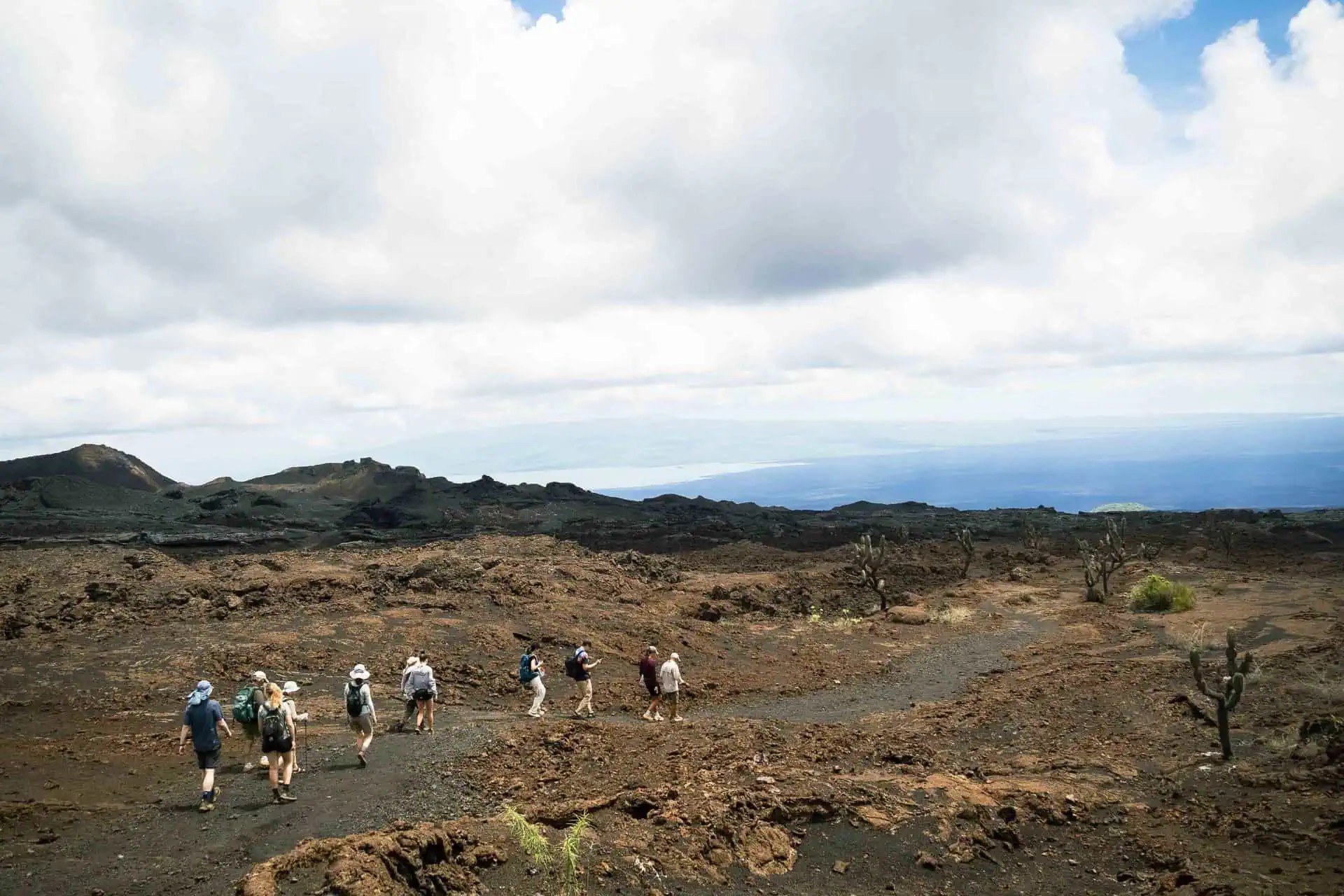
Sierra Negra Volcano & Volcán Chico Hike
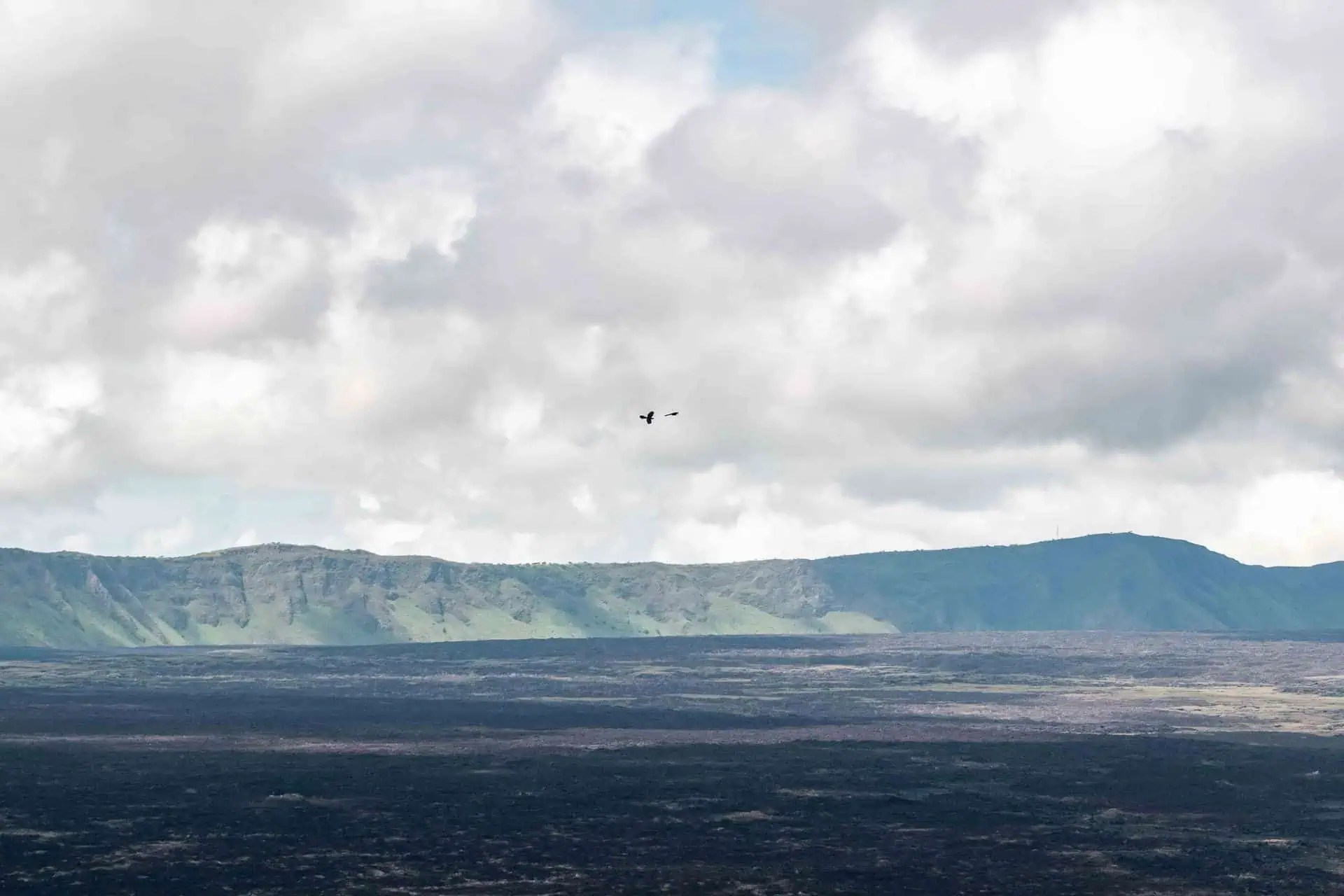
Hiking Sierra Negra Volcano was one of the biggest surprises of our trip.
We weren’t sure if we wanted to dedicate a full day to hiking—but it ended up being one of the most unique landscapes we saw in the Galápagos.
Why it’s special:
- Sierra Negra has one of the largest volcanic craters in the world
- The hike takes you across massive lava fields and viewpoints
- You can see layers of eruptions over time
If your tour includes Volcán Chico, it gets even better.
This area feels almost like another planet:
- Black and red lava formations
- Steam vents and fissures
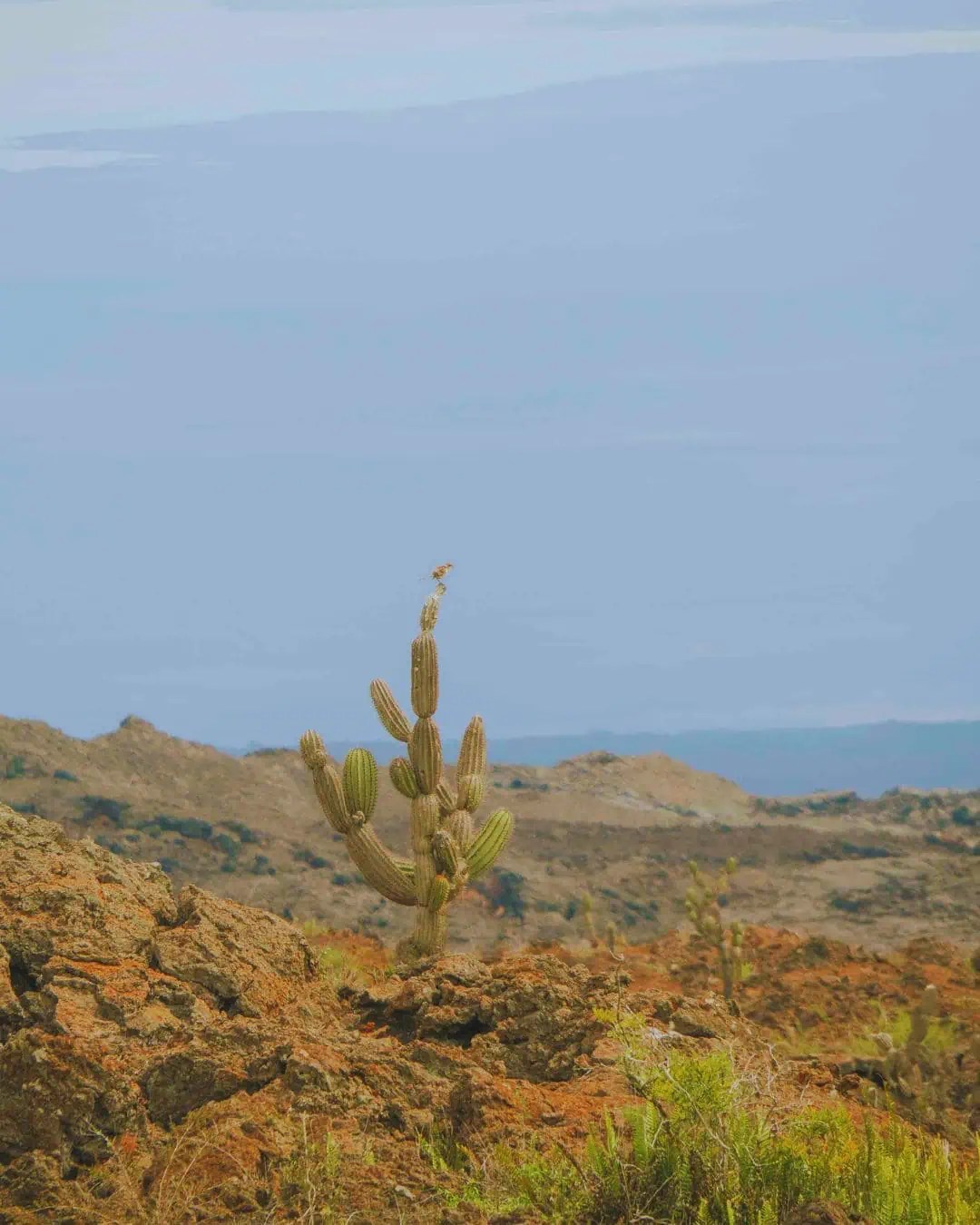
- Minimal vegetation except scattered cactus on the lava fields
What you’ll learn:
- The difference between types of lava flows
- How eruptions shaped the island
- The history of volcanic activity (Isabela erupts roughly every couple of decades)
Tip: Wear good shoes, bring water, and prepare for full sun exposure. On Isabela this tour goes for $40 per person
You can book in advance online or reach out to local tour agencies to book these tours. We used Pafecomar as our in person agency when we arrived on the island and was happy with both tours we did with them.
Getting to Isabela Island
Most travelers take the ferry from Santa Cruz Island.
- Duration: ~2 hours
- Cost: $30–$38
- Departures: Morning and afternoon
- Arrival fee: $10 per person
The ride can be rough depending on the weather—if you’re prone to seasickness, plan ahead. – Scroll to bottom of the blog for more details on ferries.
Where to Stay in Isabela Island
We stayed at the wooden house lodge, located between the pier and town—close to Concha de Perla.
It was a great balance of:
- Easy access to snorkeling
- Quiet surroundings
- Comfortable, relaxed atmosphere
Practical Tips for Visiting Isabela Island
Bring More Cash Than You Think
Isabela is the most limited island when it comes to infrastructure.
- Only one ATM on the island
- Machines can run out of cash
- Most places are cash-only
- Card payments often include a ~10% fee
Expect Intense Heat
Because the Galápagos sit on the equator, the sun is strong year-round.
Plan your days like this:
- Early morning: activities
- Midday: rest
- Late afternoon: explore
There’s very little shade, especially outside of town.
Book Smart to Save Money
- Walk into hotels and ask for rates directly
- Message places via WhatsApp
- Avoid third-party booking fees when possible
Final Thoughts: Is Isabela Island Worth It?
Absolutely.
If Santa Cruz feels like the hub and San Cristóbal feels wildlife-packed, Isabela feels like an escape.
It’s quieter, wilder, and more spacious.
And in the end, it’s not just the big tours that stand out—it’s the simple moments:
- Snorkeling in the same cove every day
- Watching sea lions slowly make their way to the ocean
- Biking past empty beaches with no one else around
Those are the moments that stick with you.
Keep Planning Your Galápagos Trip
If you’re building out your full itinerary for the Galápagos Islands, these guides will help you plan the rest of your trip:
- San Cristóbal Island Guide – Best for wildlife, sea lions, and laid-back island vibes
- Santa Cruz Island Guide – The main hub with the most tours, restaurants, and day trips
Each island offers something completely different, and visiting a mix is what makes a Galápagos trip so special.
Getting Between Islands: Galápagos Inter-Island Ferries
If you’re doing a land-based Galápagos itinerary, inter-island ferries are the main way to get around—and something you’ll definitely want to plan for in advance.


Galapagos Ferry Routes & Schedule
There are two main ferry routes connecting the three populated islands:
- San Cristóbal → Santa Cruz (~1.5 hours)
- Santa Cruz → Isabela (~2 hours)
Ferries typically run twice per day:
- Morning departure: ~7:00 AM (6:00 AM from Isabela)
- Afternoon departure: ~3:00 PM
The morning ferry is usually the better choice. The ocean tends to be calmer earlier in the day, and you’ll arrive with plenty of time to explore your next island.
Cost & What to Expect
Ferry tickets generally cost $30–$38 per person, depending on the operator and boat quality.
Not all ferries are created equal—some of the slightly higher-priced options offer:
- More comfortable seating
- A larger top deck
- Occasionally even Wi-Fi
That said, all ferries are speedboats, so expect a bit of a bumpy ride no matter which one you choose.
Check-In & Boarding Process
Plan to arrive about 1 hour before departure. Each island has its own inspection process before boarding:
- San Cristóbal: Bags are checked by a sniffer dog
- Santa Cruz: Luggage goes through a screening machine
- Isabela: Manual bag inspections
After check-in, you’ll also need to take a short water taxi (small boat) from the dock to your ferry.
💵 Cost: $1 per person, per ride
👉 That’s an extra $2 total per ferry trip (departure + arrival)
All docks are “wet landings,” so be prepared to step in and out of small boats.
Tips for a Smoother Ride
- Sit on the top deck (if available): Better views and fresh air make a big difference
- Bring motion sickness medication: We used Bonine for every ferry and boat tour
- Took one the night before
- And another about an hour before departure
- Pack light and waterproof anything important—you might get splashed
Alternative: Inter-Island Flights
If you’re short on time, prone to seasickness, or just want a more comfortable option, you can also fly between islands.
- Cost: ~$150–$180 one way
- Much faster than ferries
- Limited schedules and smaller planes
For us, the ferries were totally doable—but if you know you get seasick, the flights could be well worth the upgrade.
This is one of those parts of the Galápagos experience that’s a little rugged—but also part of the adventure. Once you know what to expect, it’s easy to plan around it and make the most of your time island hopping.
Land-Based vs. Cruise Travel in the Galápago
We originally planned to book a last-minute cruise to try and score a deal. But after doing more research and talking to locals in Quito, we pivoted to a land-based itinerary—hopping between the three main islands and doing day tours instead.
Hot take: I think this is the better option for most travelers.
It’s significantly more budget-friendly and gives you more time to actually enjoy each island. Unless you’re doing a dedicated diving cruise, you can see a huge amount of wildlife through day tours and snorkeling.
Cruises do take you to more remote areas, but for general wildlife experiences, the difference isn’t as big as you might expect.
If you are set on a last-minute cruise:
- Fly into Santa Cruz
- Research routes and pricing in advance
- Visit multiple agencies (there are 50+ in town)
- Always compare prices and read reviews
We ran into both great and not-so-great agencies—so definitely look for ones that provide clear receipts and detailed pickup instructions.
P.S. Like the vibe of these photos?
I’ve turned some of my favorite travel shots into art prints over on my Etsy shop! Not every place I write about makes it into the shop, but if you’re into dreamy landscapes, vintage surfers, or just love a cute puffin, come take a look: Night Star Studio on Etsy


