
After spending weeks traveling around China, we wanted to do something a little different before heading to a family reunion. We’d seen plenty of big cities and famous attractions, so we were hoping to find somewhere with more nature and fewer crowds.
We decided to spend a week exploring the Dong and Miao villages in Guizhou, a province in southwestern China known for its mountainous landscapes, rice terraces, and traditional wooden architecture.
Finding somewhere quiet in China during the summer holidays isn’t easy. Luckily, we arrived toward the end of summer, just as students were heading back to school. One hotel owner even told us the village had been completely packed just days before we arrived!
Over the next week, we explored traditional Dong villages, hiked through rice fields, tried local handicrafts, and stayed in smaller Miao villages where we could slow down and experience a different side of China.
We also visited Xijiang, one of China’s largest ethnic villages, which was a huge contrast to the quiet countryside we’d come to enjoy.
If you’re planning a trip to Guizhou, here’s our one-week itinerary, what each village was like, and which places I’d recommend spending more time in.
P.S. This post contains affiliate links. If you use my links to make a purchase, I’ll get a small commission at no extra cost to you. Thanks for your support!
Guizhou Travel Itinerary
Our 1-Week Guizhou Itinerary
We visited four villages during our week in Guizhou:
- Zhaoxing Dong Village (2 nights): A popular Dong village known for its drum towers, covered bridges, wooden architecture, and evening performances.
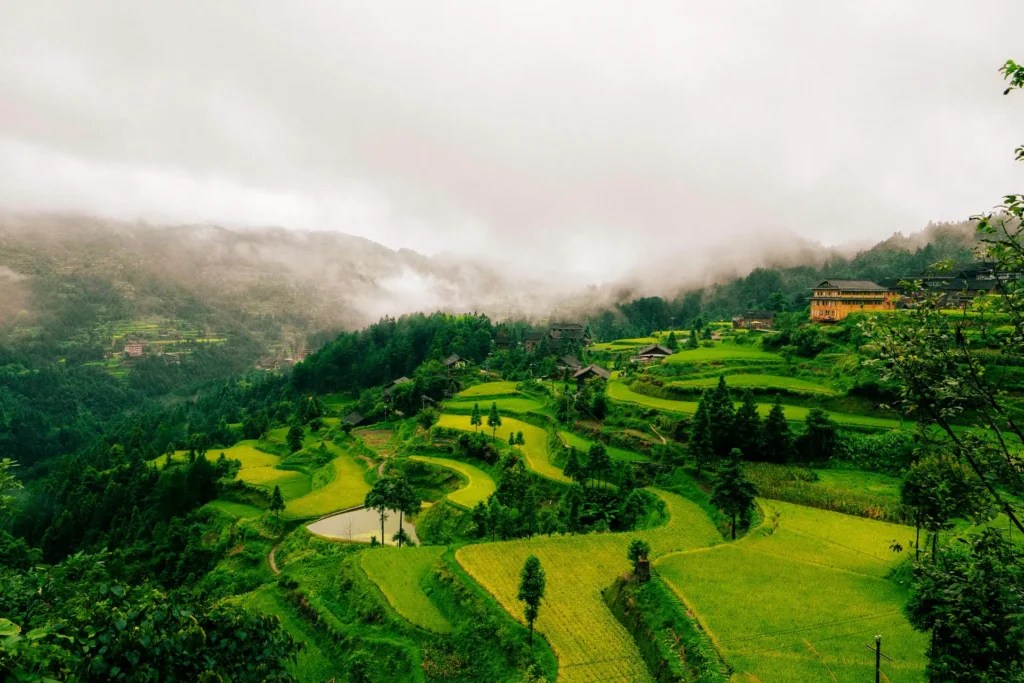
- Tang’an Dong Village (1 night): A smaller village surrounded by rice terraces, about a 6.5 km hike from Zhaoxing.
- Longtang Miao Village (2 nights): A peaceful village with rice fields, local handicrafts, and a much slower pace of life.
- Baiyan Village and Xiangshuiyan Waterfall: A scenic mountain detour between Longtang and Xijiang, with rice terraces, misty hills, and fewer tourists.
- Xijiang Miao Village (1 night): A much larger tourist destination with traditional-style houses covering the hillsides, nighttime views, and plenty of traditional clothing photo shoots.
We started in Zhaoxing, hiked to Tang’an, and then traveled north to explore the Miao villages.
Looking back, I’m glad we didn’t try to squeeze in too many places. Each village had a different atmosphere, and spending two nights in Longtang gave us a much-needed break from constantly packing up and moving to the next destination.
1. Zhaoxing Dong Village: Traditional Architecture and Local Culture
Getting to Zhaoxing
We flew from Shanghai to Guilin, then took a taxi to Guilin West Railway Station to catch a high-speed train to Congjiang (around 50 mins).
Our flight was delayed by an hour, so we ended up sprinting through train security and check-in with about one minute to spare. Not exactly the most relaxing start to the trip!
Once we arrived, our guesthouse helped arrange a pickup from the station and explained how to get into the village. There is also a public bus that you can get on that takes you from the train station to the village entrance. There is schedule available somewhere, but it usually just leaves once the bus is full.
Zhaoxing has an entrance gate where you’ll need to buy an admission ticket (80 RMB). From there, you can take a free sightseeing bus closer to the village center or walk for around 20 minutes.
When we first arrived, the village felt like a maze. After a few hours of wandering around, though, we started recognizing the drum towers and main streets, and it became much easier to get around.
Exploring Zhaoxing Dong Village
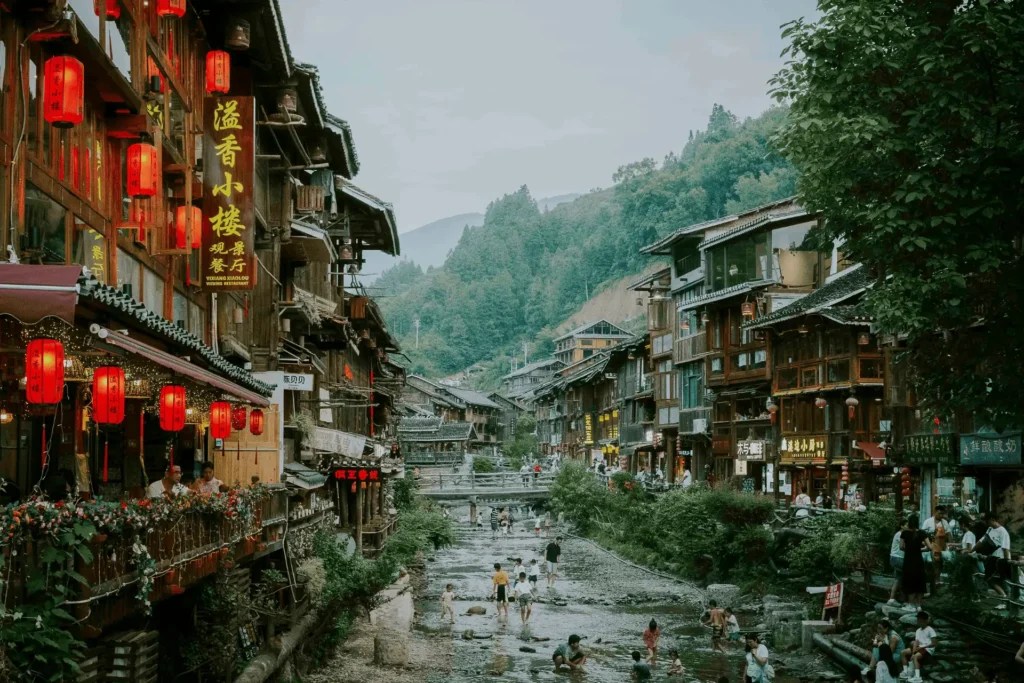
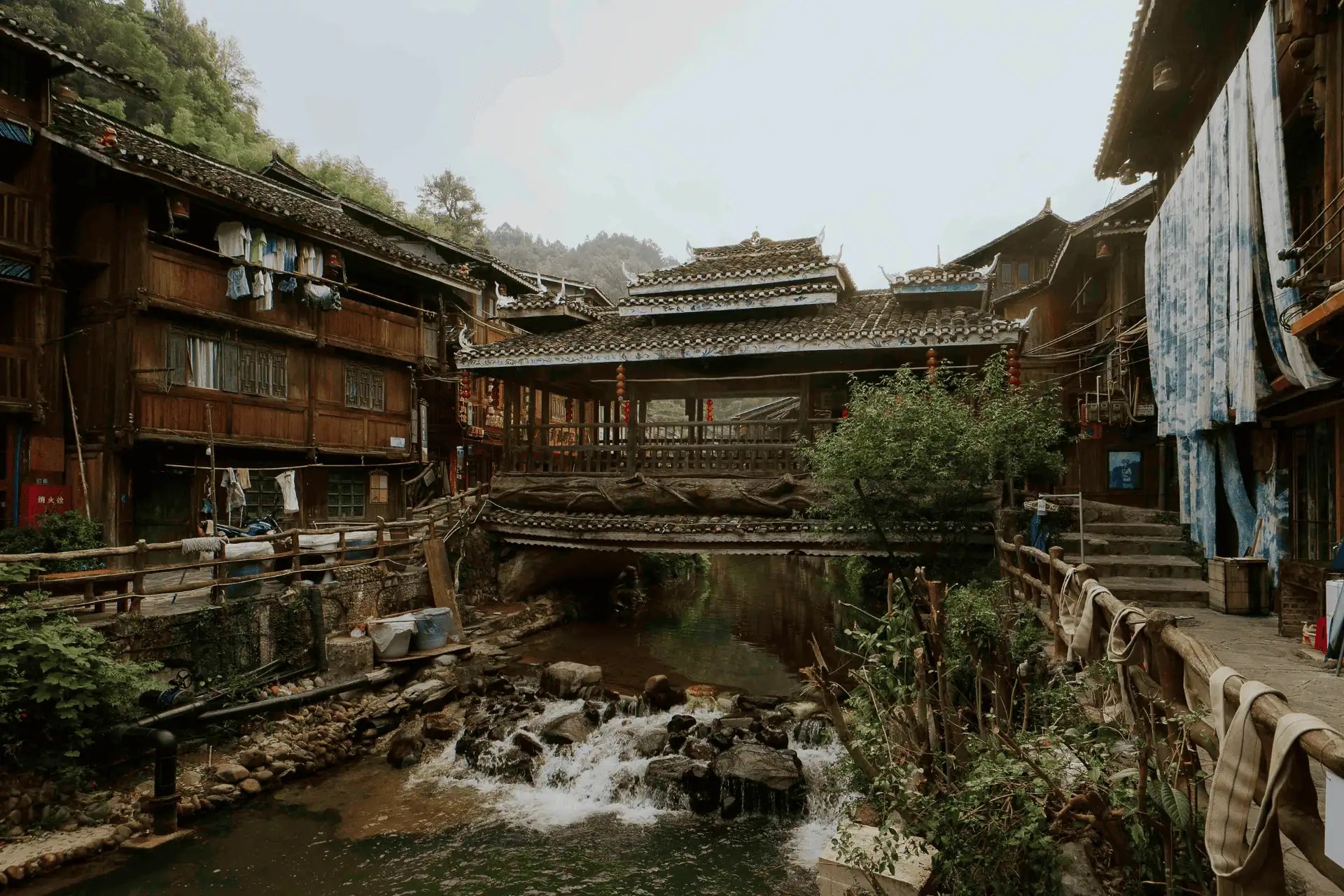
Zhaoxing is one of China’s best-known Dong villages, famous for its traditional wooden houses, covered bridges, and distinctive drum towers.
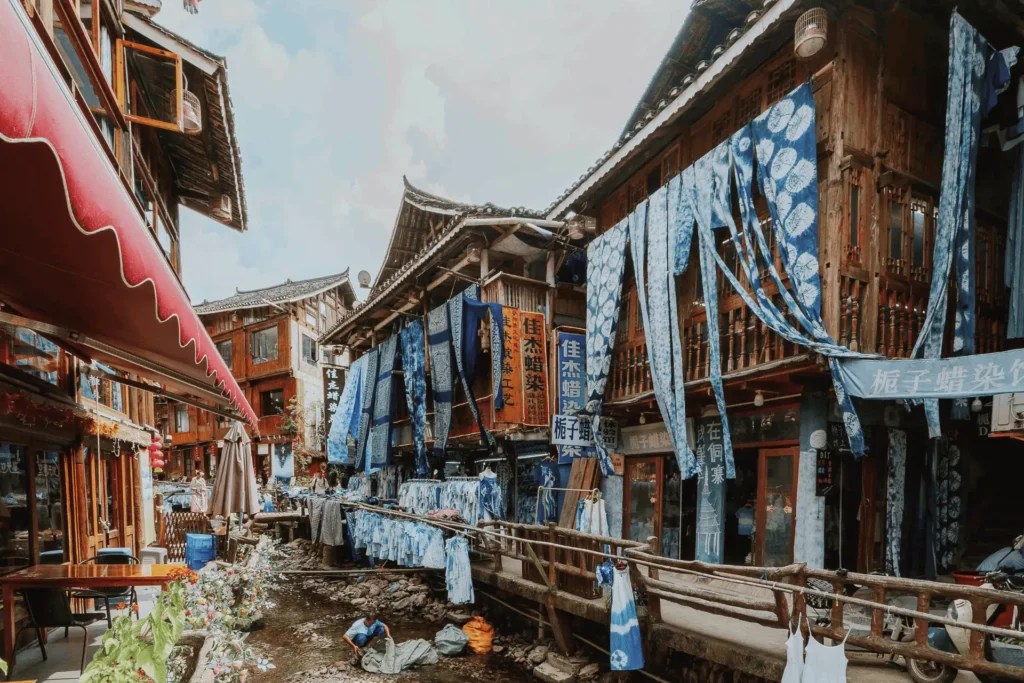
Walking through the village, you’ll see wooden buildings lining the streets, small shops selling local crafts, and long pieces of indigo-dyed fabric hanging outside homes and workshops.
It’s also a popular spot for tourists and influencers. Renting traditional Dong clothing for a photo shoot is huge here, so you’ll see plenty of visitors dressed up and posing around the village.
Although it was more touristy than we’d hoped, I still enjoyed exploring the streets and checking out the architecture. There are plenty of little alleys to wander through, and it was interesting seeing how the village has adapted to tourism.
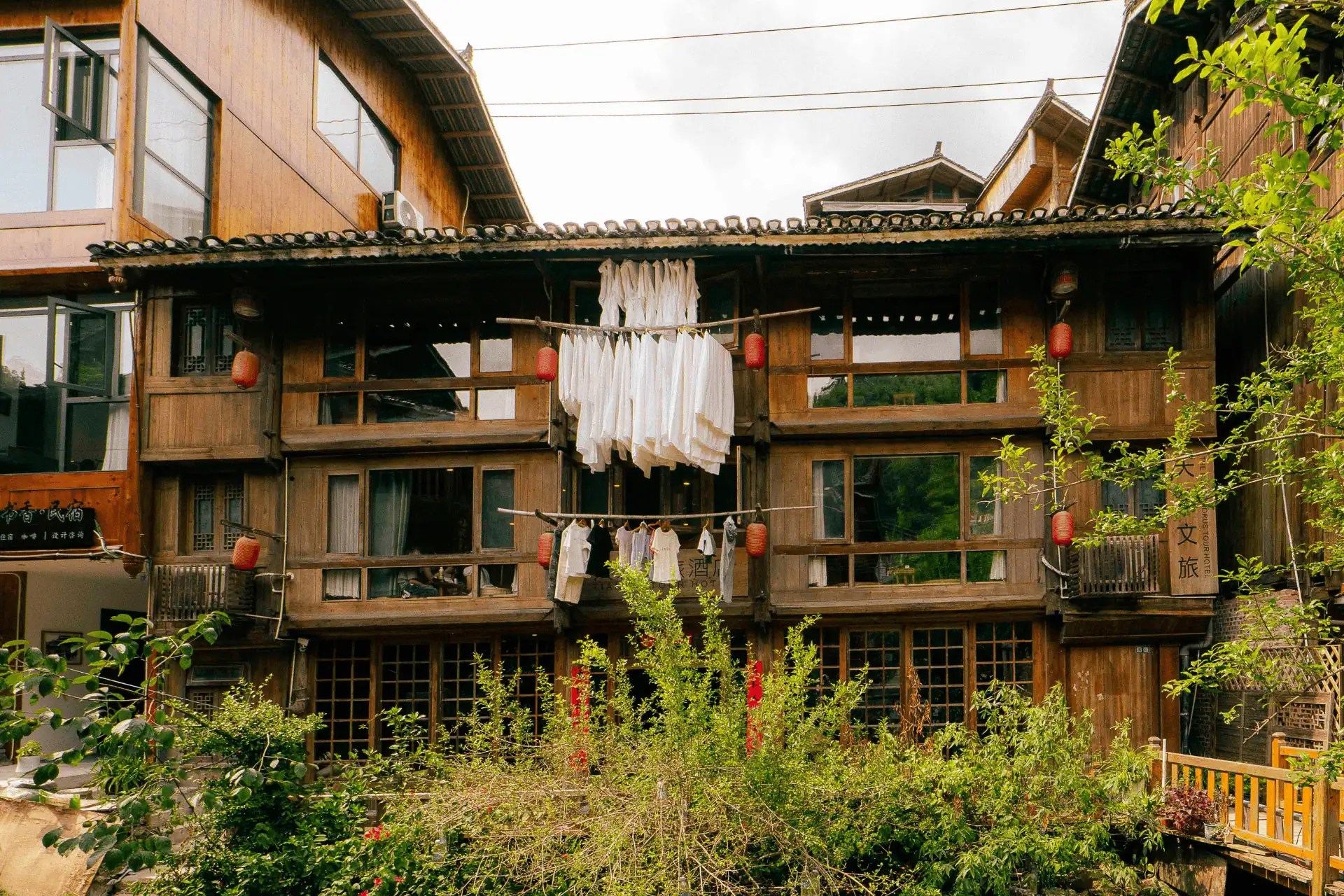
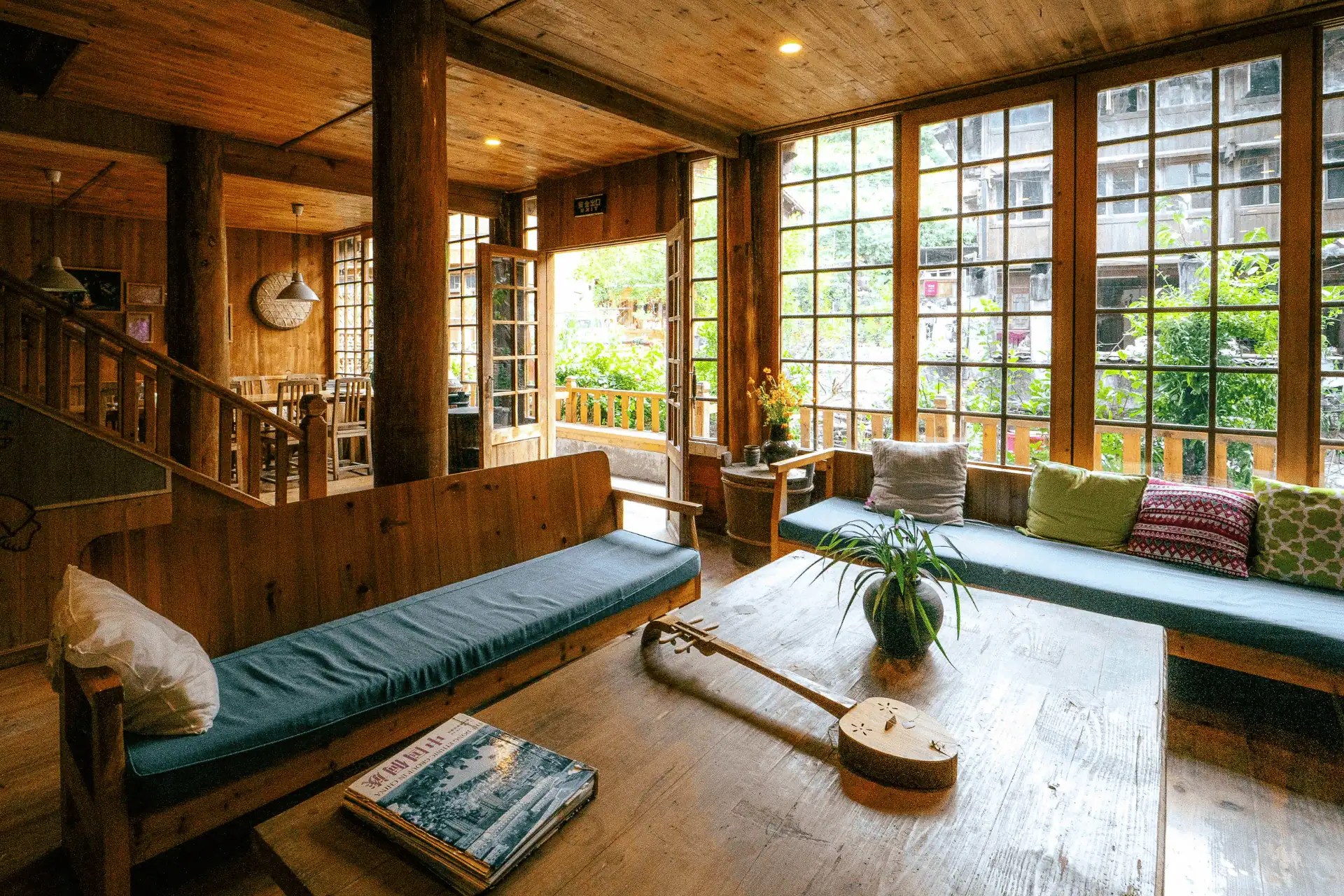
We stayed at a small, family-run guesthouse near one of the drum towers – Zhaoxing Dong Village Tianlai Cultural Tourism Homestay. The owners were local to the village and incredibly helpful, recommending places to visit, hiking trails, and local events.
Honestly, having locals to help us figure things out made the stay much easier.
An Evening of Traditional Dong Singing
One of my favorite experiences in Zhaoxing happened after sunset.
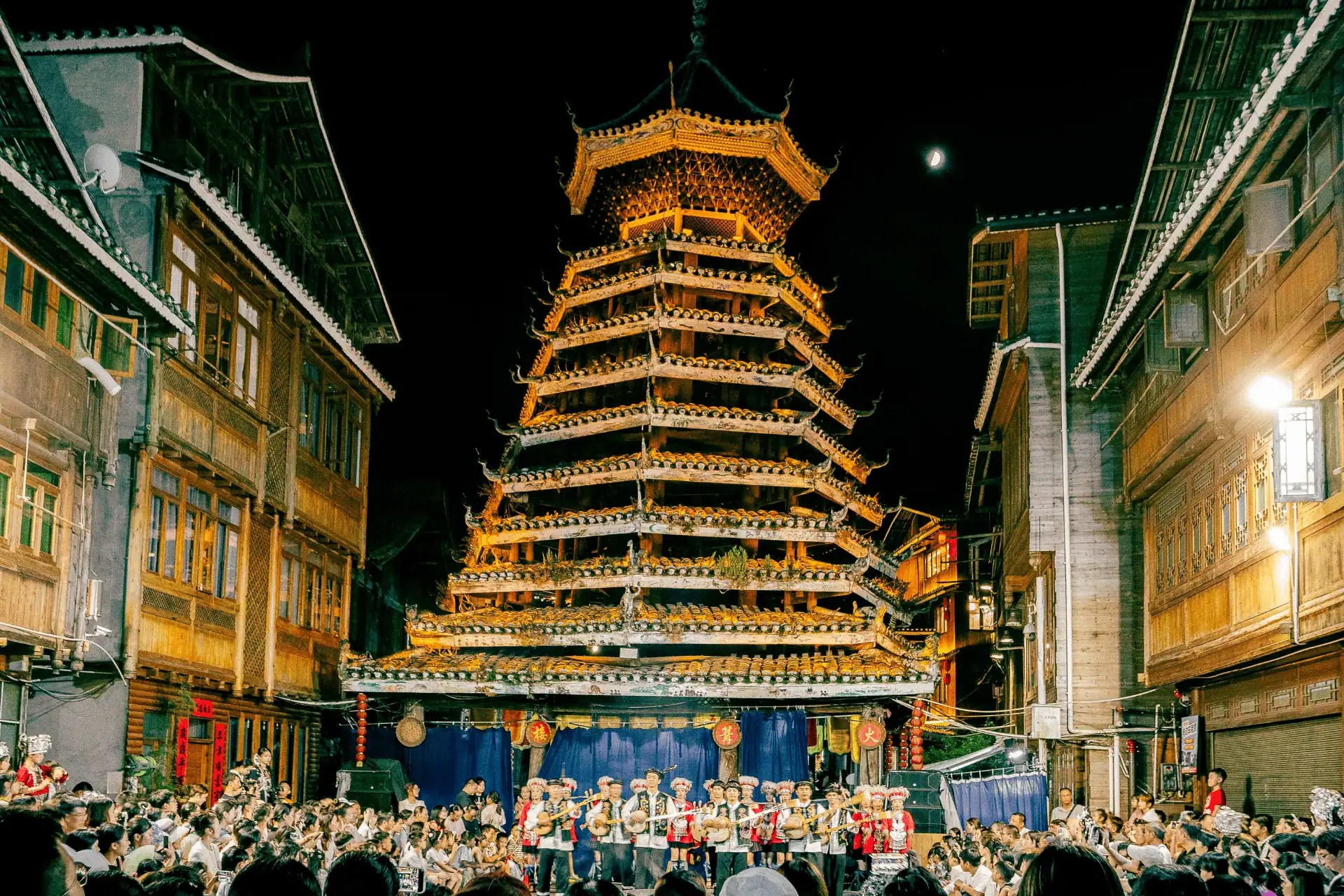
The village holds daily evening singing and dancing performances, one organized by the government and another put on by local villagers. We chose the village performance, which we booked through our guesthouse.
It was pretty interactive, with audience participation and volunteers joining in on some of the activities.
But the best part came after we returned to our guesthouse.
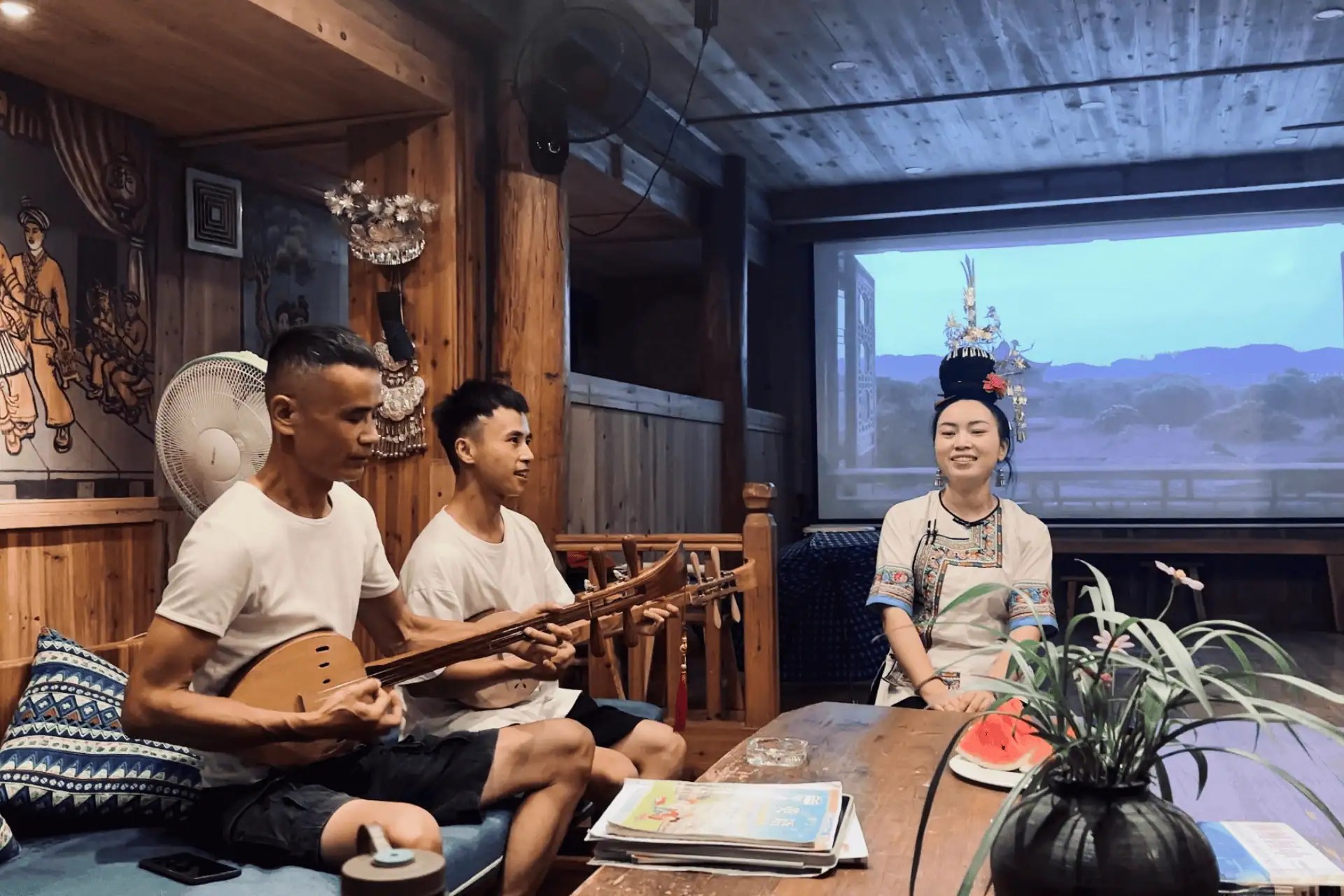
The owner’s wife had invited some of her friends over, and they spent the next few hours playing music and singing for the guests. Between songs, she told us stories about the village, its culture, and what it was like growing up there.
Everything was in Chinese, so my mom translated the main points for me, but it was still really interesting hearing about village life directly from the people who lived there.
We also learned that singing plays an important role in traditional Dong courtship. Young men may sing outside the home of a woman they’re interested in, and if she likes his singing, she might open the door and invite him in to talk.
It was such a fun experience and a good reminder that sometimes the best travel memories happen outside the usual tourist spots.

A Glimpse of Everyday Life in the Village
Something else I noticed was that many of the people around the village were older adults and young children. We learned that a lot of younger adults move to cities for work, while older children attend boarding schools in larger cities and return home on weekends.
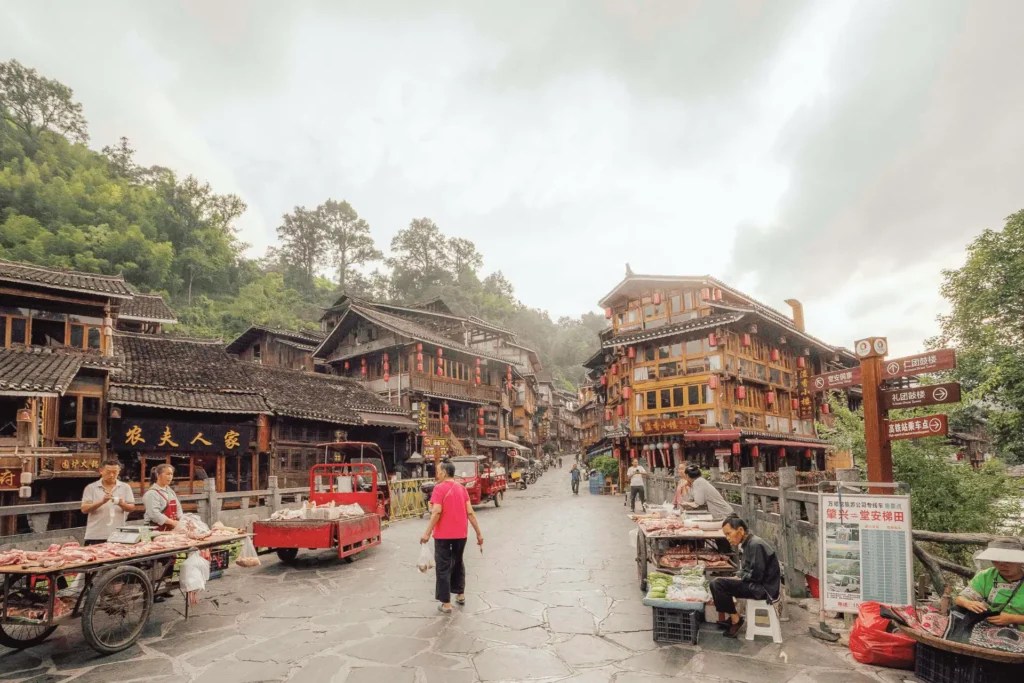
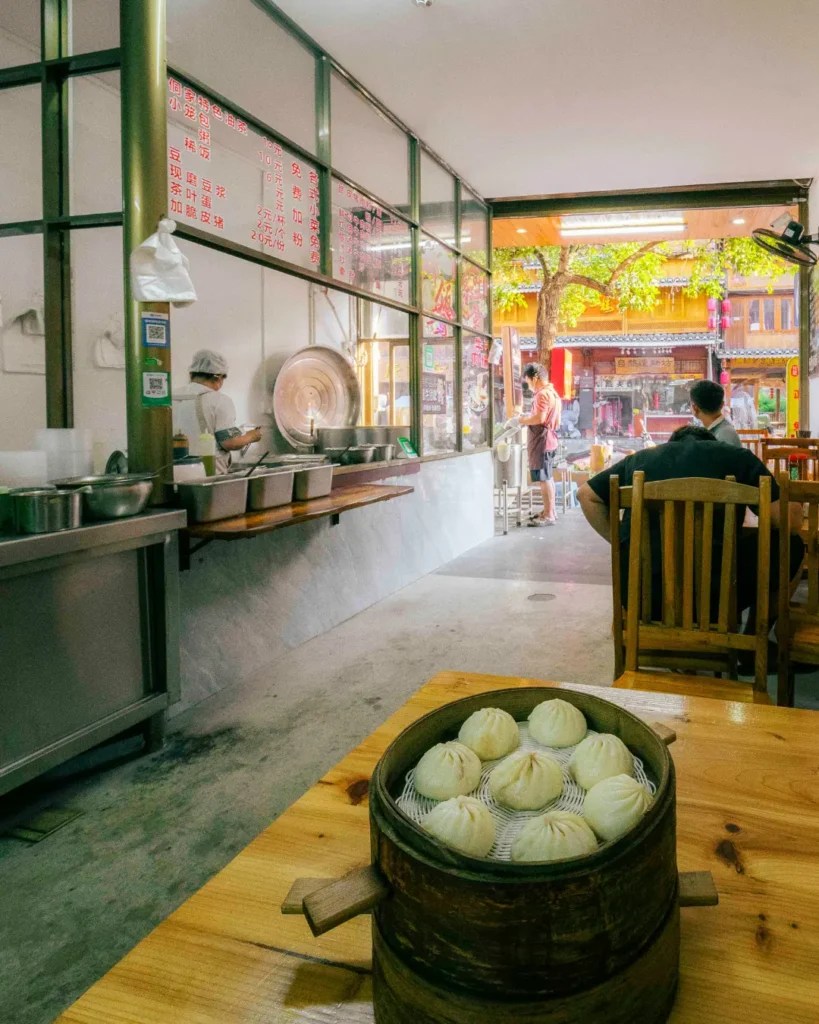
The next morning, we grabbed breakfast at a small local restaurant serving congee, noodles, and steamed buns. Steam was coming off the big cooking stoves, and people were sitting outside on little plastic stools eating breakfast.
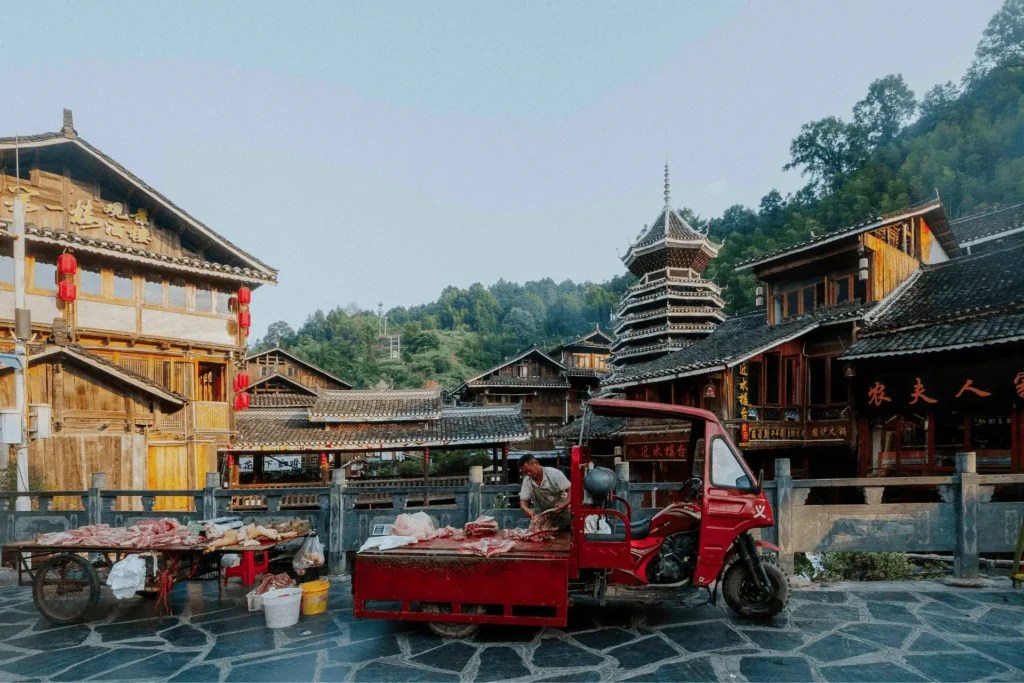
There were also street vendors selling vegetables, fruit, and meat around the village. It reminded me of visiting China when I was younger, when street vendors were much more common in cities across the country.
It was nice seeing that familiar side of China again.
How long should you spend in Zhaoxing? I’d recommend one-two nights if you’re planning to visit the nearby villages, too. That gives you time to explore the main streets, see an evening performance, and experience the village after dark.
2. Hiking From Zhaoxing to Tang’an Rice Terraces
One of the things we most wanted to do in Guizhou was get out into the countryside, so instead of taking the bus to Tang’an, we decided to hike there from Zhaoxing.
The two villages are about 6.5 km apart, with a trail passing through rice fields and smaller villages along the way. You can also take a bus, which takes around 20 minutes.
We checked out of our guesthouse, left our larger bags behind, packed a small overnight bag, and set off on foot.
What the Hike Is Like
The hike itself isn’t particularly difficult in terms of distance or elevation. The scenery was beautiful, and walking between the villages gave us a chance to see more of the surrounding countryside.
The biggest challenge was the summer weather.
We visited in August, and the heat and humidity made the walk much harder than we’d expected. What looked like a relatively easy hike on paper turned into a sweaty few hours outdoors.
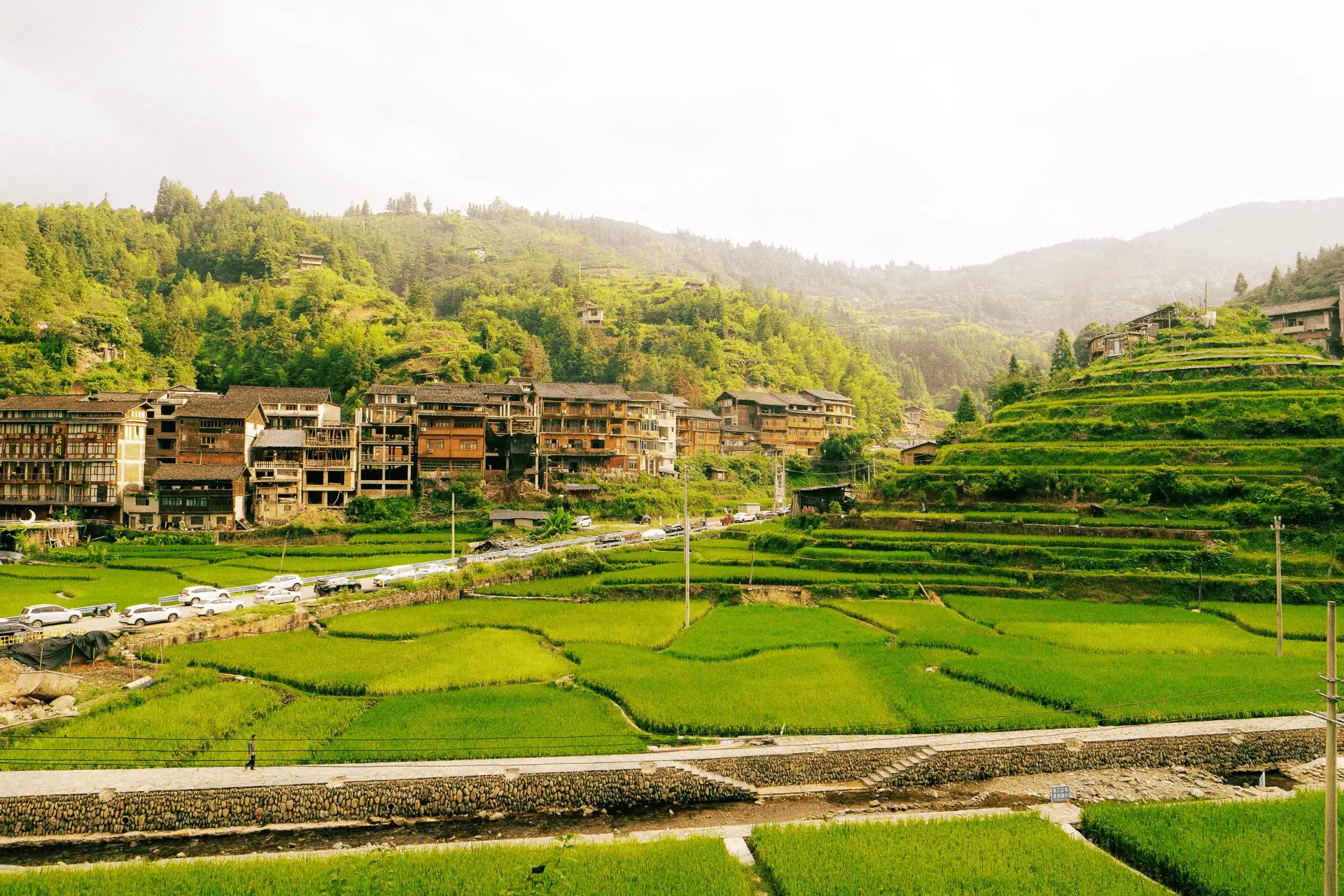
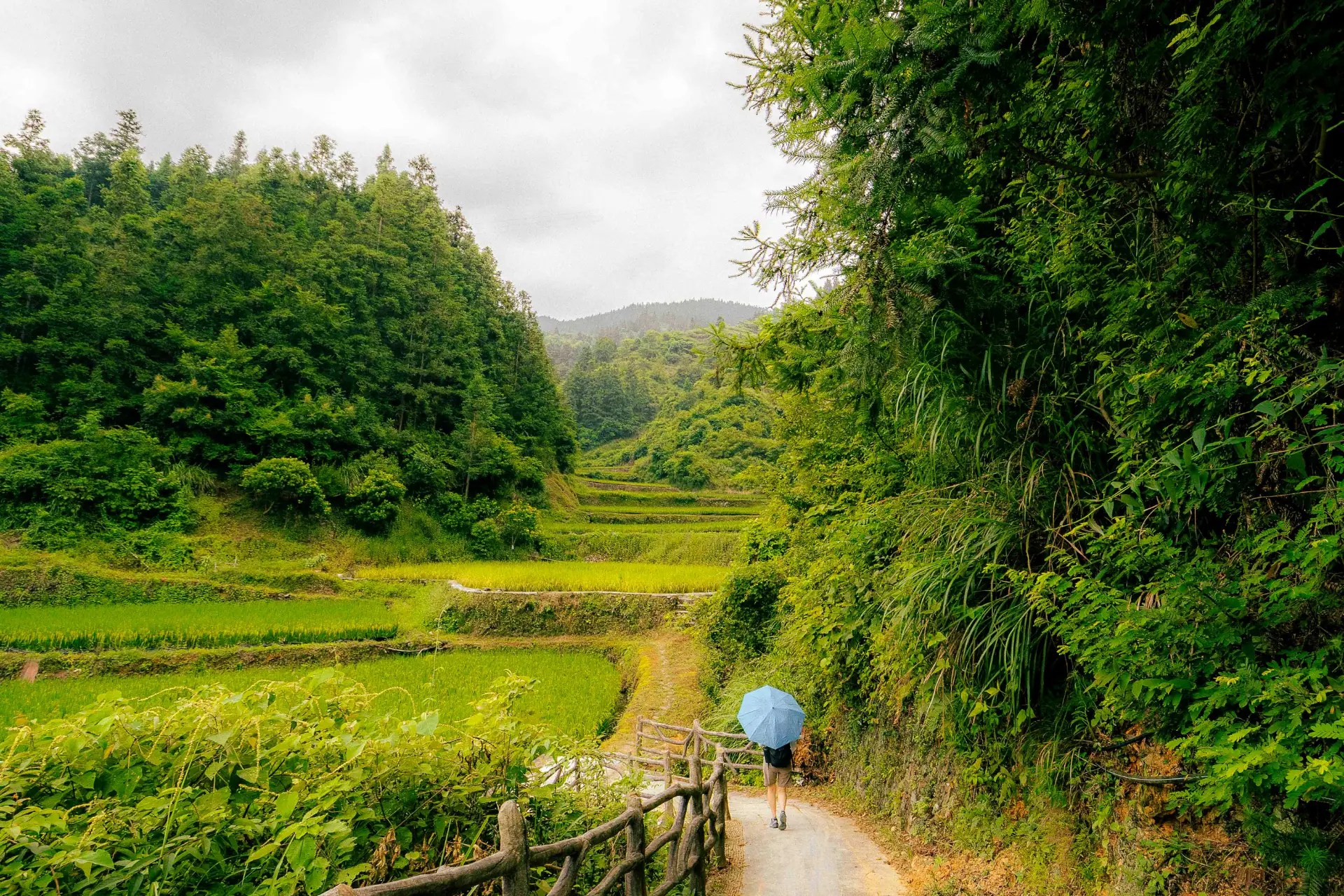
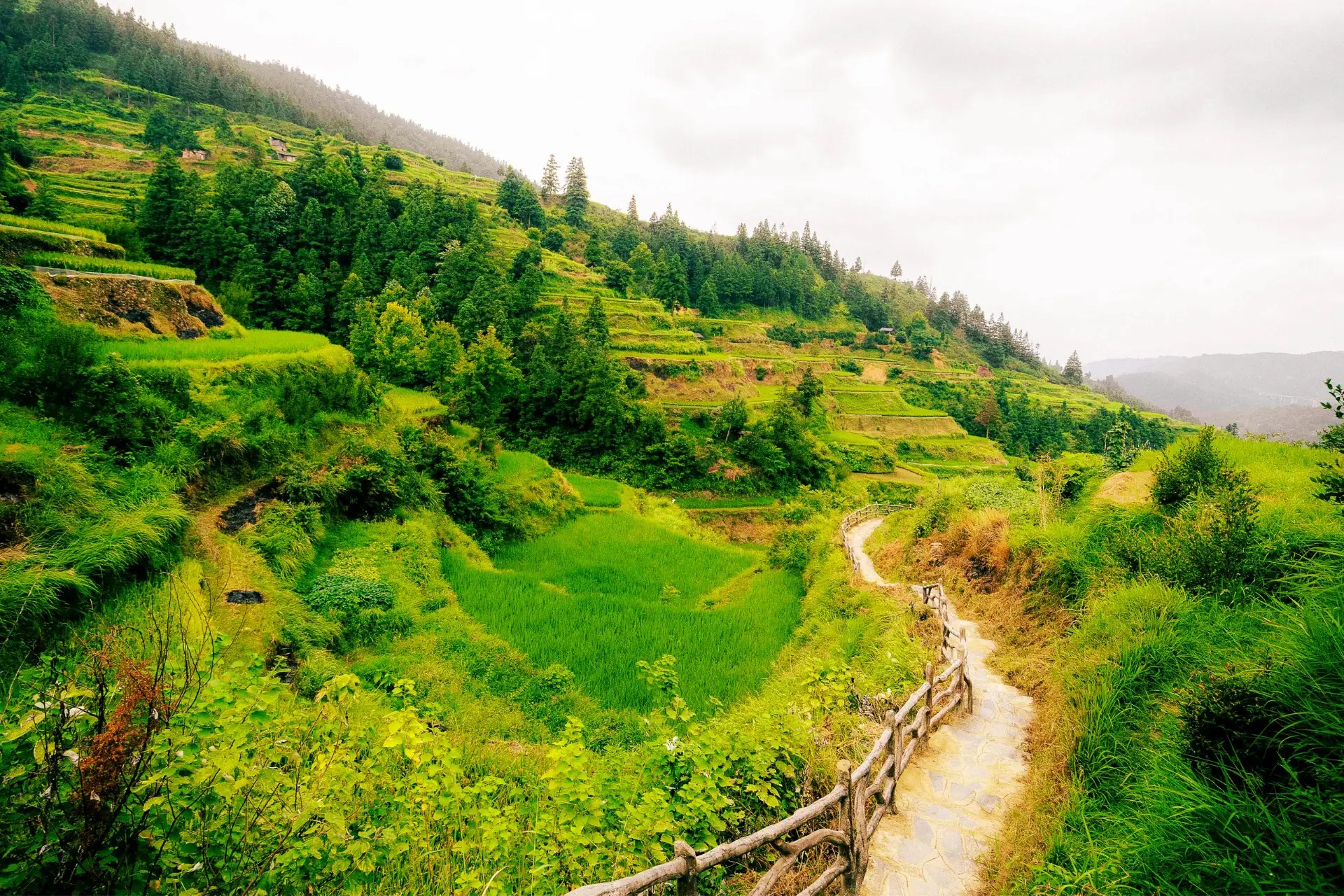
It took us a little over three hours to reach Tang’an.
Navigation was another challenge. We got lost trying to find our way through Xiage, a village that was much bigger than it looked on the map.
None of my mapping apps had a useful map of the village, and there was barely any signage. Even when we found a sign, it often led to another fork in the road without telling us where to go next.
We ended up asking locals for directions constantly. Some were helpful, while others gave us vague instructions or claimed they didn’t where the trail went- we realized here that either Chinese people suck at directions or they’re just not that foreigner friendly. We ran into similar situations several times throughout our trip, BUT some people were very helpful so it just depends on your luck.
Eventually, we made it through and continued toward Tang’an, but the village crossings definitely took longer than expected.
My advice: Download offline maps, bring plenty of water, and allow extra time for the hike. If you’re visiting in summer, I’d also recommend starting early to avoid the worst of the heat.
Arriving in Tang’an Dong Village
By the time we reached Tang’an, we were ready for lunch and a break from walking.
After grabbing some food and drinks, we called our guesthouse – Yunduan Xiaoyang Homestay. It was about a 10-minute drive from the main village center, and since it was already hot and we’d spent most of the day hiking, we were too tired to find it ourselves.
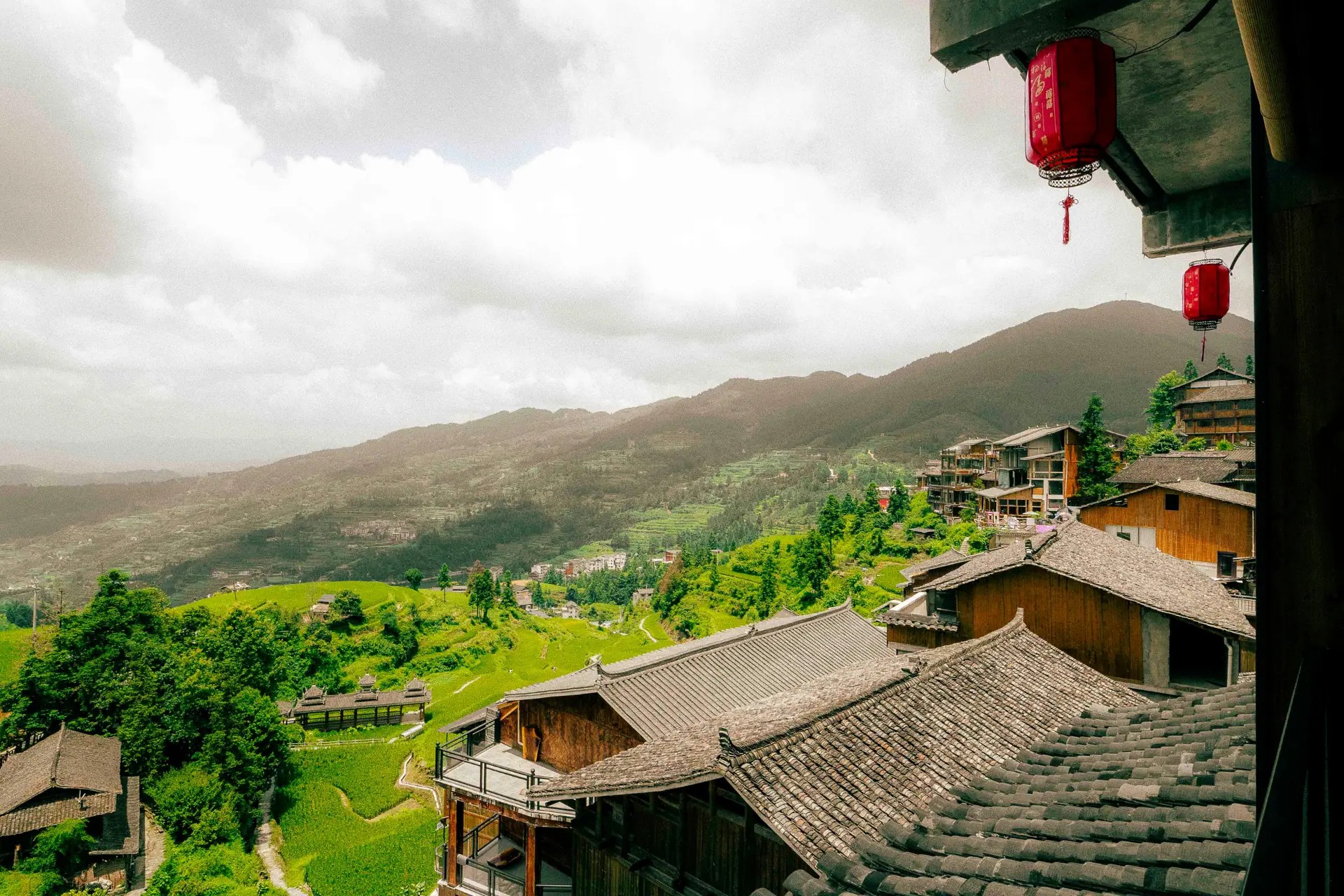
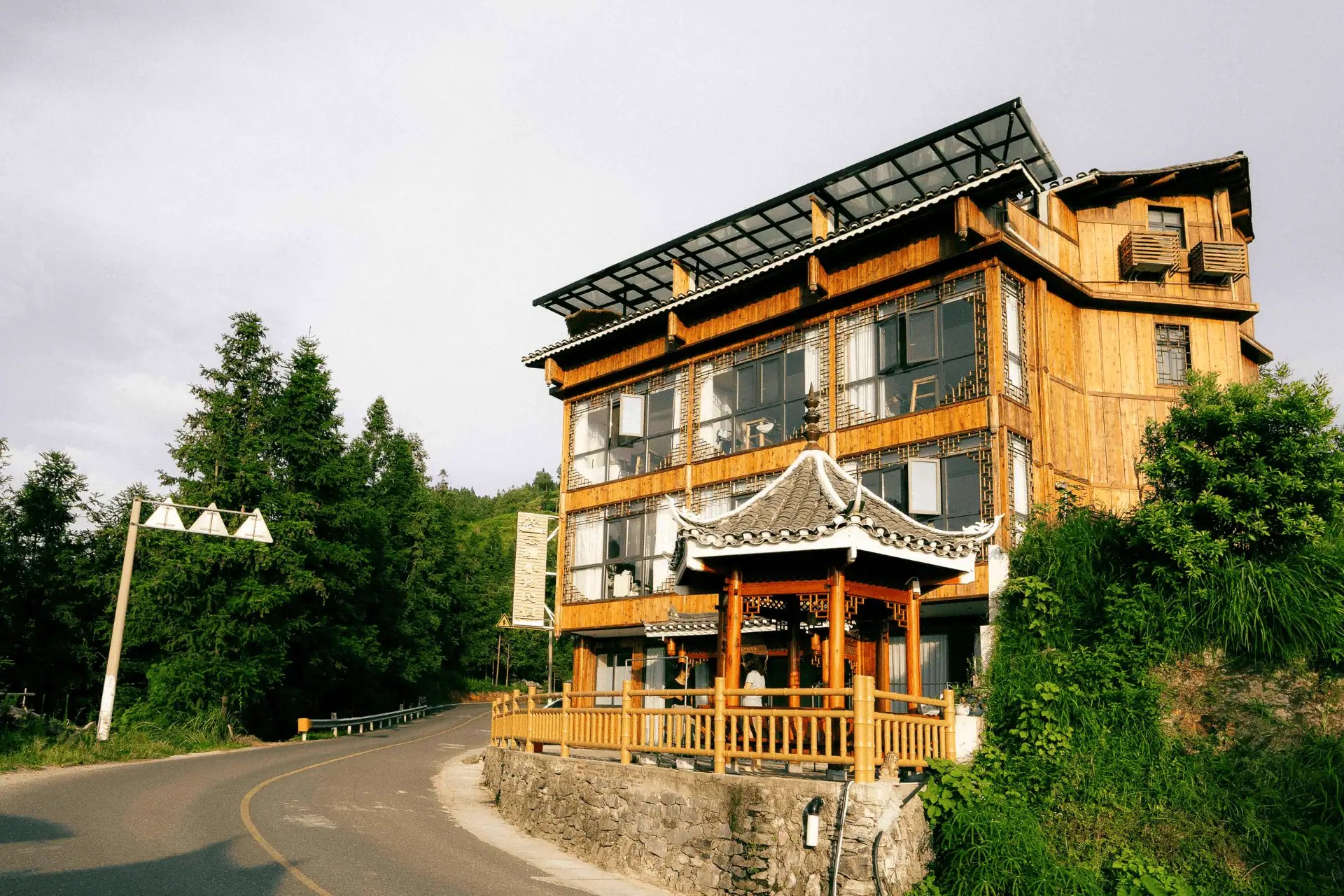
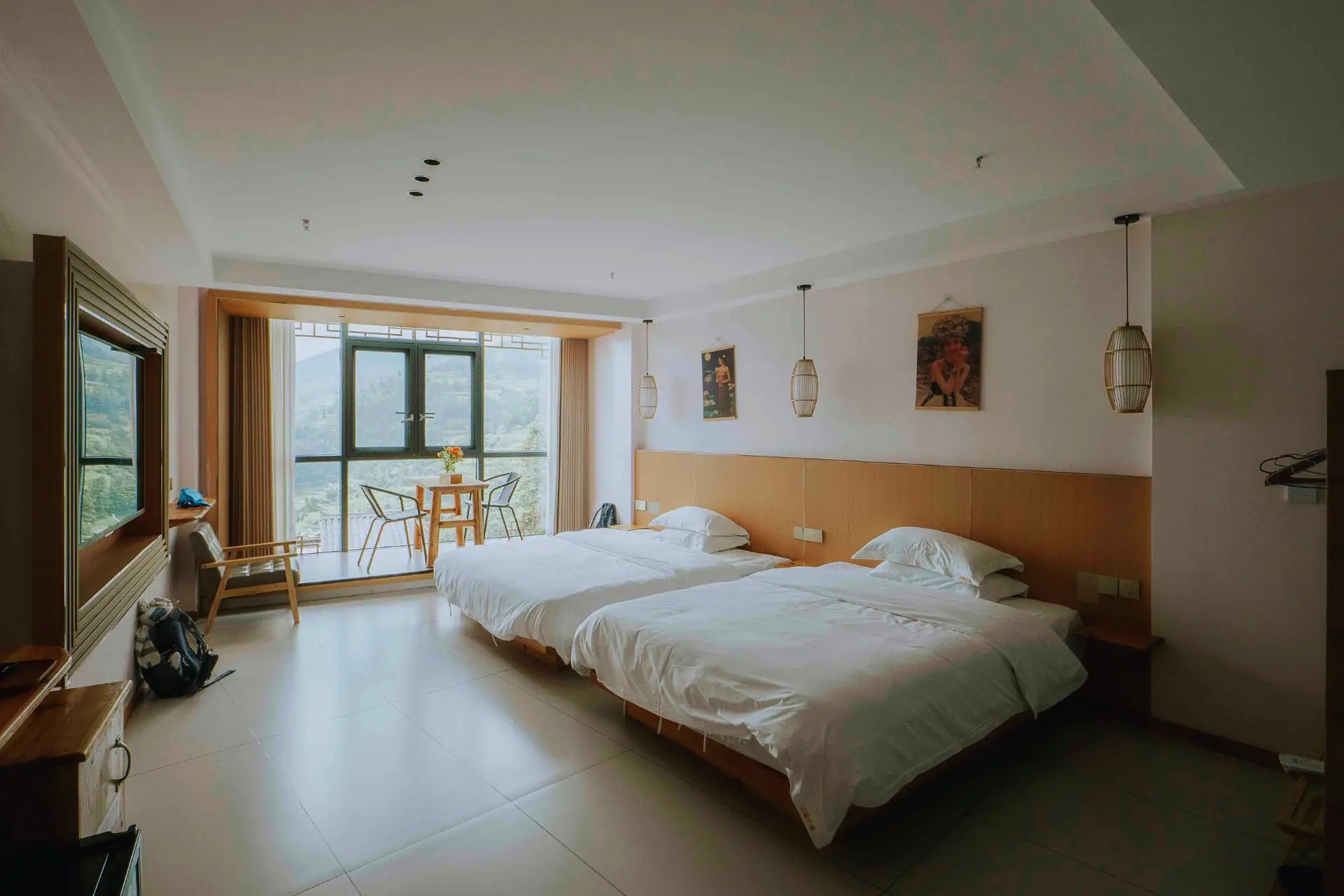
Luckily, the owners came to pick us up!
One thing that surprised me about staying in these smaller villages was how modern some of the guesthouses were. The rooms were generally comfortable, although the finishing details weren’t always perfect. You could tell some of the materials were cheaper, and things like plumbing weren’t always installed particularly well.
Still, these were relatively minor issues, and we had a comfortable stay.
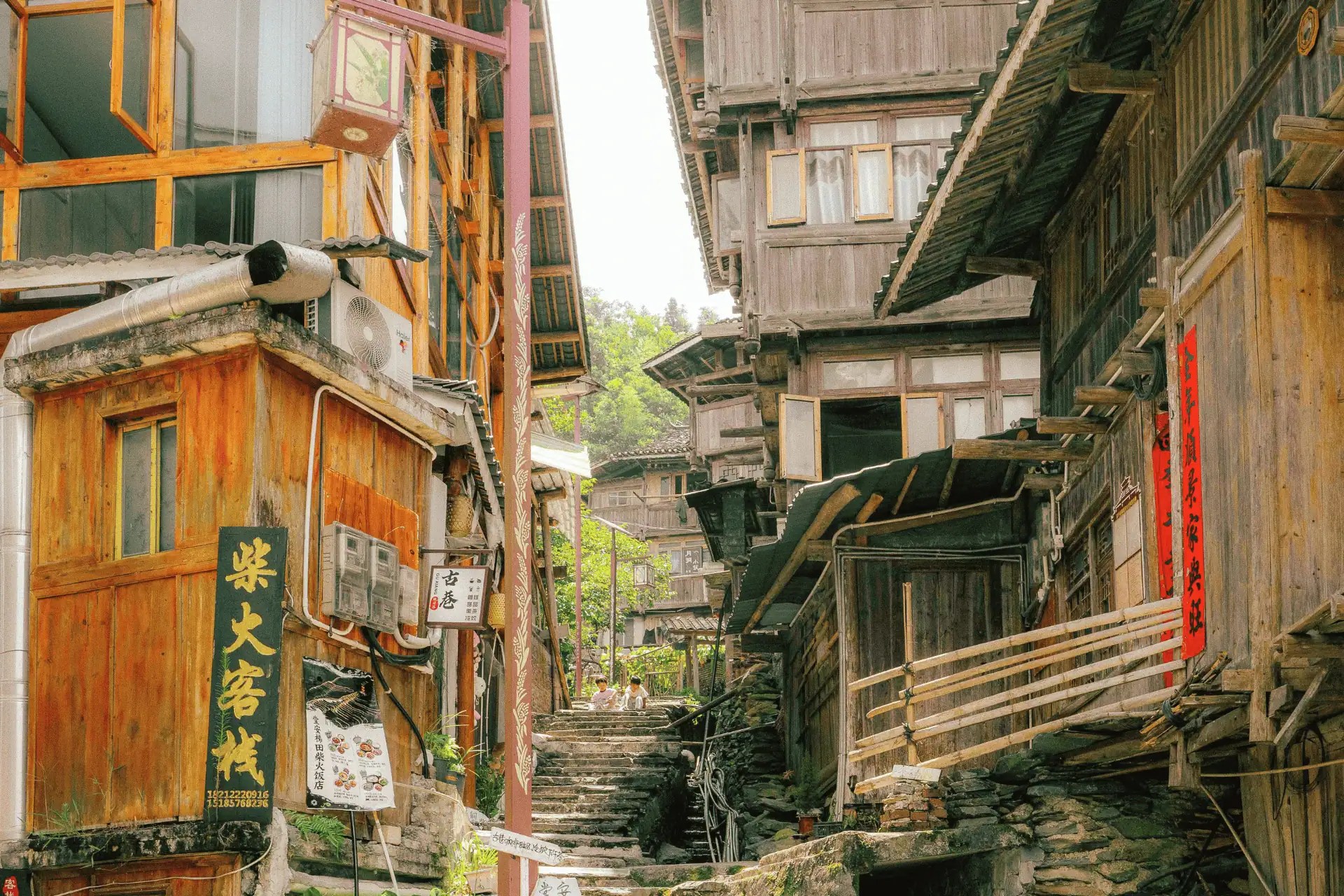
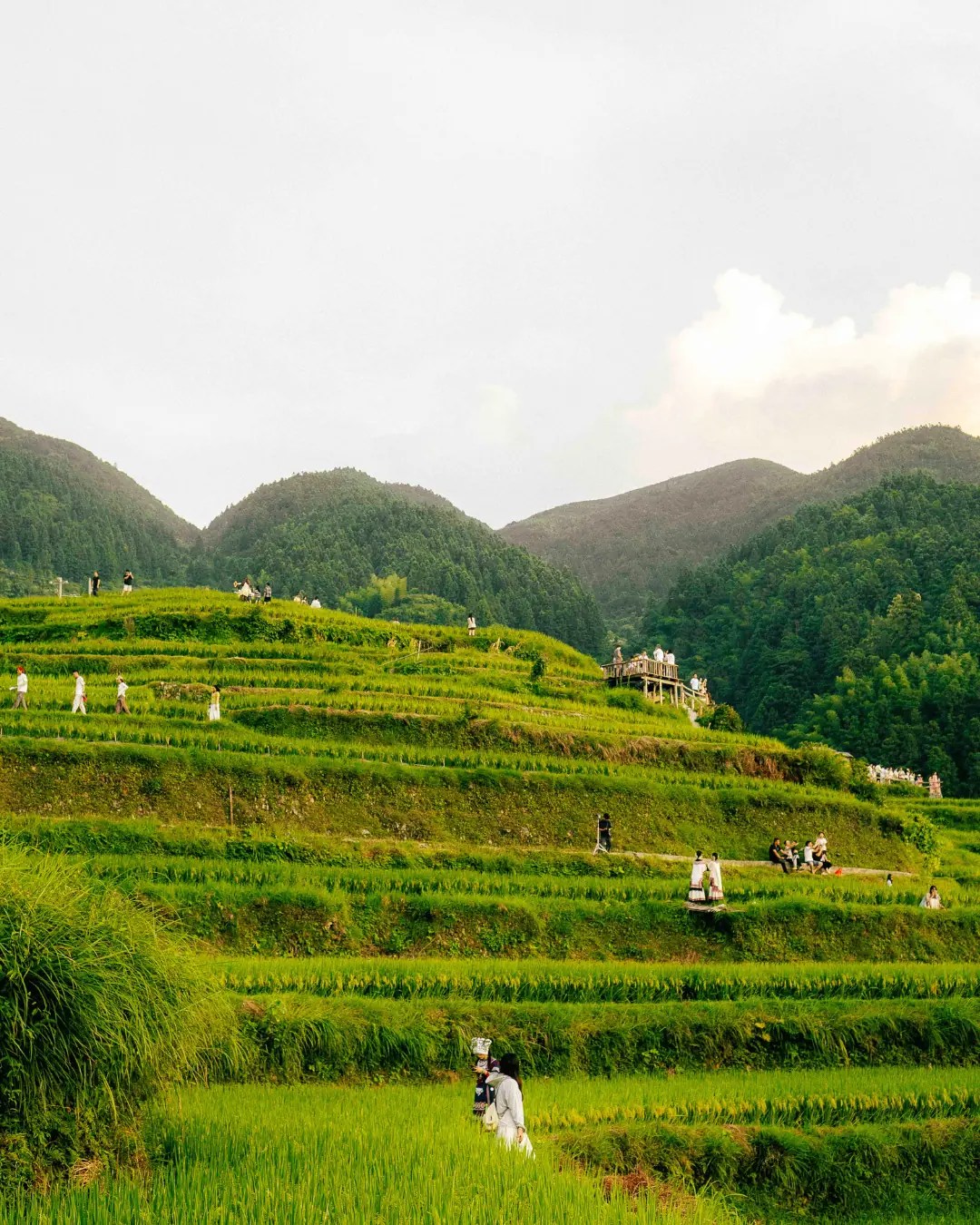
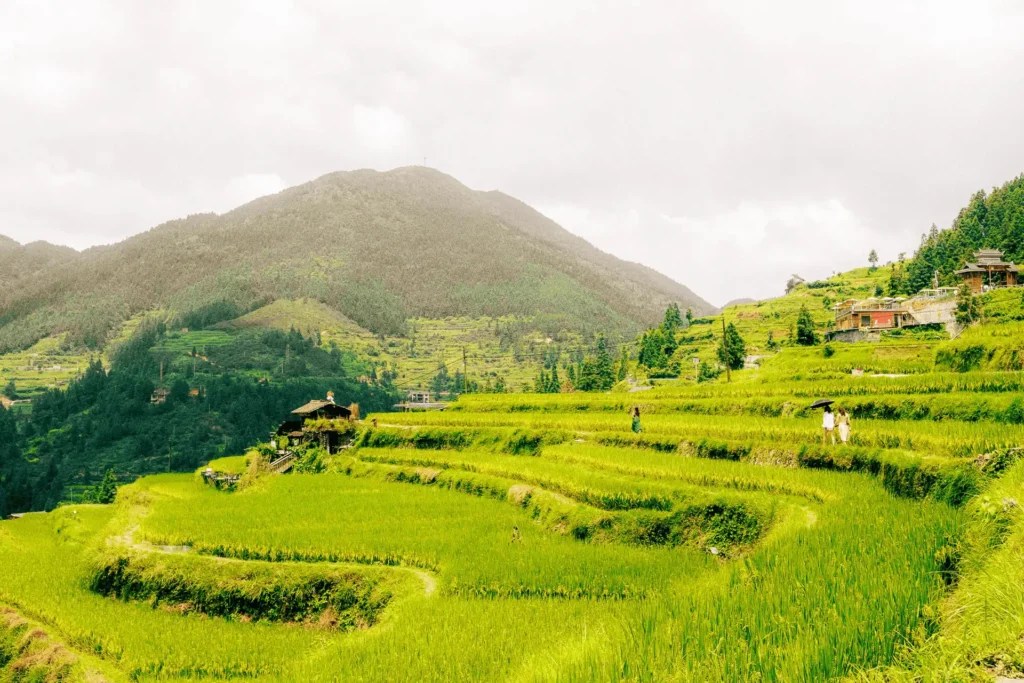
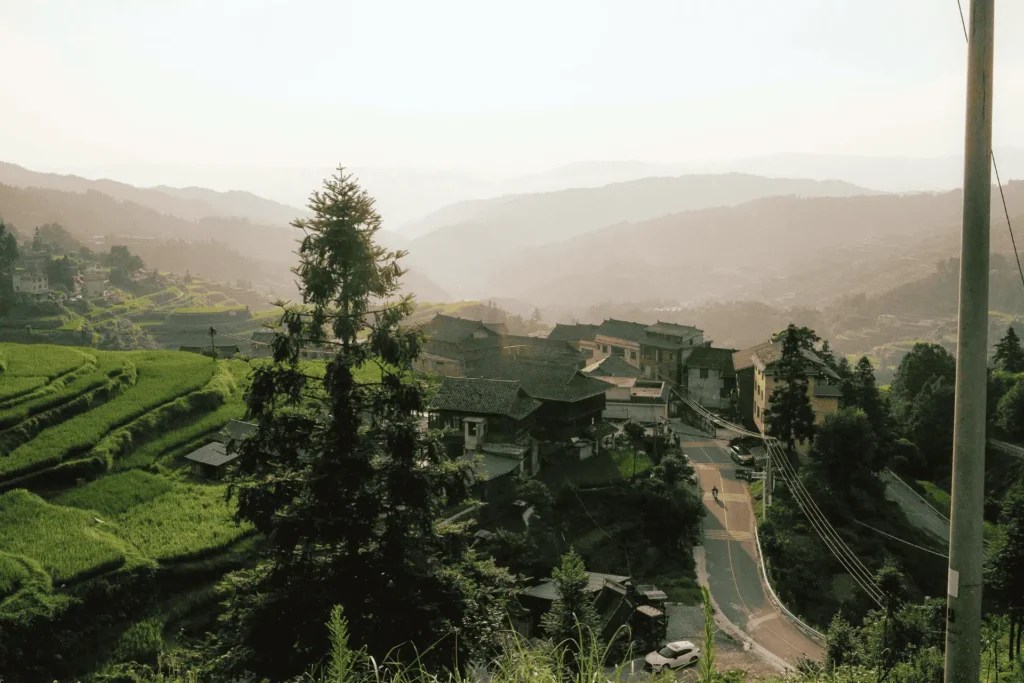
Tang’an felt much quieter than Zhaoxing. There were still tourists taking photos in the rice fields, but the village was smaller and more scenic, surrounded by green terraces and hills.
We had dinner at our guesthouse, where the owner’s wife cooked for us, then asked about nearby walking trails.
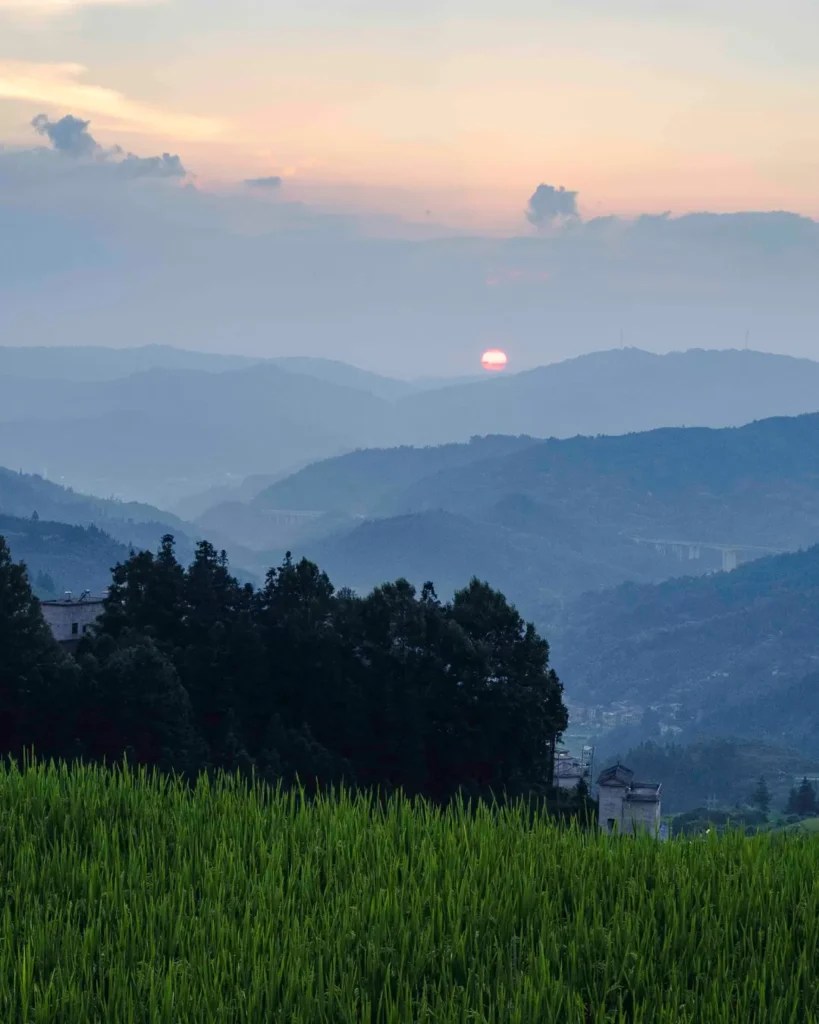
One path ran up the hill behind the guesthouse toward Tang’an. We followed it in the late afternoon and watched the sunset over the surrounding countryside.
After a sweaty day of hiking, it was exactly what we needed.

Is Tang’an Worth Visiting?
Absolutely! If you’re visiting Zhaoxing and enjoy hiking, I’d recommend spending a night in Tang’an rather than just taking a quick day trip.
You can also arrange a sunrise trip to a nearby viewpoint through local guesthouses. I went with my guesthouse and saw several other hotel vans there too.
After breakfast, we made our way back to Zhaoxing. Somehow, we managed to get even more lost passing through the villages on the return hike!
Eventually, we made it back to our first hotel, took a nap, and spent the rest of the evening relaxing.
Despite the navigation struggles and summer heat, I really enjoyed seeing the rice terraces and countryside between the villages. I’d just try to visit outside the hottest part of summer next time.
3. Longtang Miao Village: My Favorite Place in Guizhou
Getting From Zhaoxing to Longtang
After exploring the Dong villages, we continued north to visit the Miao villages.
Getting to Longtang involved a few different connections. We took the village bus out of Zhaoxing, followed by a larger public bus to Congjiang Railway Station. From there, we caught a train toward Kaili South, transferring at Guiyang East along the way.
The train journey took around three hours, depending on the transfer schedule.
Since we were traveling in August, we booked our train tickets in advance. The more convenient departure times can sell out, so it’s worth planning ahead.
Once we arrived at Kaili South station, we had to speak with a few drivers outside to find someone willing to take us directly to Longtang.
There may be buses that get you closer to the village, but with our luggage, we decided a taxi would be easier. The drive took around 50 minutes and cost us 160 RMB.
Getting around the smaller villages in Guizhou definitely took more planning than traveling between major cities. As foreigners, we also ran into some trouble using Didi, China’s ride-hailing app, so we often had to rely on local taxis.
Why I Loved Longtang Village
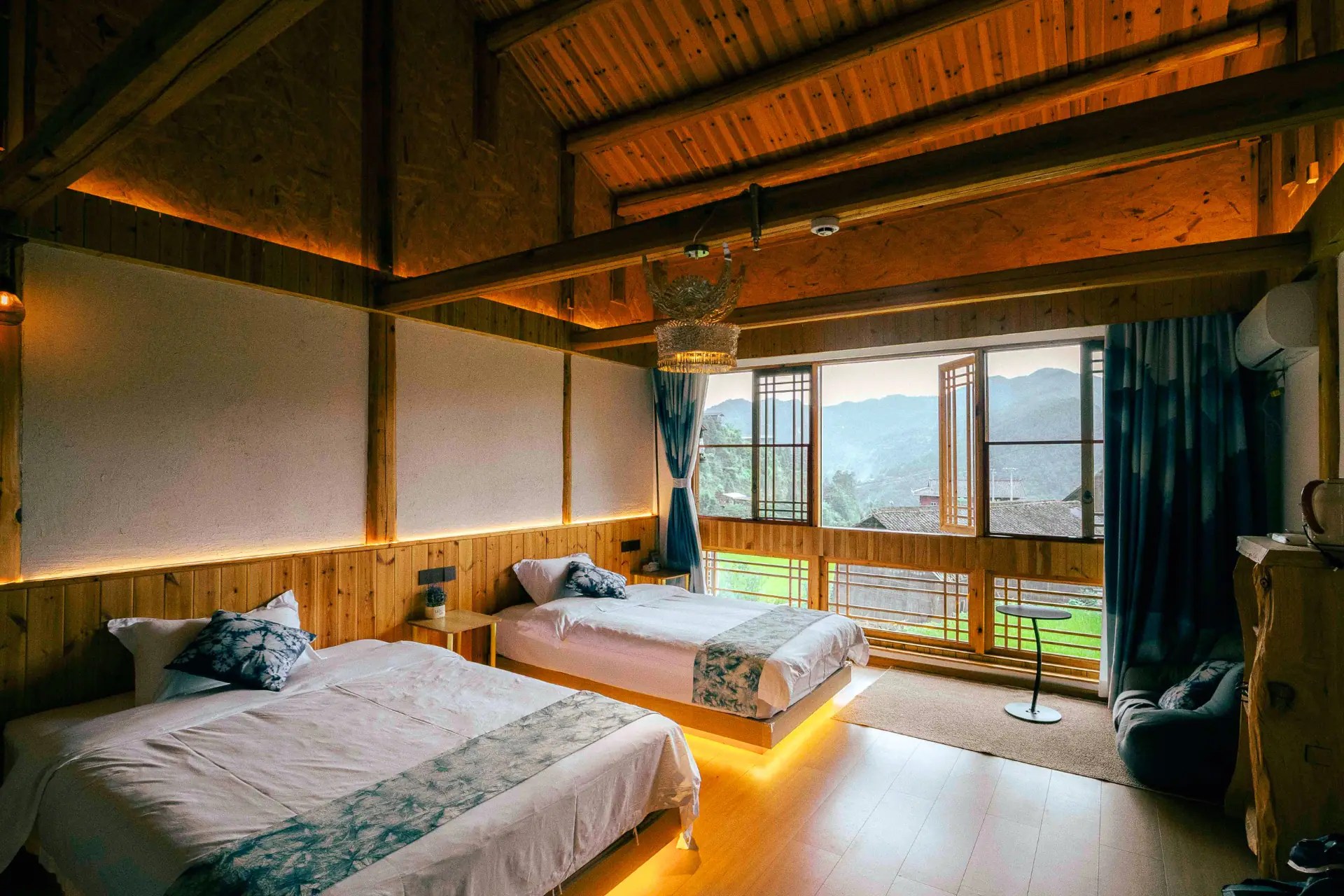
We booked two nights in Longtang – Mt. Ryosan Riin Lodge – to give ourselves a break from all the moving around, and I’m so glad we did.
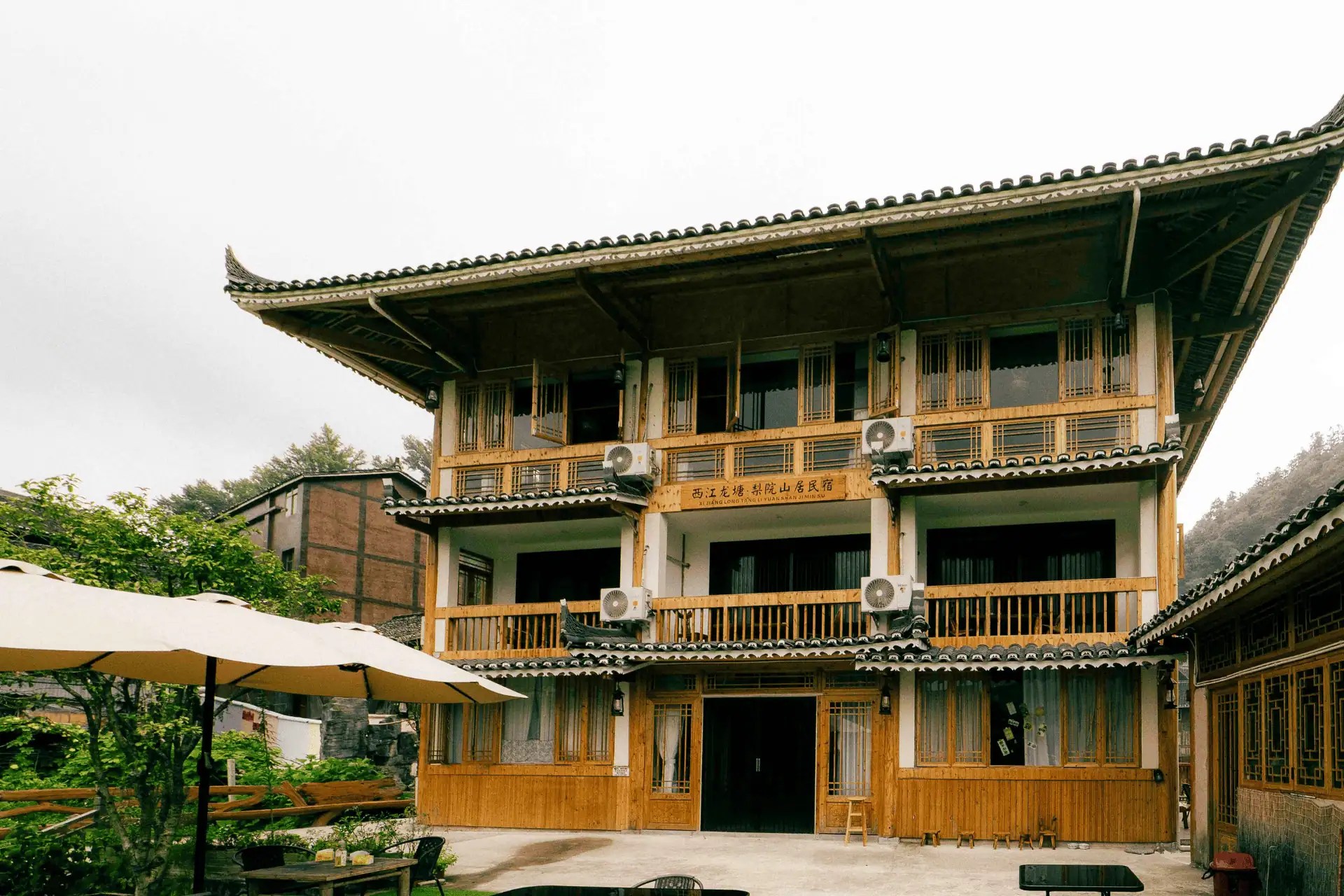
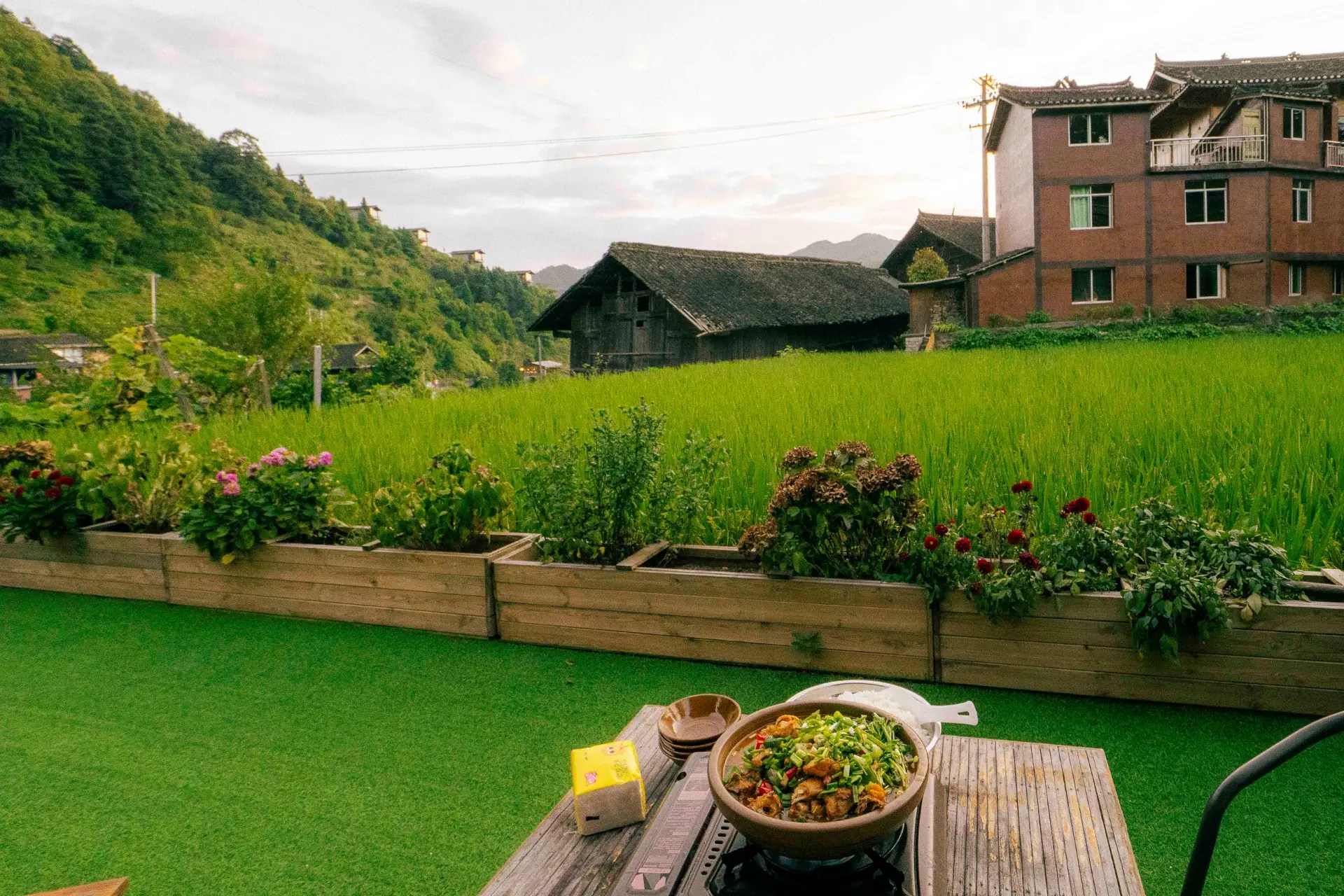
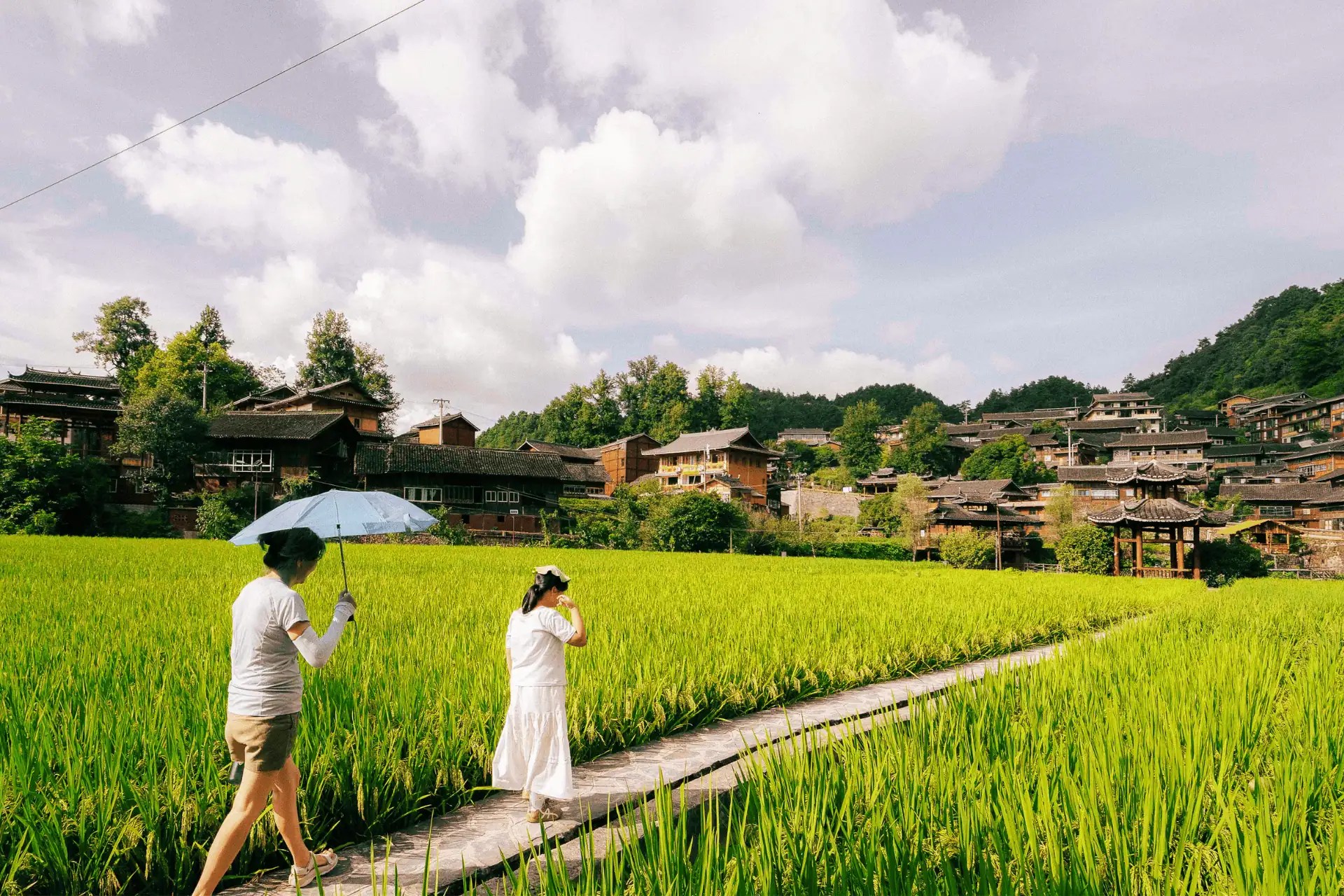
The village is relatively small, with lakes, rice fields, and paths winding through the countryside. We saw local farmers working across the terraces, birds flying overhead, and kids running around the streets during their summer break.
It was exactly the kind of place we’d hoped to find when we decided to visit Guizhou.
There wasn’t a huge list of attractions to check off, and that was part of the appeal. We spent our time wandering through the village, exploring the rice fields, and enjoying a slower pace after several busy travel days.
Compared with Zhaoxing and Xijiang, Longtang felt much less commercialized. There were still guesthouses and activities for visitors, but the village didn’t feel as focused on tourism.
Instead, we got to see more of everyday life in the countryside.
Trying Traditional Handicrafts and Talking to Local Kids
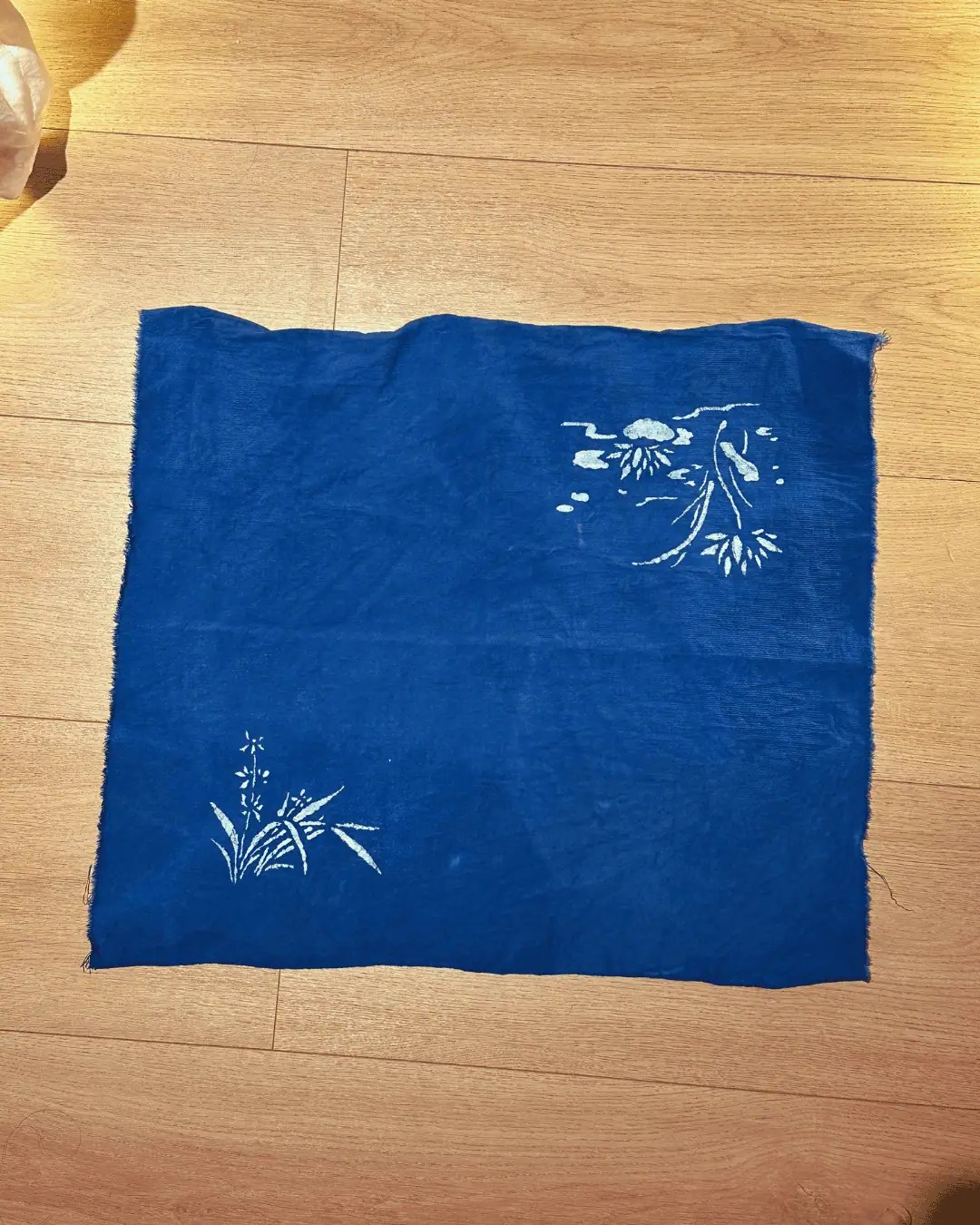
Longtang is also a great place to try local arts and crafts. Depending on what’s available, you can take part in activities like indigo dyeing, woodworking, jewelry making, and fishing in the rice paddies.
We decided to try a DIY dyeing activity, where we ended up chatting with some of the local kids.
We talked with the 13-year-old daughter of our guesthouse owner and two girls, aged 12 and 9, whose family ran a nearby shop.
One of the things that surprised me most was hearing about their school lives.
We’d already learned that some children from smaller villages attend boarding schools in larger cities during the week, returning home on weekends. The girls we met shared similar experiences.
One of them told us she regularly stayed up until midnight doing homework. When we talked about having time to play, she said there wasn’t time for that and joked that if you played now, your life was over.
Schools are so competitive that by the time they reach middle school, their grades determine if they can apply for university or go straight into trade school. I wasn’t expecting to have that kind of conversation during our visit, and it really stuck with me.
It’s easy to visit traditional villages and focus on the architecture, scenery, and cultural activities. But talking with the people who live there gives you a different perspective on everyday life, especially for the younger generation.
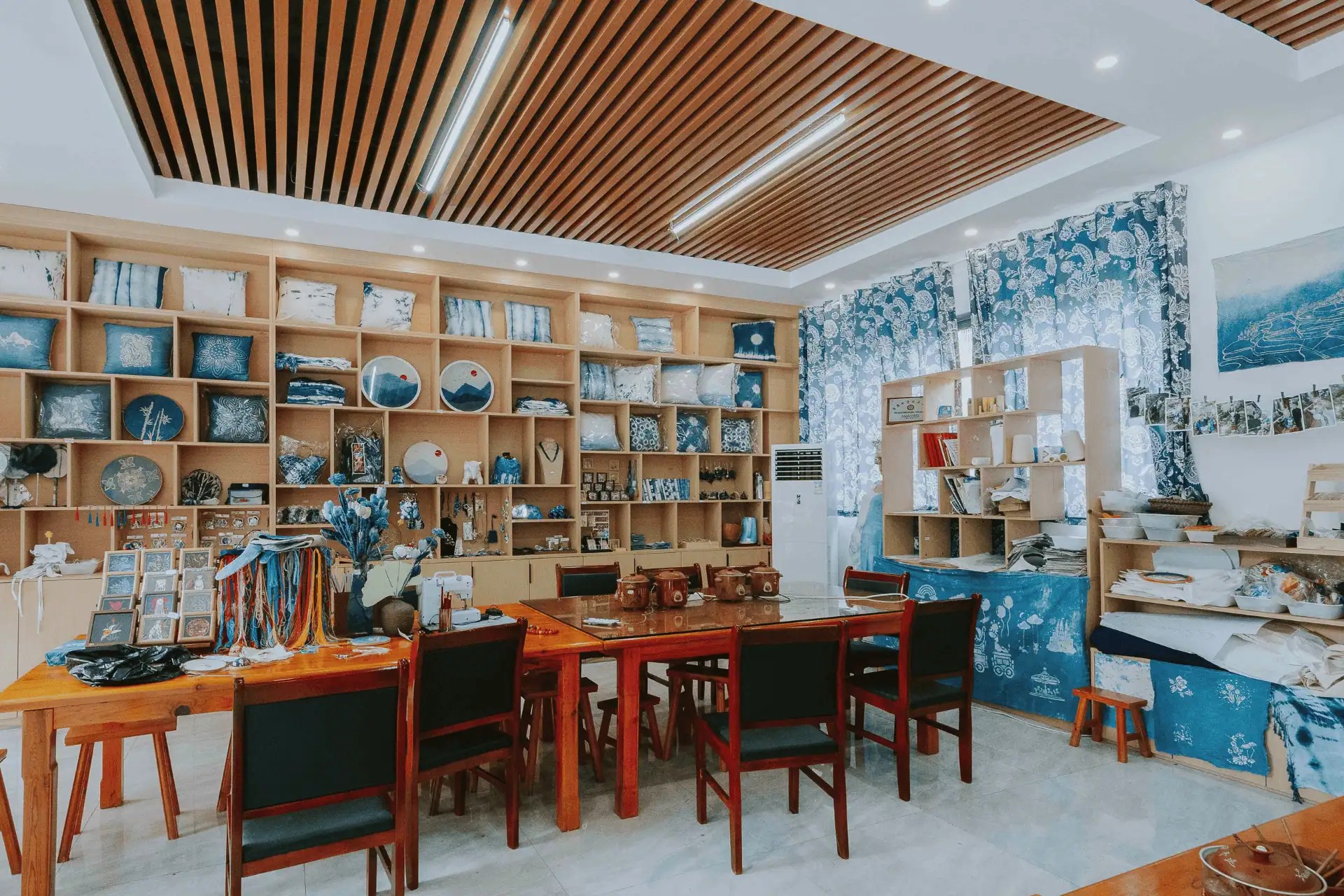
Exploring Longtang’s Rice Fields and Hills

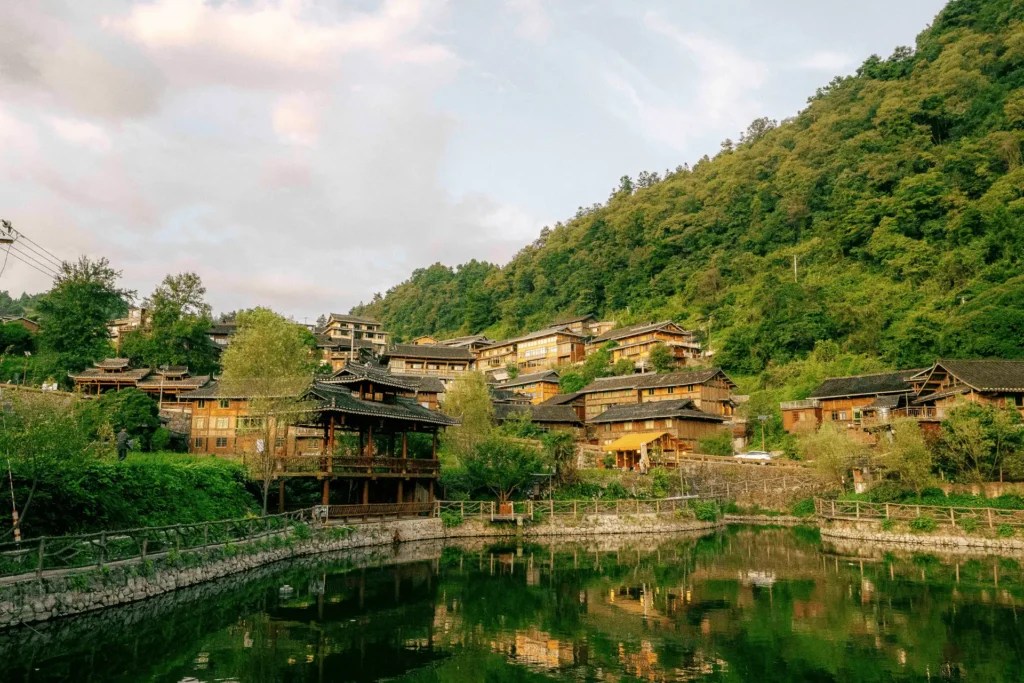
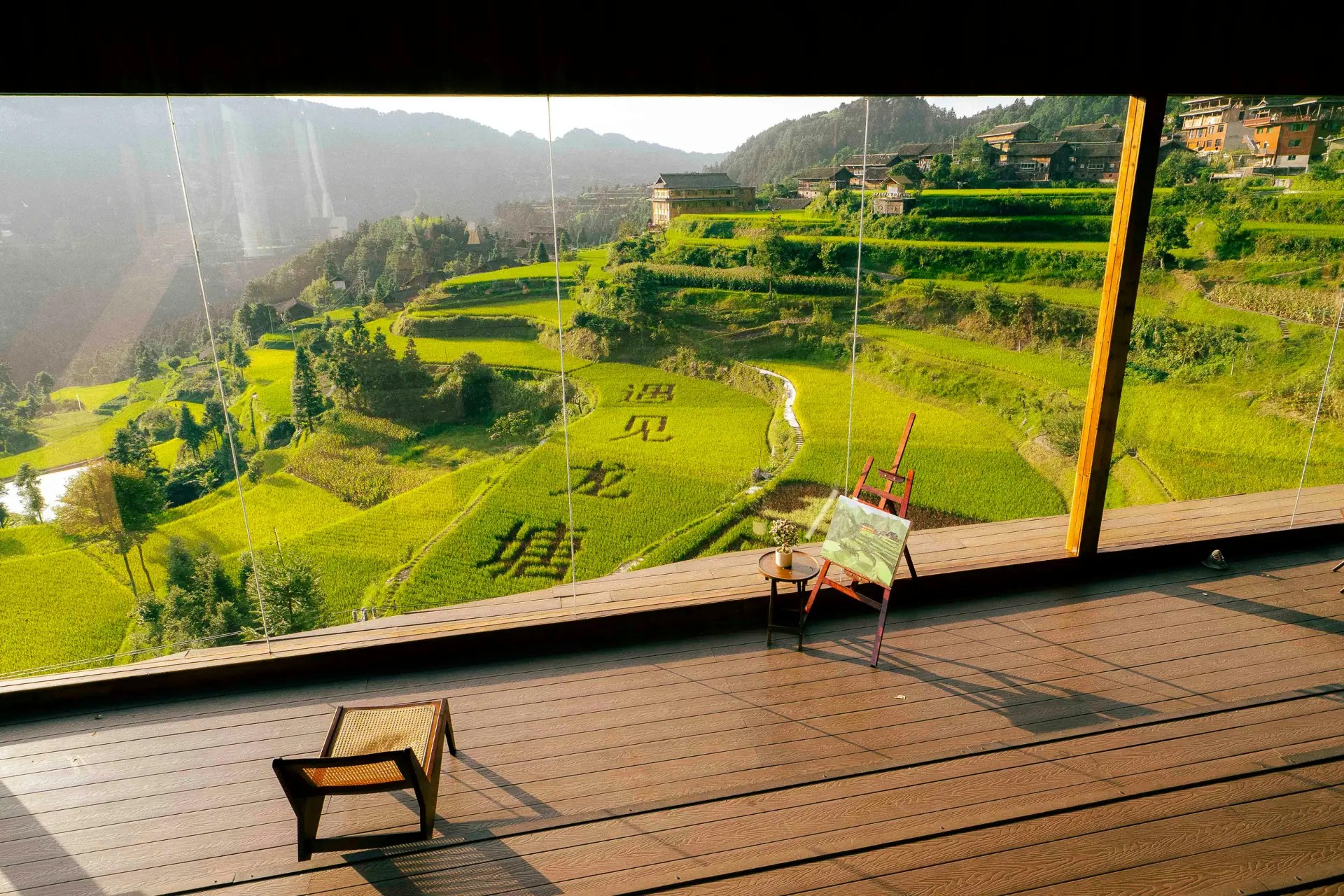
Aside from the handicrafts, one of my favorite things about Longtang was simply being outside.
There are little paths winding through the rice fields, roads connecting different parts of the village, and hills with views across the valley.
We also found a cute coffee shop with floor-to-ceiling windows overlooking the rice terraces. It was a nice place to stop for a drink and enjoy the scenery.
If you hike up the nearby hill, you’ll also find modern hotels perched above the village. Their rooftops offer panoramic views across the valley and rice fields. They’re part of a village revitalization program aimed at bringing more visitors to smaller villages while preserving their local culture.
It’s the kind of place where you can spend a few hours wandering around without much of a plan, stopping wherever catches your eye.
If you’re looking for a quieter side of Guizhou, Longtang was my favorite village of the trip. I loved the countryside, the slower pace, and the chance to spend time with locals without feeling like we were constantly moving between tourist attractions.
4. Day Trip to Baiyan Village and Xiangshuiyan Waterfall
Since we needed to take a taxi from Longtang to Xijiang anyway, we decided to turn the journey into a little day trip and visit a few other spots in the mountains along the way.
We hired a local driver who took us up into the mountains to Baiyan Village, and it was exactly the change of pace we were looking for. The village is about a 1–2 hour drive through the mountains, which means it gets far fewer tourists than the more popular villages in the region.
Baiyan is nestled among layers of green rice terraces, with traditional village houses surrounded by fields that stretch across the hillsides. It was such a beautiful area, and a nice contrast to the busier tourist villages we’d visited earlier in the week.
We continued further into the mountains and stopped at a viewpoint overlooking Xiangshuiyan Waterfall in the distance. The waterfall itself was nice to see, but honestly, my favorite part was just how quiet everything was. There was nothing but the wind blowing through the rice fields and a sea of clouds rolling over the surrounding hills.
After spending the morning exploring the mountains, we continued to Xijiang and arrived around 5 p.m., giving us time to check in and settle into our hotel before exploring the village.
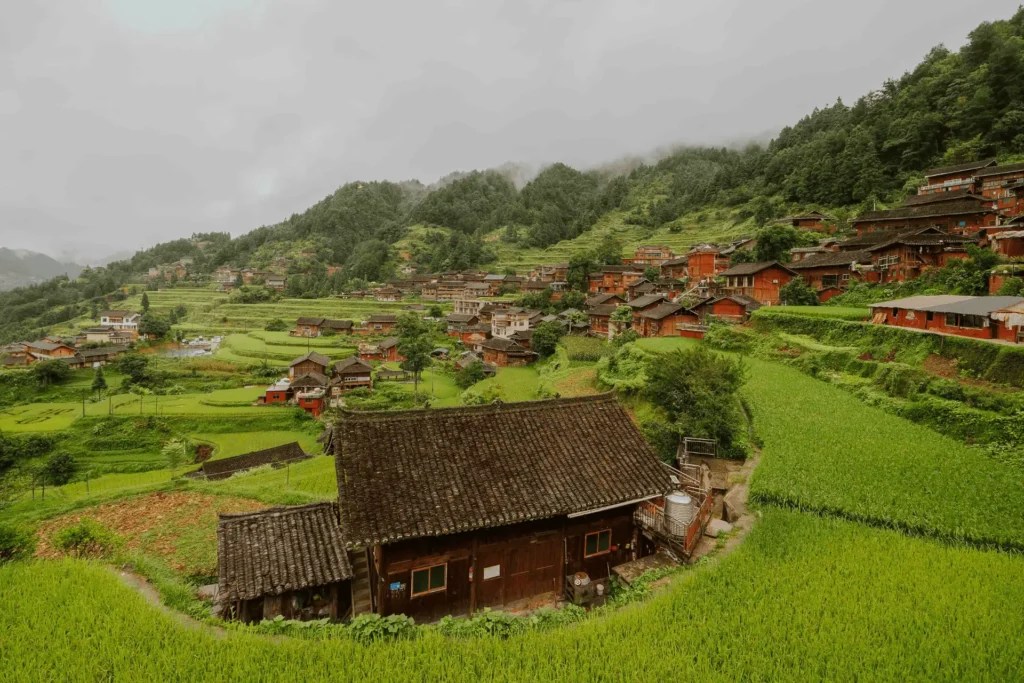
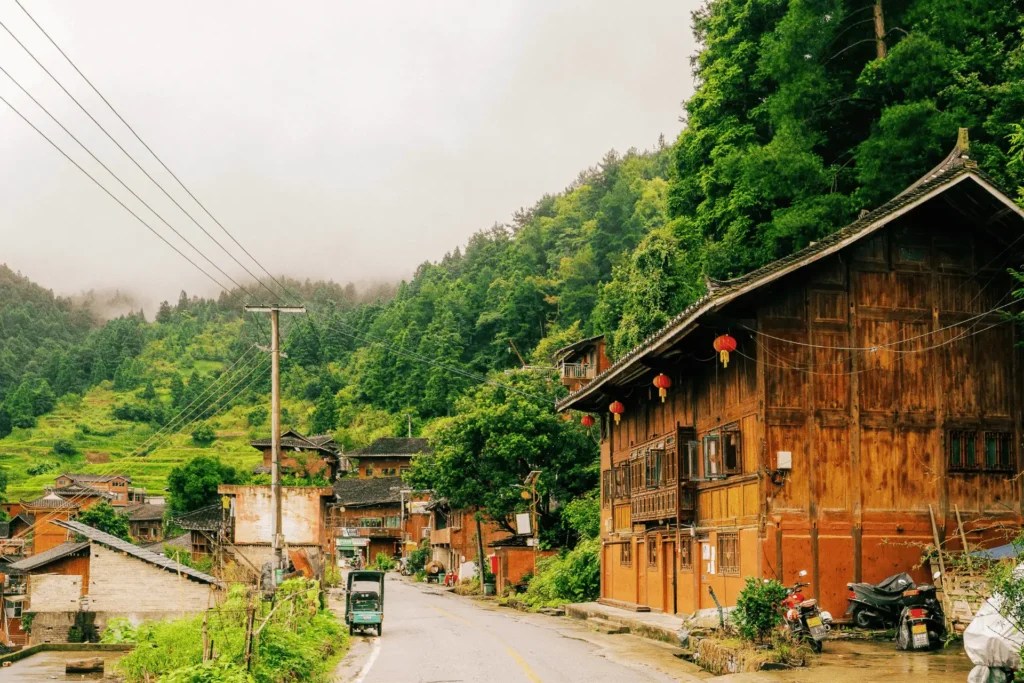
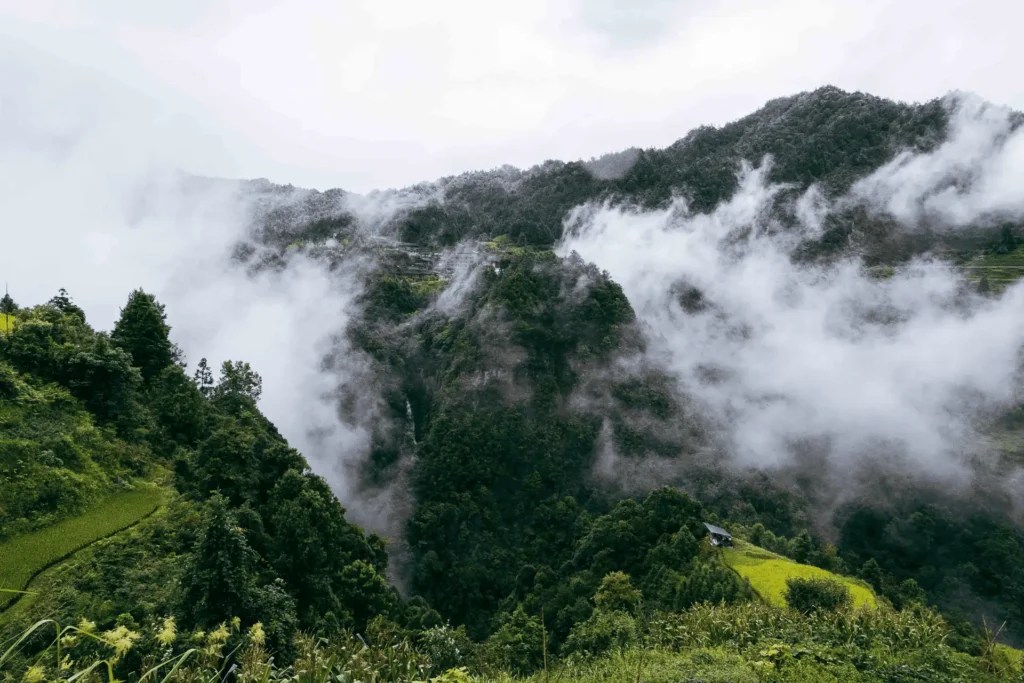
If you’re traveling between Longtang and Xijiang, I’d recommend asking your guesthouse about arranging a local driver and making a few stops around the area. It was a great way to see more of Guizhou’s countryside without having to plan a separate day trip.
5. Xijiang Miao Village: Traditional Houses and Night Views
Arriving in Xijiang
After two nights in Longtang, we moved on to Xijiang, one of China’s largest Miao villages.
After the peaceful countryside we’d just spent a couple of days exploring, arriving in Xijiang was a bit of a shock.
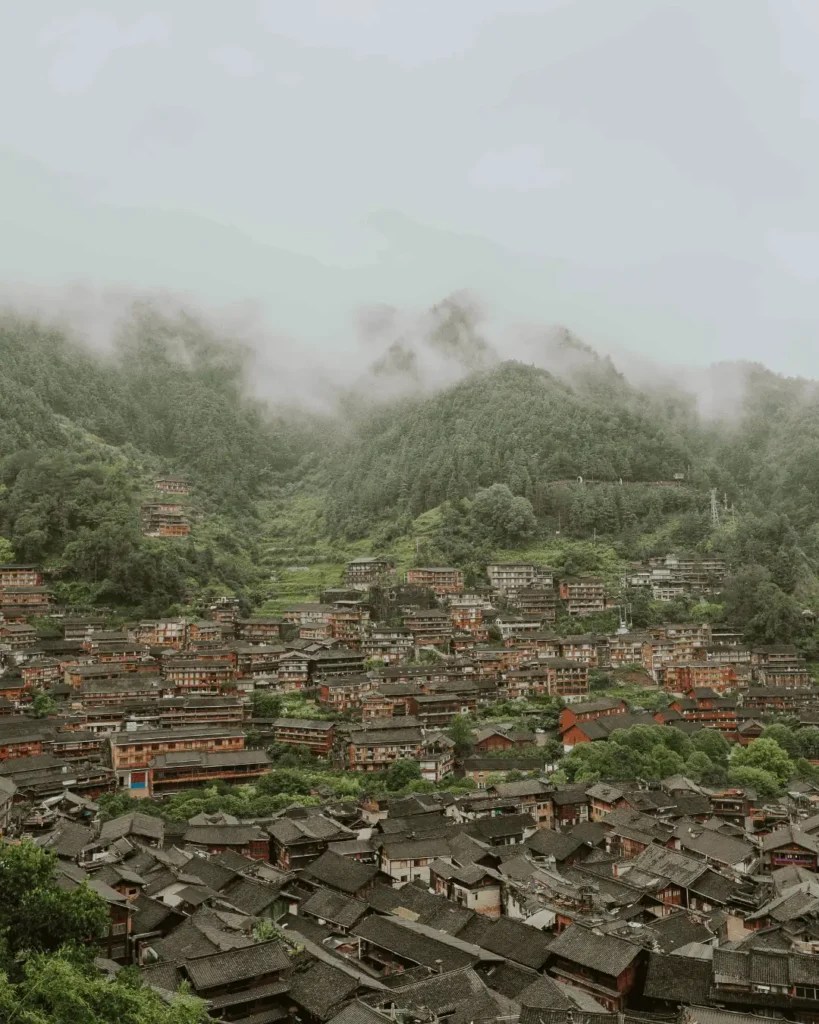
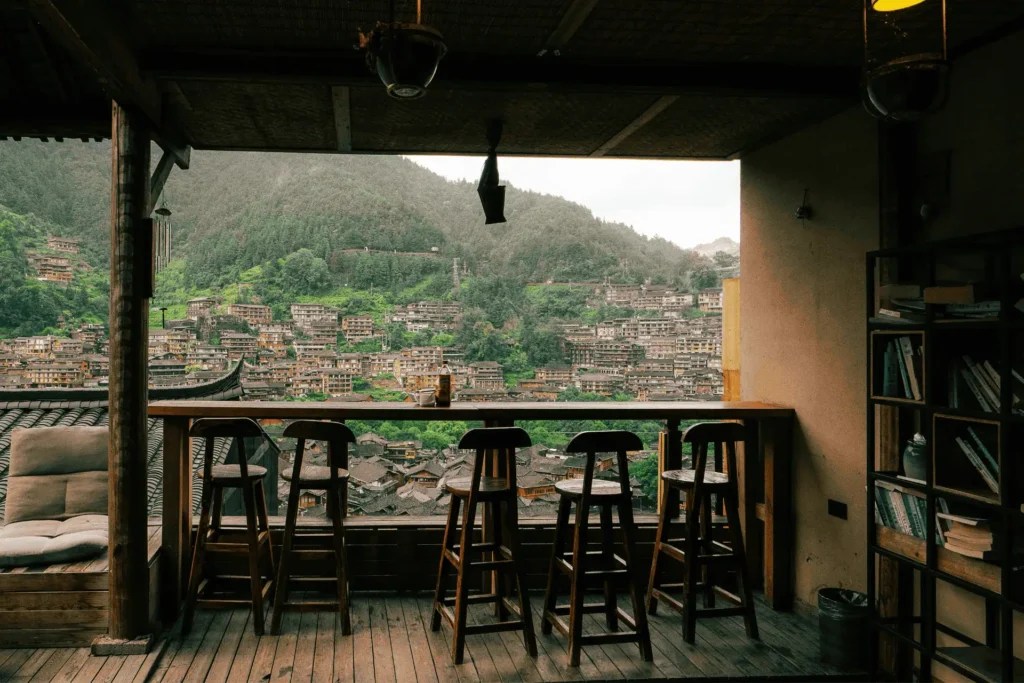
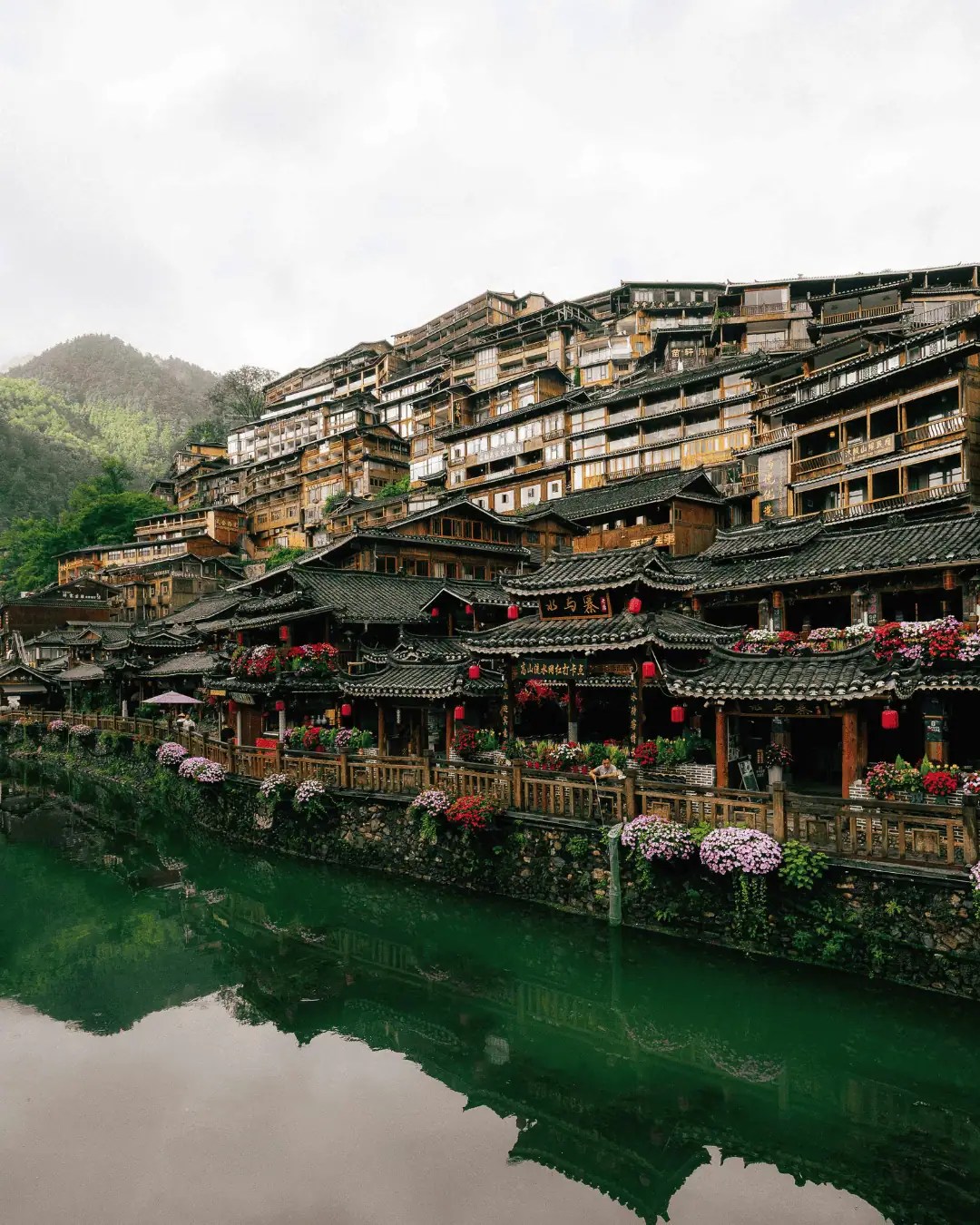
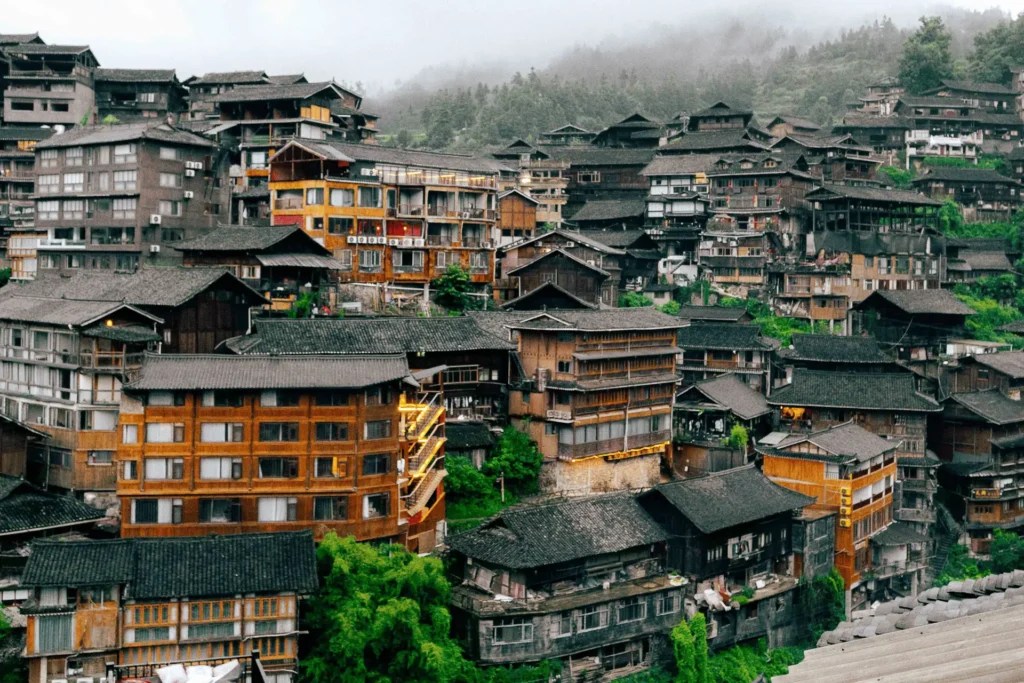
The village stretches across an entire valley, with traditional-style wooden houses stacked along the hillsides. I’d seen photos beforehand, but the sheer scale of it was still impressive in person.
There were houses everywhere, stairs climbing up and down the hills, and crowds moving through the main streets. Its almost like a village version of Chongqing – the infamous cyperpunk city in China.
Because the village is so large, there are a few ways to get around, including a cable car and a sightseeing bus that runs from the bottom of the village all the way to the top. The sightseeing bus is included with your entrance ticket and offers panoramic views across the valley. I’d recommend taking it at night when the hillsides light up with thousands of houses.
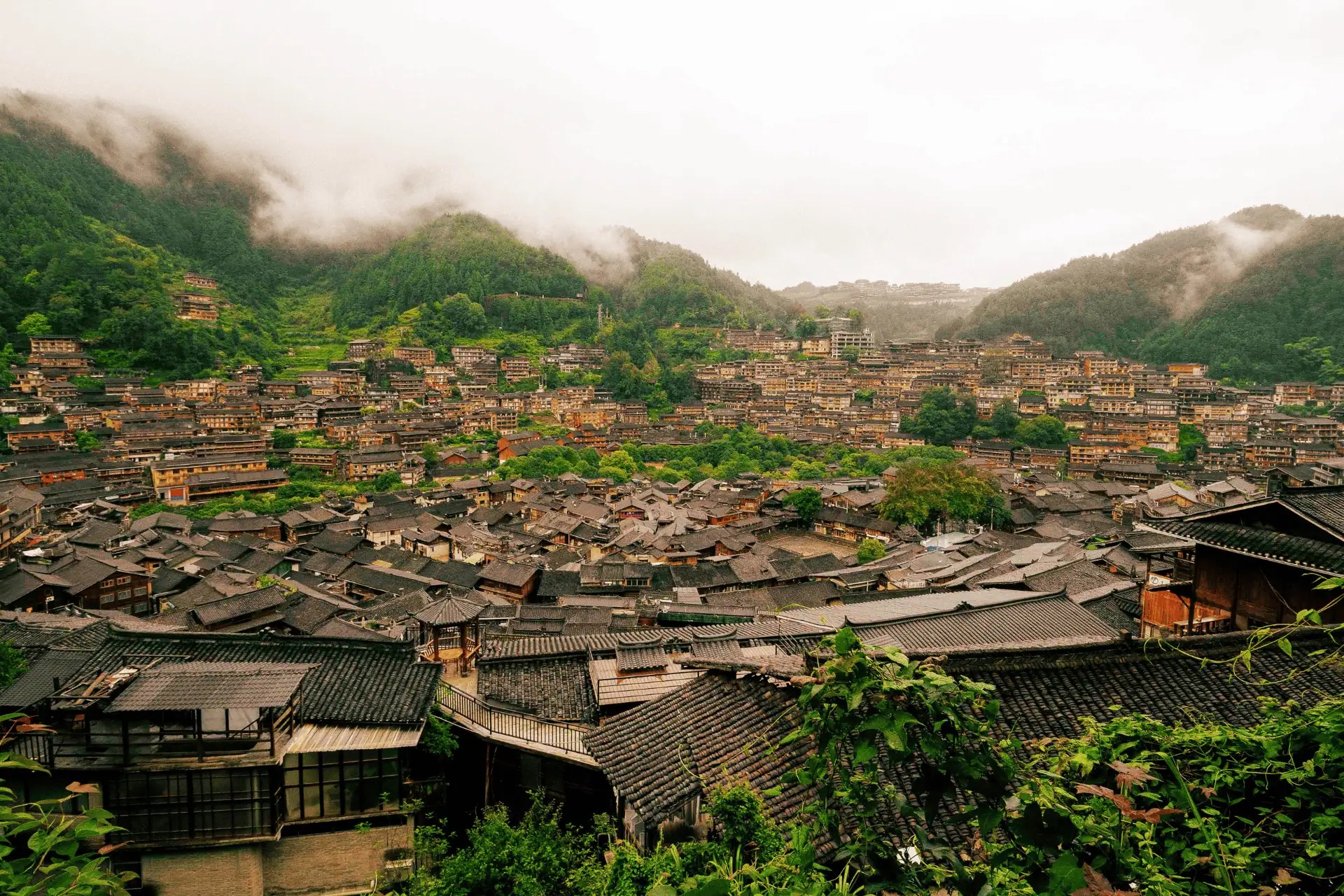

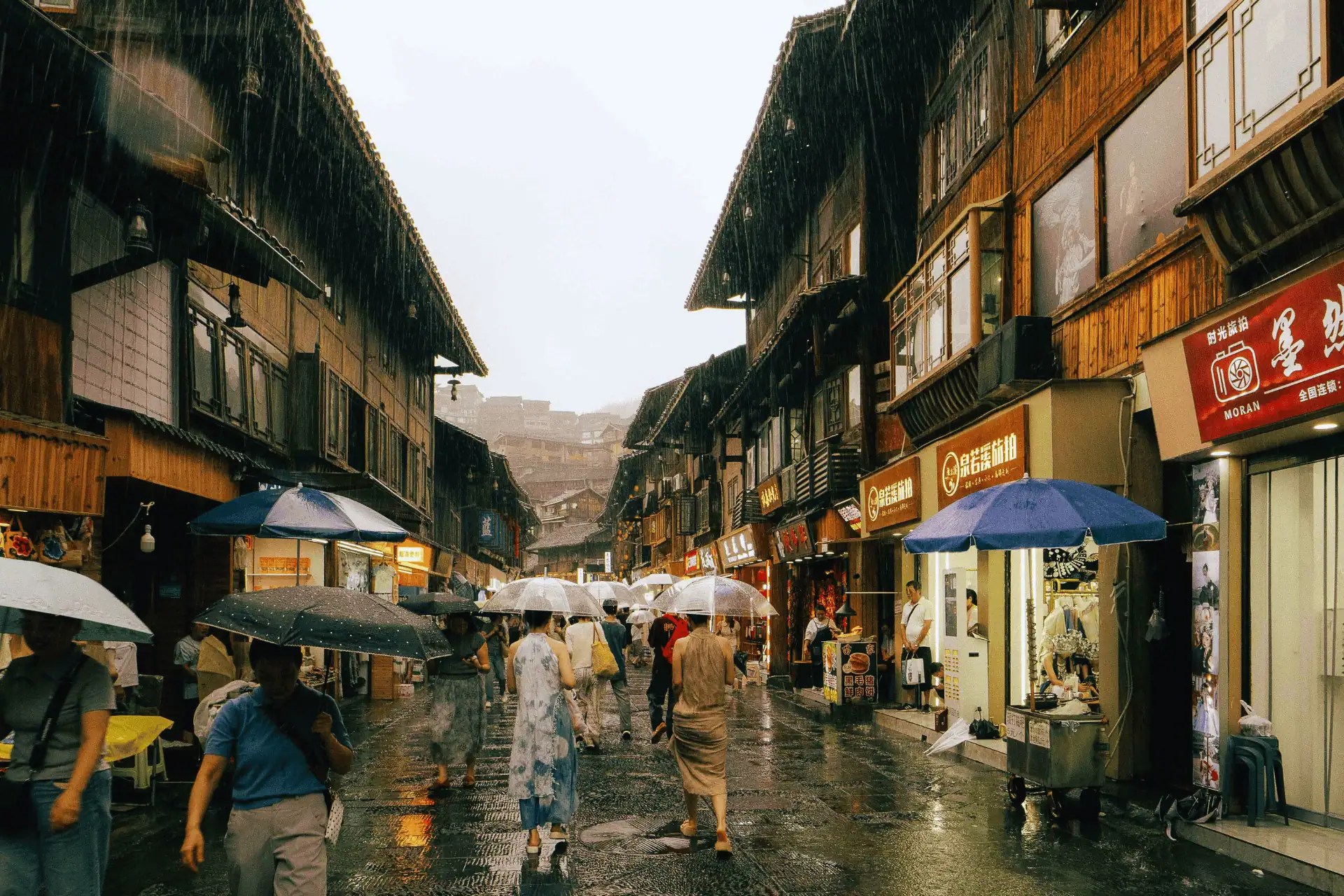
Tip: keep your paper ticket or entrance-fee receipt with you, as it has the QR code you need to scan when boarding the bus. Chinese visitors can usually scan their ID instead, but foreign visitors need to show their ticket or proof of purchase. We found that having the paper ticket handy was the easiest option. We did forget it once and they let us through with the rest of the crowd, so it can also depends on whose working at the time too.
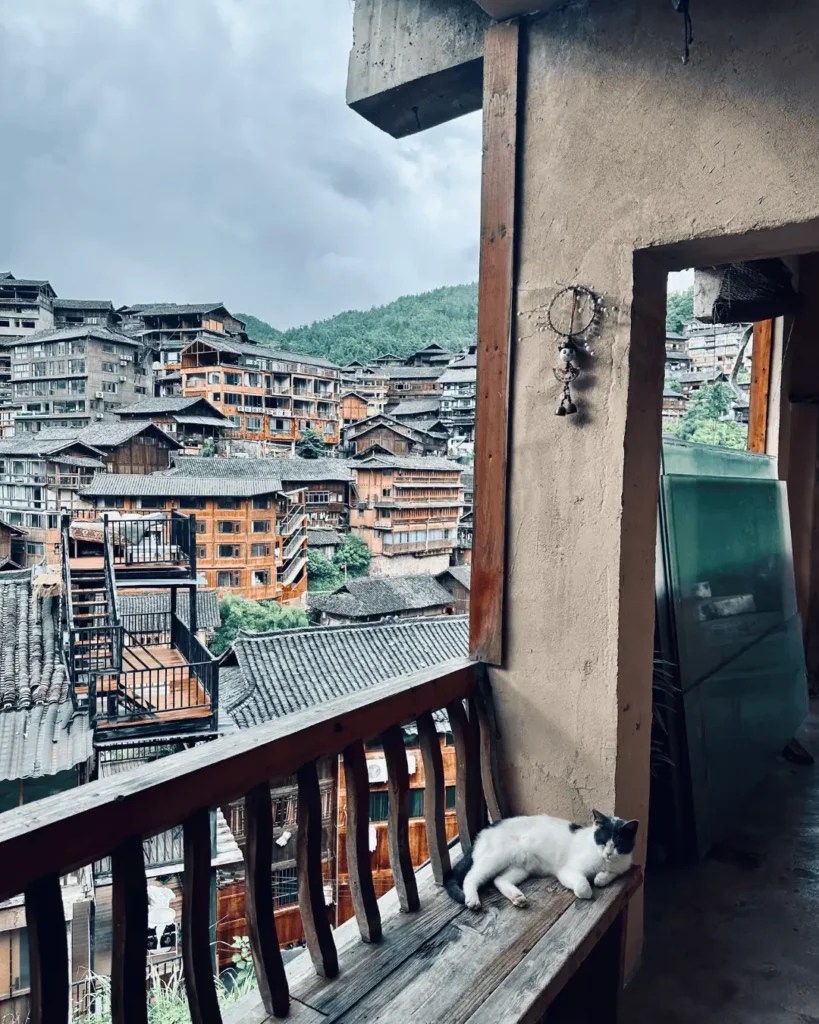
We stayed at a hotel, Xi jiang miao Hotel Mingshan, known for its resident cats and hillside views. I knew there would be stairs, but after a long day of travel, I wasn’t prepared for the long staircase leading up to the hotel.
It was a solid 10 minutes of walking straight uphill to reach the top.
Thankfully, the hotel staff came down to help carry our luggage, which made things much easier.
Once we finally arrived, though, the views were incredible. Looking out over the village, with houses stretching across the valley and lights starting to appear in the evening, it was easy to see why Xijiang is so popular.
I’m not sure I’d book a hotel that far uphill again, but waking up to those views was pretty special.

Traditional Miao Clothing and Photo Shoots
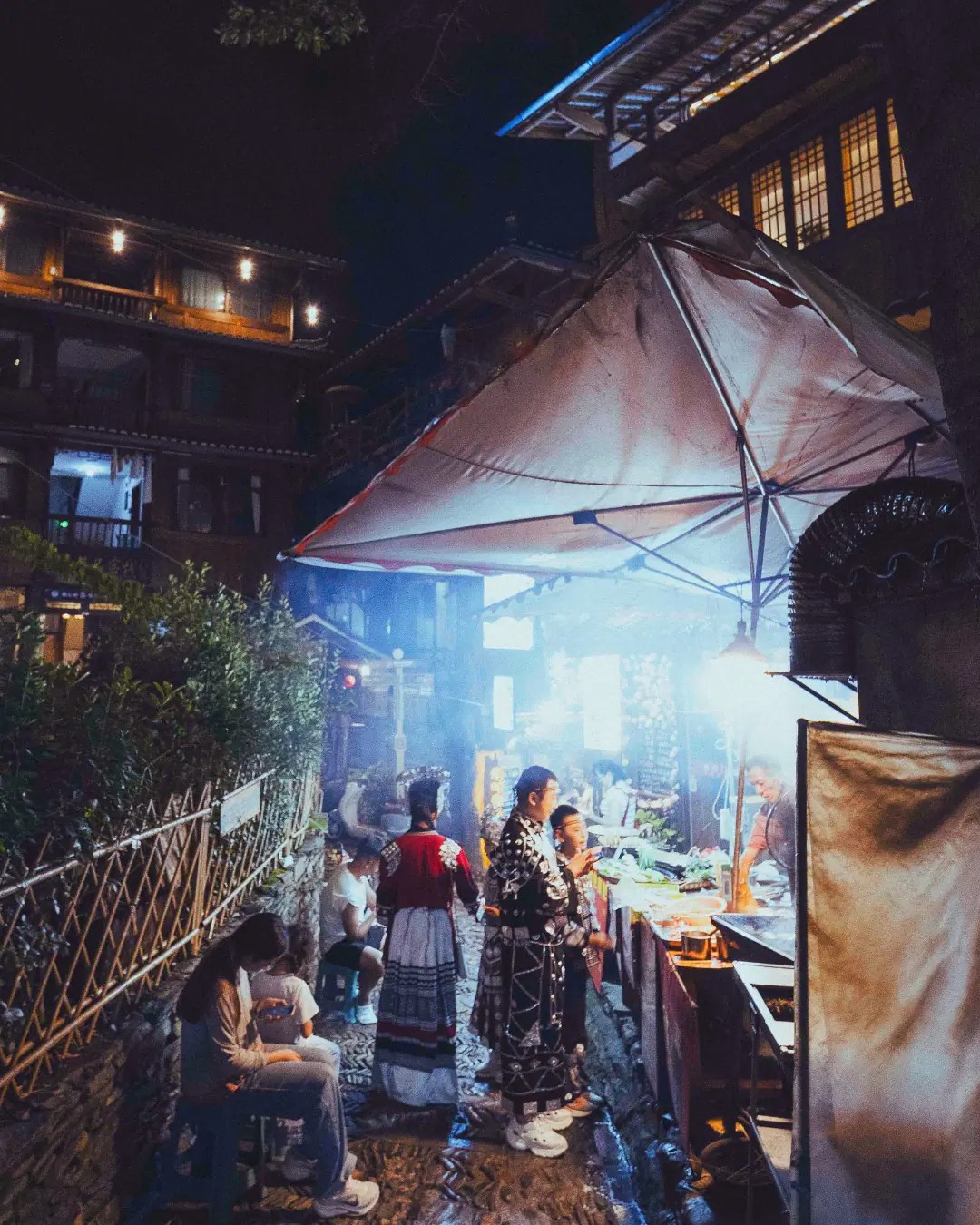
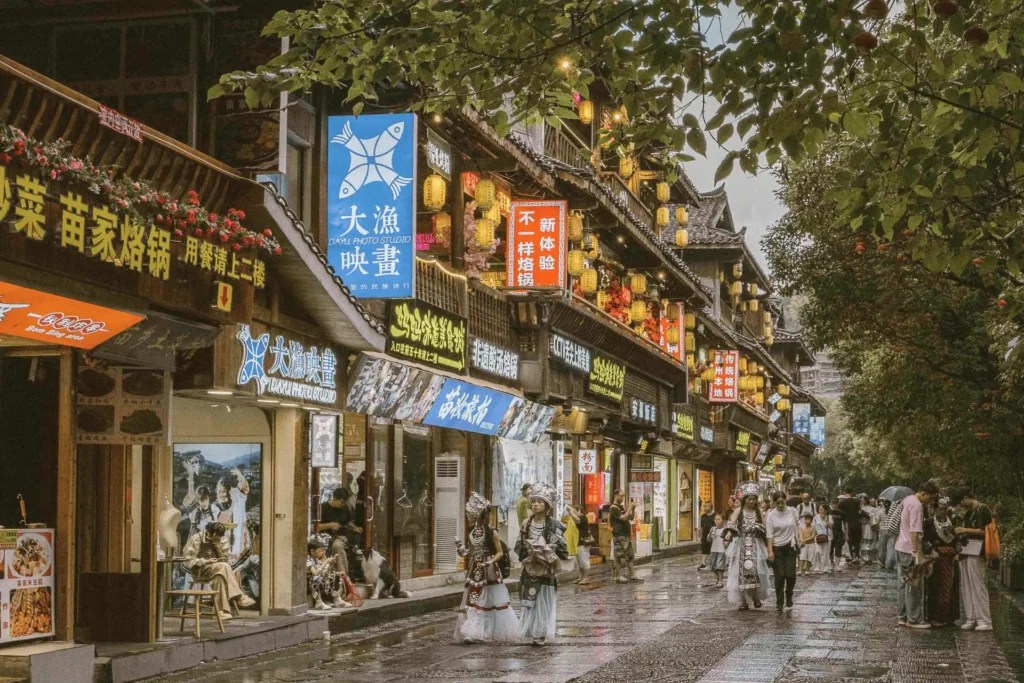
One of the first things you’ll notice in Xijiang is just how many people are dressed up for photos.
Visitors can rent traditional Miao clothing, have their hair and makeup done, and spend the day taking photos around the village.
There were people posing along the streets, photographers working with visitors, and content creators filming videos everywhere we went.
At times, it almost felt like walking through a cosplay convention, with elaborate outfits everywhere you looked.
It was fun seeing all the different clothing and styling, but compared with Longtang, the atmosphere felt much more commercialized.
Xijiang has plenty of shops and restaurants, and traditional-style buildings sit alongside modern attractions. There’s even a bright blue basketball court near the main village square and a McDonald’s closer to the entrance.
It was a pretty surreal mix of old and new.
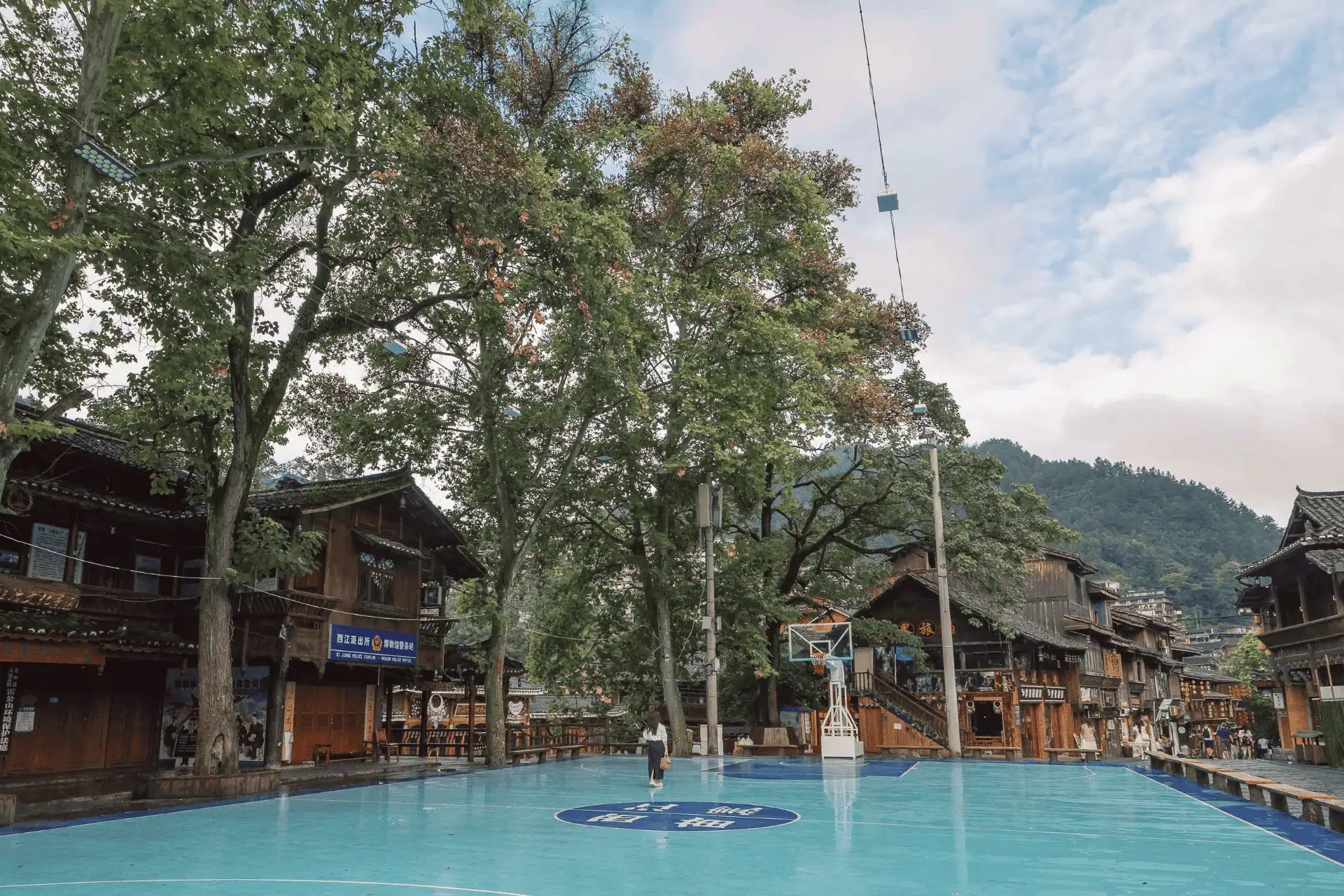
Is Xijiang Miao Village Worth Visiting?
Despite feeling a little overwhelmed by the crowds, I’m glad we visited.
The village is visually impressive, and seeing the houses spread across the hillsides was unlike anything else we’d experienced during the trip.
It’s also worth walking around in the evening when the lights come on across the valley. The illuminated buildings make for a memorable view, especially from the higher parts of the village.
We decided to spend just one night in Xijiang rather than the two nights we’d spent in Longtang, and I think that was the right choice for us.
It gave us enough time to explore the village and enjoy the views without feeling like we needed to stay longer.
If you enjoy photography, traditional clothing, shopping, and lively tourist areas, you might want to spend more time here. But if you’re more interested in hiking, rice terraces, and a quieter experience of village life, I’d prioritize the smaller villages.
Personally, I preferred Longtang, but I’m still glad we got to see Xijiang.
Final Thoughts: Is Guizhou Worth Visiting?
I really enjoyed our week exploring Guizhou. It was a different side of China from the big cities and famous attractions we’d visited before.
Each village had something different to offer.
- Zhaoxing was a great introduction to Dong architecture and culture, and the evening singing at our guesthouse was one of my favorite experiences.
- Tang’an was beautiful, with its rice terraces and hiking trails, although the summer heat and confusing village paths made the hike more challenging than expected.
- Longtang was my favorite stop. I loved the peaceful atmosphere, the rice fields, and the chance to slow down for a couple of days.
- Xijiang was impressive to see in person, even if the crowds and commercialized atmosphere weren’t really my thing.
If I were planning the trip again, I’d still visit all four villages, but I’d make sure to leave enough time for the smaller ones.
Some of my favorite memories weren’t from the main attractions at all. They were watching the sunset over the rice fields, chatting with local kids while trying traditional crafts, and listening to the guesthouse owners sing in Zhaoxing.
Guizhou might not be the first place that comes to mind when planning a trip to China, but if you’re interested in traditional villages, mountain scenery, rice terraces, and experiencing a different side of the country, it’s well worth considering.
Just bring comfortable walking shoes, plan your transportation ahead of time, and be prepared for plenty of heat and humidity if you’re visiting in summer!
Practical Tips for Visiting Guizhou’s Dong and Miao Villages
How Many Days Do You Need in Guizhou?
I’d recommend around one week if you want to visit Zhaoxing, Tang’an, Longtang, and Xijiang without rushing.
Here’s how I’d divide the time:
| Village | Recommended stay | Best for |
| Zhaoxing | 2 nights (split up) | Dong architecture, cultural performances, and exploring the village |
| Tang’an | 1 night | Rice terraces, hiking, and countryside views |
| Longtang | 2 nights | Local handicrafts, village life, and a slower pace |
| Xijiang | 1 night | Traditional Miao clothing, hillside houses, and nighttime views |
You’ll also need to account for travel time between villages, especially when combining trains, buses, and taxis.
When Is the Best Time to Visit Guizhou?
We visited in August, when the countryside was lush and green, but the heat and humidity made hiking more tiring than expected.
It was also still a busy travel period, although we arrived toward the end of the summer holidays.
If you want to see the rice terraces turn golden around harvest time, late September is a great time to visit. When we went, the fields were still green, which was beautiful in its own way, but I’d love to see the golden terraces during harvest season.
Winter and spring can be beautiful, too, when the rice terraces are filled with water and reflect the surrounding mountains. I’d avoid visiting just after the harvest, though, as the fields can look barren once the rice has been cut.
If you plan to hike between villages, I’d consider visiting outside the hottest part of summer if possible. The scenery and rice fields will also vary depending on the season, so it’s worth checking what the landscape will look like during your planned dates.
How to Get Around Guizhou
Traveling between the larger railway stations was fairly straightforward, but getting to the villages required more planning.
We used a combination of trains, village buses, and taxis. A few things I’d recommend:
- Book train tickets ahead of time. Convenient departure times can sell out, especially during busy travel periods.
- Ask your guesthouse about transportation. Some accommodations can arrange station pickups or help you find a local driver. A lot of the listings on Trip.com will also say if rides are included in the bookings.
- Allow extra time for connections. Getting between villages can involve several different forms of transportation.
Should You Visit the Smaller Villages or the More Famous Tourist Spots?
If you have enough time, I’d recommend visiting a mix of both.
Zhaoxing and Xijiang have more developed tourism infrastructure, cultural performances, restaurants, and plenty of opportunities to learn about local traditions. Its also easier for foreigners to get around here.
The smaller villages offer something different. They’re generally quieter, and you’ll have more opportunities to explore the countryside and see everyday village life beyond the main tourist areas.
For me, Longtang was the highlight because it offered the slower pace I was hoping to find in Guizhou.
If you’re short on time and prefer nature and hiking over shopping and photo opportunities, I’d prioritize the smaller villages and rice terraces.
But if you’re interested in traditional architecture, elaborate clothing, and the energy of China’s more popular ethnic tourism destinations, Xijiang and Zhaoxing are great.
Explore More of China 🇨🇳
Planning to explore more of China? Check out my other China travel guides for more tips, favorite places, and adventures around the country!
Love the photos from this trip? I also sell prints of these landscapes and more of my travel photography in my Etsy shop, Night Star Studio. If you’d like to bring a little piece of your travels home, feel free to take a look!


