
This was my first trip to South America, and Ecuador felt like the perfect introduction. Visiting the Galápagos Islands had been a dream of mine for years, so I built the trip around that first. But since I was already traveling all the way to Ecuador, I decided to make the most of it and explore some of the country’s other incredible ecosystems too.
Over the course of four weeks, I spent most of my time immersed in nature and landscapes completely different from anything I had experienced before. Our itinerary ended up including one week deep in the Amazon Rainforest, 12 days in the Galápagos Islands, and three days in the cloud forests of Mindo. Between each destination, we also spent time around Quito and the surrounding mountains.
For such a small country, Ecuador has an unbelievable amount of biodiversity packed into a relatively tiny area. Within just a few hours, you can travel from the Amazon rainforest to the peaks of the Andes Mountains, cloud forests filled with hummingbirds, or the volcanic islands of the Galápagos.
In fact, Ecuador is considered one of the world’s 17 “megadiverse” countries. Despite covering only about 0.2% of the Earth’s landmass, it is home to an estimated 6% of all plant and animal species on the planet, making it one of the most biodiverse countries per square kilometer in the world.
Some of the biodiversity statistics are honestly hard to comprehend:
- Ecuador has over 1,600 recorded bird species, including more than 130 species of hummingbirds.
- There are over 18,000 plant species throughout the country, including around 4,300 orchid species.
- Around 8% of the world’s amphibian species and 5% of reptile species can be found within Ecuador’s borders.
Originally, we thought we might spend more time exploring cities during the trip. However, right before we arrived in March 2026, the U.S. and Ecuadorian governments began a joint military operation targeting organized crime and drug trafficking in parts of the country. During our one day exploring Quito, we unexpectedly walked into a large protest and saw heavy police and military presence throughout the city. After that experience, we decided to focus the rest of our trip primarily on nature destinations instead.


4 Week Ecuador Itinerary:
P.S. This post contains affiliate links. If you use my links to make a purchase, I’ll get a small commission at no extra cost to you. Thanks for your support!
Staying Outside Quito
For most of our time near Quito, we stayed at a small farm hotel located about five minutes from the airport and roughly 45 minutes outside the city center. It’s called Quito Airport Suites Hotel and ended up being one of my favorite places we stayed during the trip.
The property was filled with animals including alpacas, llamas, miniature horses, rabbits, chickens, ducks, guinea pigs, dogs, and cats wandering around the grounds. It felt peaceful and rural despite being so close to the airport. The inn also included breakfast, an onsite restaurant for dinner, and inexpensive airport transfers, which made it a really convenient base between flights and excursions.
We actually stayed there four separate times throughout the trip as we traveled between different regions of Ecuador.
Since we were avoiding spending too much time in the city itself, we used the area around Quito as a base for several day trips instead.
One of my favorite day hikes was along the old Inca trail called El Chaquiñán. The trail winds through the mountains and passes through several tunnels carved into the rock. We spent a few hours slowly walking the route before catching a car back. The scenery was beautiful, and it felt like a nice way to experience the Andes without venturing too far from our accommodation.


Visiting the Equator Line at Mitad del Mundo
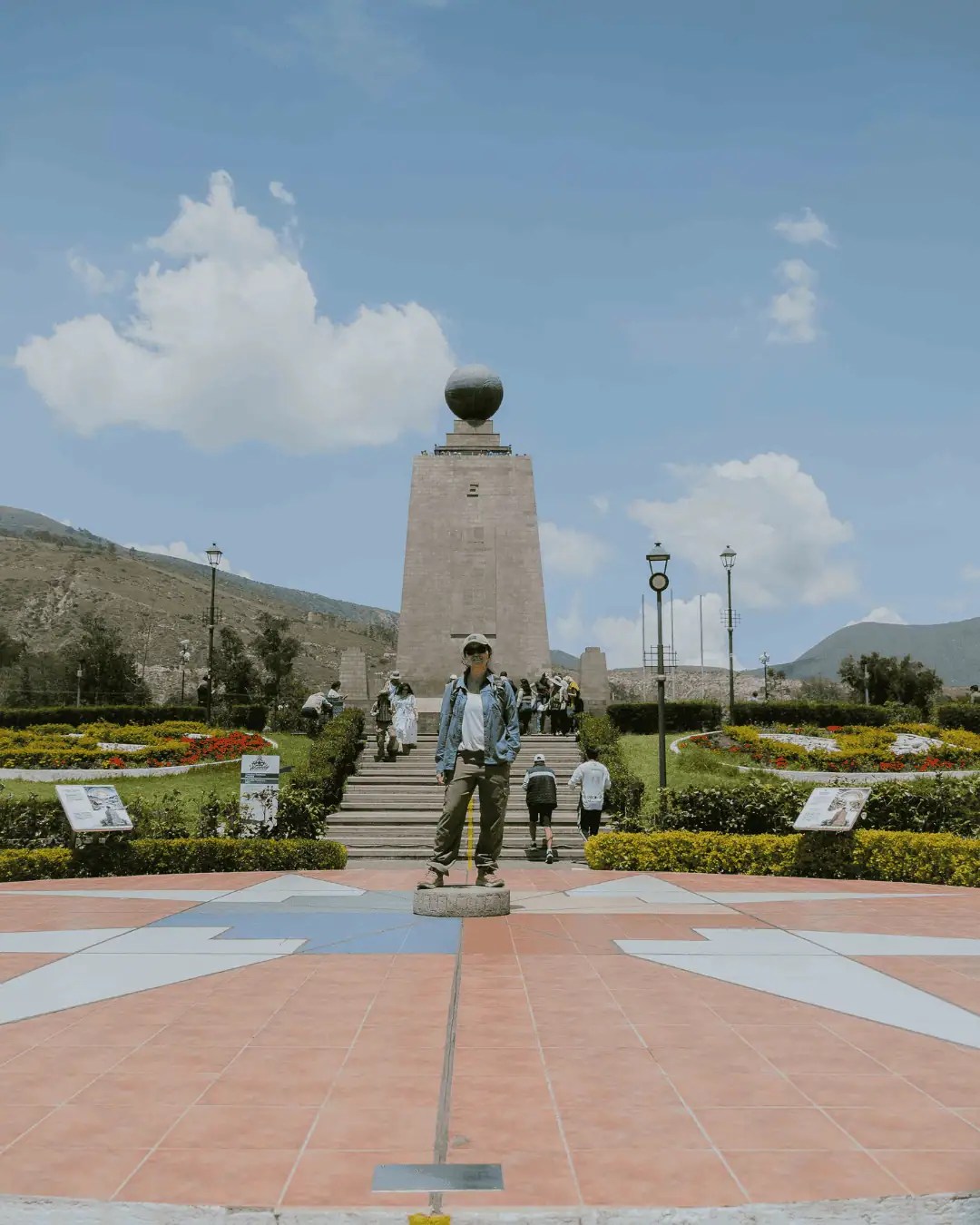
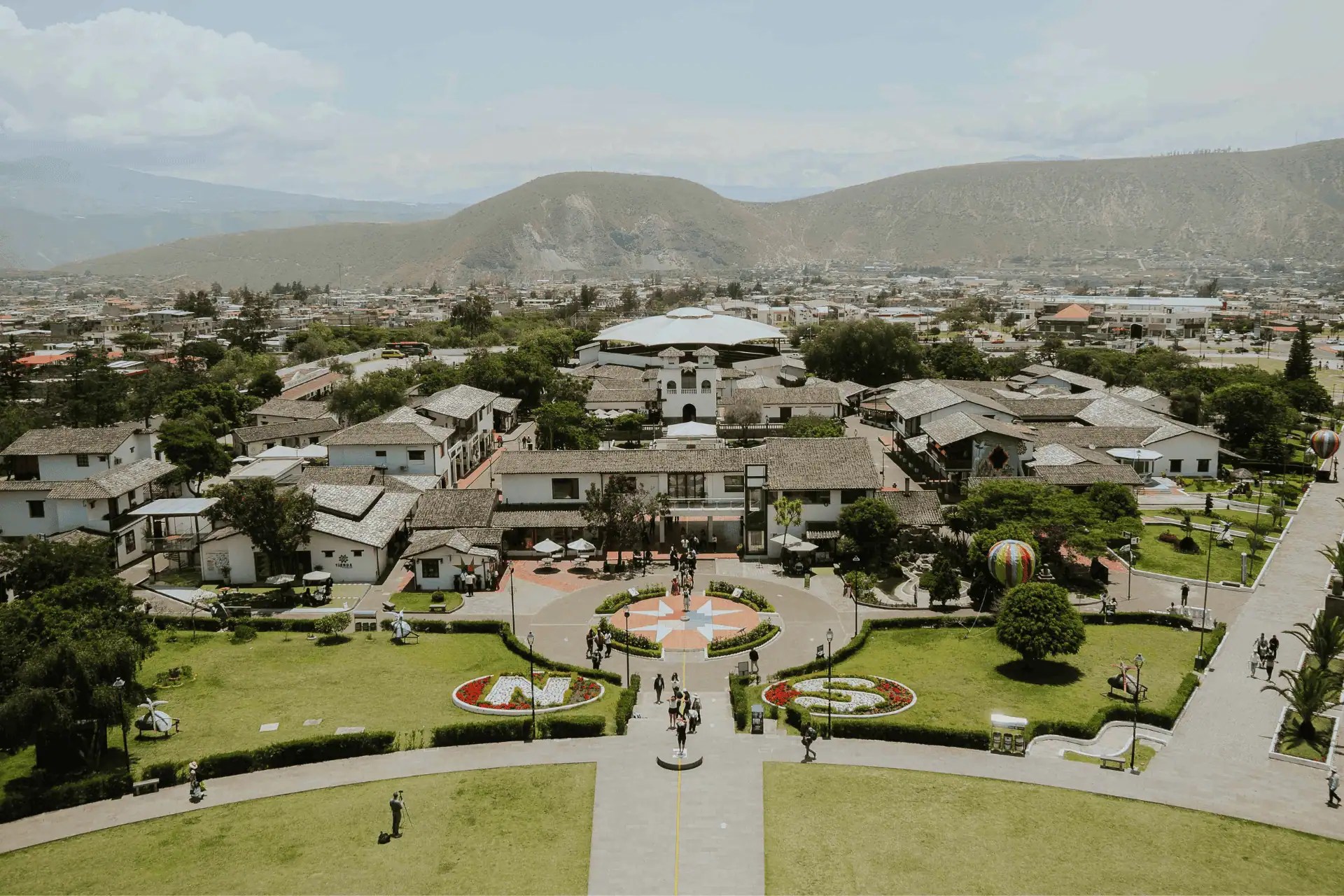
Another memorable day trip was visiting Mitad del Mundo, the famous “Middle of the Earth” monument marking the equator line.
The main monument is a massive 30-meter-tall structure originally built in the 1980s. However, with the help of modern GPS technology, scientists later discovered that the actual equator line is located about 200 meters north of the monument. Naturally, a second museum was built at the “real” equator line nearby.
Honestly, I recommend visiting both because they each offer completely different experiences.
The main Mitad del Mundo complex is larger and much more commercialized, with restaurants, cafes, shops, exhibits, and even a planetarium. You can also go to the top of the monument for views overlooking the surrounding mountains.
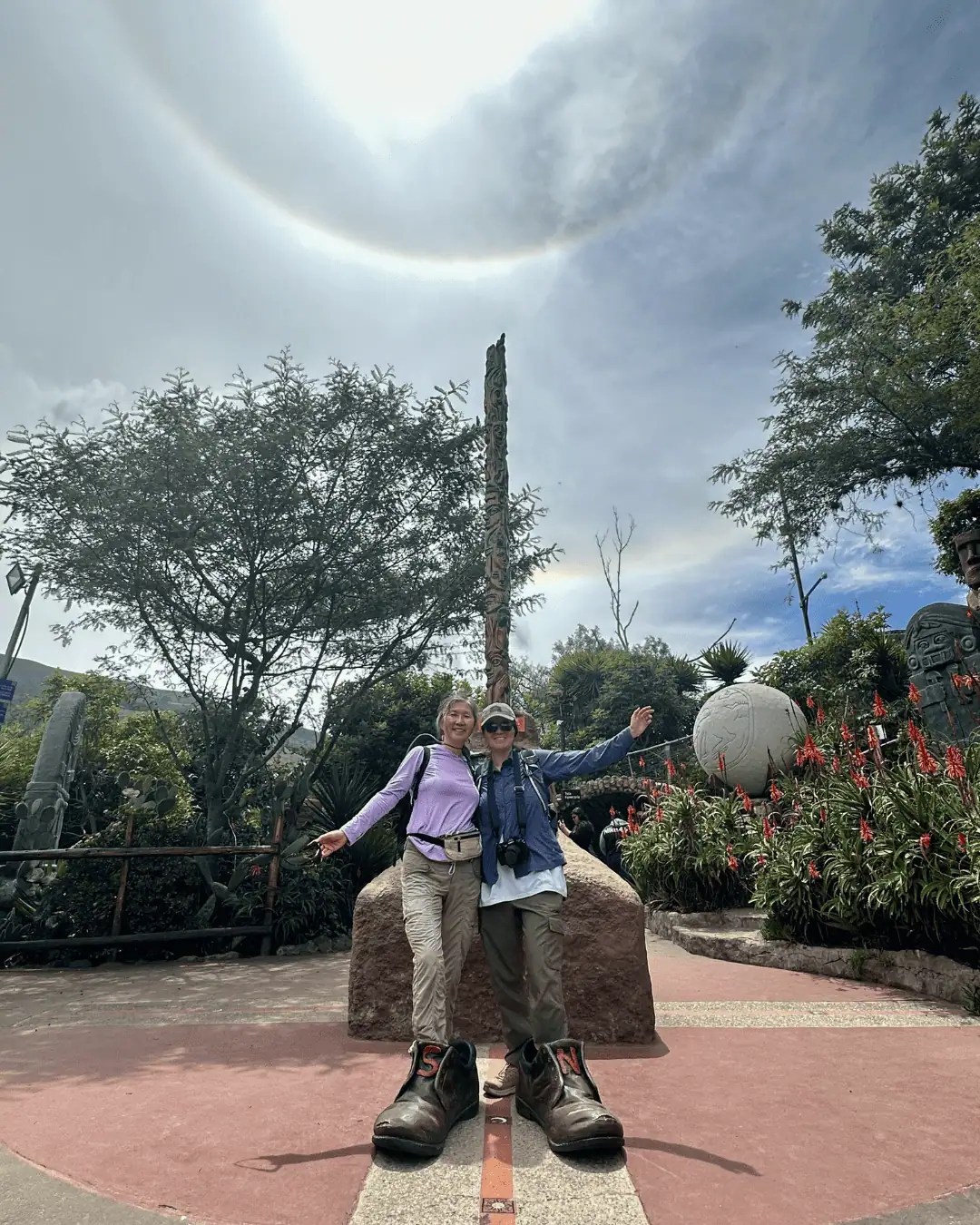
The nearby Intiñan Museum ended up being my personal favorite. The experience felt more focused on Ecuadorian culture and history, and the guided tour covered the country’s four major regions along with Indigenous traditions and local science demonstrations. Some of the demonstrations are definitely a bit touristy, like balancing an egg on a nail or watching water drain differently on either side of the equator, but it still made for a really fun stop. And of course it has its own Equator line photo op complete with giant shoes.
Pululahua Volcanic Crater
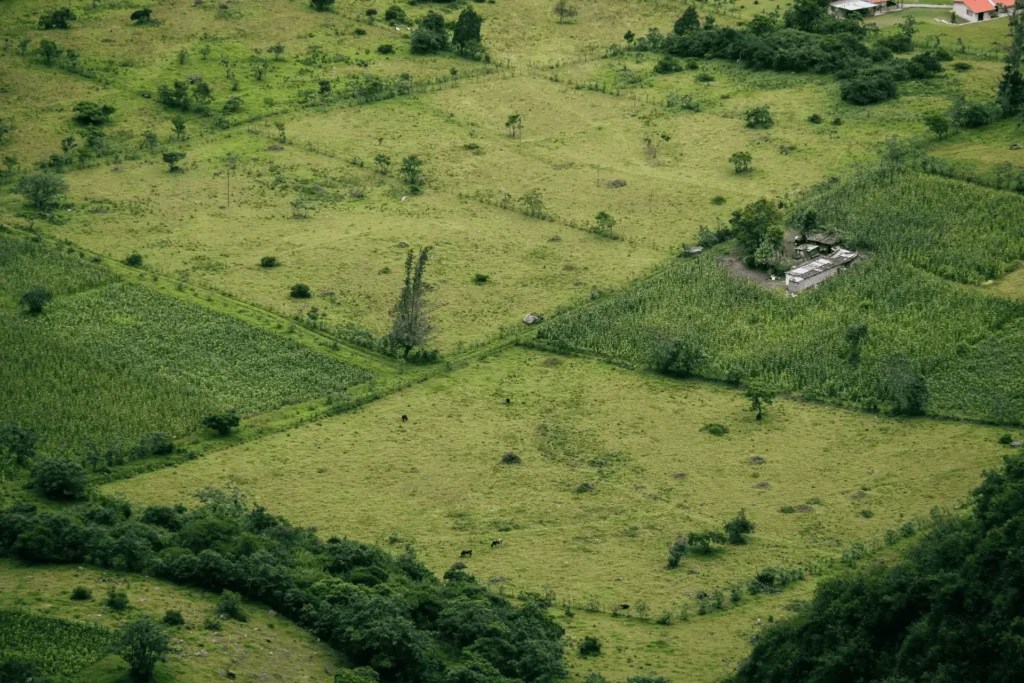
Only about 10 minutes away from the equator line is Pululahua Geobotanical Reserve, a volcanic crater with farmland and a small community living inside it.
The overlook here was one of the coolest landscapes we saw near Quito. From the viewpoint, you can look down into the massive green crater surrounded by mist-covered mountains. If you have more time, it’s also possible to hike down into the crater itself.
There’s a small café near the viewpoint where we stopped for snacks while watching the fog roll dramatically across the mountains. The weather changed constantly, with clouds moving in and out every few minutes, which made the scenery feel even more surreal.

Our First Stop: The Amazon Rainforest
The first major destination of the trip was the Ecuadorian Amazon Rainforest.
We stayed at Wild Mandari, a community-run eco lodge located inside Yasuní National Park. Choosing a community-operated lodge was important to us because we wanted our tourism dollars to directly support the local communities living within the rainforest.
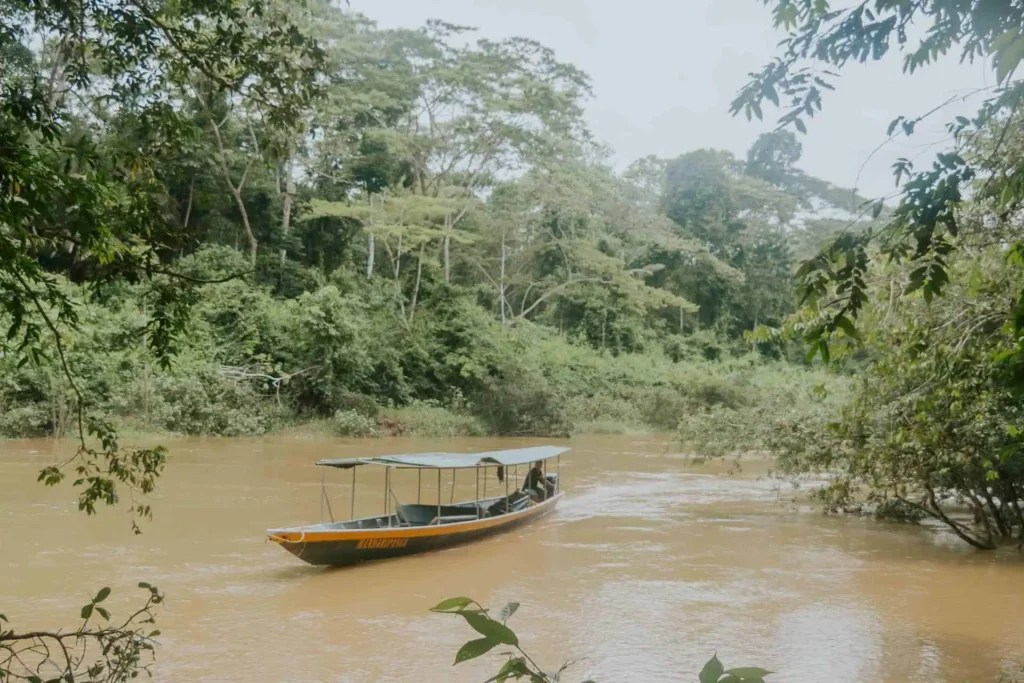
Getting there was part of the adventure itself. We took a short 40-minute flight from Quito to Coca, followed by a two-hour drive and then a one-hour boat ride deep into the jungle to reach the lodge. There is also an option to take an approximately eight-hour bus ride from Quito to Coca, but we decided to fly to save time.
We spent seven days living semi off-grid in the Amazon. The lodge had running water, limited electricity, and partial Wi-Fi access powered by a generator that only operated during certain hours of the day. Even with limited electricity, there was still enough time to charge camera gear and occasionally message family and friends.
Most mornings started with birdwatching or quietly floating down the river searching for wildlife. Other excursions throughout the week included jungle hikes, kayaking through blackwater lagoons, visiting a parrot clay lick, fishing, cooking demonstrations, and learning traditional crafts from community members.
One thing I really appreciated was how flexible the guides were. They adapted activities based on what the group was most interested in. Since we loved slowly drifting along the river looking for wildlife, we ended up doing a lot more of that throughout the week.
The amount of wildlife we saw was honestly incredible. At the same time, the Amazon was also the hottest, buggiest, and most humid environment I had ever experienced. Adjusting to the constant heat, humidity, insects, and giant spiders definitely took some time, but it was completely worth it.
It ended up being one of the most eye-opening experiences I’ve ever had and made me come home feeling much more aware of how important conservation and environmental protection really are.
For a full breakdown of our Amazon experience, check out my blog: “Life Inside Yasuni National Park: My Magical 7-Day Amazon Rainforest Tour in Ecuador”


Exploring Without a Cruise: Galápagos Islands land based itinerary
After leaving the Amazon, we returned to our little base near Quito for one night before heading to our next major destination: the Galápagos Islands.
Originally, our plan was to wait until we arrived and look for heavily discounted last-minute cruises between the islands. However, after talking to more travelers and locals in Ecuador, we decided to skip the cruise entirely and do a fully land-based Galápagos itinerary instead.
Honestly, I’m so happy we chose that route.
Most of the wildlife you see advertised on the distant cruise-only islands can also be seen on the main inhabited islands for a fraction of the cost through day tours and self-guided exploring. We also liked the freedom of moving at our own pace rather than being locked into a strict cruise schedule.
The more comfortable cruises can get extremely expensive, and for the price of a tiny cabin on a small boat, we realized we would rather spend more time actually enjoying the islands from land. That said, if you’re really into scuba diving, I do think the longer liveaboard dive cruises would probably be much more worth it since they can access remote dive sites that day tours cannot.
We visited from late March through early April during shoulder season, which made spontaneous planning much easier. We booked almost everything after arriving on each island with very little preparation beforehand.
For someone who usually travels with an over-organized spreadsheet itinerary, this was honestly stressful at first, but everything somehow worked out in the end.
One thing we quickly learned is that booking tours and accommodations in person with cash is often significantly cheaper than reserving online ahead of time. However, it also comes with risks. We met several travelers on tighter schedules who couldn’t get spots on the more popular tours after arriving. So if you have limited time or specific bucket-list excursions, I’d definitely recommend booking those in advance or at least messaging agencies ahead of time.
Our 12 Day Galápagos Itinerary
Our land-based itinerary through the Galápagos Islands looked like this:
- 4 days — San Cristóbal Island
- 2 days — Santa Cruz Island
- 5 days — Isabela Island
- 1 final day — Santa Cruz Island before flying out
We traveled between islands using the inter-island ferries, which are affordable but definitely not luxurious. If you get seasick easily, I highly recommend bringing motion sickness medication because the rides can get pretty rough depending on the weather.
The islands are also still very cash-based, so make sure to bring plenty of cash with you for ferries, tours, restaurants, taxis, and accommodations. While the Galápagos Islands are expensive compared to mainland Ecuador, it’s still absolutely possible to visit on a budget with some flexibility and planning.
Wildlife Everywhere You Look
The wildlife in the Galápagos Islands completely lived up to the hype.
Everywhere you look, there are animals. The land, sea, and sky are constantly filled with wildlife. Even just walking around town, we regularly saw sea lions sleeping on benches, marine iguanas piled onto rocks, Sally Lightfoot crabs covering the shoreline, and frigate birds soaring overhead.
For nature lovers, it honestly feels like paradise.
San Cristobal Island guide
San Cristóbal Island was our first stop and probably the easiest island to arrive at since the airport is within walking distance of town.
This island felt like the perfect middle ground in terms of development. It has restaurants, tours, and infrastructure for tourism, but it still feels relaxed and laid back compared to some of the busier islands.
It’s also absolutely overflowing with sea lions.
Huge colonies live directly in town, and the sound of sea lions barking became the soundtrack of our stay there. They nap on beaches, benches, docks, sidewalks, and basically anywhere they want. Between the three islands we visited, San Cristóbal definitely had the most sea lions overall.


Santa Cruz Galápagos Travel Guide
Our second stop was Santa Cruz Island, and the difference in atmosphere was immediate.
After the quieter vibe of San Cristóbal, Santa Cruz felt busy, crowded, and almost overwhelming at first. The waterfront is packed with taxis, souvenir shops, restaurants, tour agencies, and people trying to sell excursions.
However, if you’re looking for shopping, nightlife, or the widest variety of tours and restaurants, this is definitely the island for it.
Santa Cruz is also one of the best islands for finding last-minute cruise deals if you decide to go that route instead of doing a fully land-based itinerary.
One of the highlights here was visiting the giant tortoise ranches in the highlands. Many of the ranches allow you to walk among massive wild giant tortoises that roam freely across the property. Seeing these ancient-looking animals wandering through the grass up close was surreal.
Most visits also include access to lava tunnels formed by volcanic activity beneath the island, which made the experience even cooler.
Another favorite stop was the local fish market. It’s actually much smaller than I expected, with only a few seafood vendors, but the real attraction is the wildlife gathered around it.
Pelicans, marine iguanas, and frigate birds all wait nearby hoping for scraps from the fishermen, and watching them compete for food became weirdly entertaining. We stopped by multiple times because the activity changes throughout the day depending on when fish are being cleaned.


Isabela Island Itinerary
Our final major stop was Isabela Island, which ended up being our favorite island overall.
Even though Isabela is the largest island in the archipelago, it’s also the least populated of the three main inhabited islands. When we first arrived, it almost felt strangely empty compared to the activity on Santa Cruz.
The main road through town is mostly dirt, giving the island a much more rustic and remote feeling. While we saw plenty of people during tours and excursions, the town itself often felt surprisingly quiet.
For nature, though, Isabela was unbeatable.
A small sea lion colony spends most of the day sleeping beneath the palm trees along the main beach, and watching them slowly head into the ocean at sunset to feed became one of my favorite memories from the entire trip.
Just a short walk from the ferry dock is Concha de Perla, a free snorkeling lagoon that quickly became one of our favorite places on the islands. We would rent snorkel gear from our lodge and spend hours floating around the calm water looking for wildlife.
Even without a tour, we saw sea turtles, reef sharks, rays, and huge schools of fish there.
Another great stop was Poza de los Flamingos, where we saw flamingos feeding in the shallow lagoons just outside town.
We also biked part of the trail to the Wall of Tears, a historic site tied to the island’s dark past as a former penal colony. Along the route, there’s also a chance to spot wild giant tortoises wandering freely through the landscape.
For a full breakdown of our experience, check out my blog: “12 Days in the Galápagos Islands Land Based Itinerary (Budget Tips + Best Travel Guide)“


Mindo Cloud Forest Travel Guide: Our Final Stop in Ecuador
After another quick overnight stop near Quito, we headed to our final destination in Ecuador the next morning: the cloud forests of Mindo.
Located about 1.5 to 2 hours from Quito, Mindo is a small, laid-back town tucked into the lush Andean foothills. The drive itself is beautiful, winding through mountain roads before descending into a vibrant green valley covered in misty forest.
We ended up using a rideshare app to hire a private driver for around $45 USD to get there, and then arranged our return transportation through our hotel for about $60 USD. For us, the convenience and peace of mind were completely worth it, especially after moving around so much during the trip.
If you’re short on time though, it’s also very possible to visit Mindo as a day tour from Quito.
Sitting at around 1,250 meters (4,100 feet) above sea level, Mindo has a population of only about 3,000 people. Despite its small size, the town has become increasingly popular in recent years, especially after COVID, with both locals and expats moving there for a quieter lifestyle surrounded by nature.
Gateway to Ecuador’s Cloud Forest
Mindo is known as one of Ecuador’s top cloud forest destinations and is considered one of the most biodiverse ecosystems in the country.
Unlike the humid heat of the Amazon, the cloud forest felt cooler, mistier, and incredibly lush. Low clouds drift constantly through the mountains, covering the forest in fog and giving the entire area an almost magical atmosphere.
Mindo is especially famous for birdwatching.
The region is home to more than 550 bird species, including over 130 species of hummingbirds, making it an incredible destination for wildlife lovers, photographers, and nature enthusiasts. Even short walks around town can lead to colorful bird sightings and unexpected wildlife encounters.
One of the highlights of our stay was visiting Punto Ornitológico, a hummingbird sanctuary where you can actually hand-feed hummingbirds for only around $5 USD.
The experience honestly felt surreal.
Tiny hummingbirds would zip inches from our faces before landing directly on the feeders in our hands. The sanctuary also offers early morning birdwatching tours and forest trails where you can spot toucans, parrots, tanagers, and many other species throughout the surrounding cloud forest.
Waterfalls, Chocolate, and Adventure Activities
Beyond birdwatching, there are so many things to do around Mindo.
The area is filled with butterfly gardens, orchid farms, chocolate tours, and beautiful waterfall hikes through the forest. While Mindo is known for its relaxed nature-focused atmosphere, it’s also surprisingly popular for adventure activities.
You can go ziplining above the forest canopy, whitewater rafting, tubing, canyoning, ATV riding, and more.
Mindo is also famous for its locally produced chocolate, and nearly every café or shop in town seems to sell handmade Ecuadorian chocolate and desserts.
After weeks of constantly moving between destinations, islands, boats, and flights, Mindo ended up being the perfect final stop for our Ecuador trip. Everything felt slower and more relaxed there, and most activities were close enough that we never felt rushed.
It was the ideal place to unwind and soak in nature before heading back home.
For a full breakdown of our experience, check out my blog: “3 Days in Mindo Ecuador: The Perfect Cloud Forest Escape
.”


Final Thoughts on Ecuador
Even after spending four weeks exploring Ecuador, it still felt like we had only scratched the surface of everything the country has to offer.
If we had stayed longer, I would have loved to spend more time exploring the Andes Mountains, hiking around Cotopaxi, and visiting Baños, which many travelers told us was another incredible destination for outdoor adventures and nature.
What surprised me most about Ecuador was just how much diversity exists within such a relatively small country. Within a single trip, we experienced the Amazon rainforest, volcanic islands, cloud forests, and the Andes Mountains all within a matter of weeks.
Whether you love wildlife, hiking, photography, adventure sports, beaches, birdwatching, or simply being surrounded by nature, Ecuador really does have something for everyone.
P.S. Like the vibe of these photos?
I’ve turned some of my favorite travel shots into art prints over on my Etsy shop! Not every place I write about makes it into the shop, but if you’re into dreamy landscapes, vintage surfers, or just love a cute puffin, come take a look: Night Star Studio on Etsy


