
Growing up, I always dreamed of becoming a biologist and exploring the rainforest. I imagined myself trekking through the jungle, encountering wildlife, and living in a nature documentary. But as I got older, I developed a strong fear of bugs… which pushed the Amazon lower and lower on my bucket list.
Yet somehow, during our month-long trip through Ecuador, we found ourselves climbing into a long boat and floating deep down the river toward a small lodge hidden in the heart of the Amazon rainforest.
And just like that, I was living inside the jungle I dreamed about.
Our 7-day Amazon rainforest tour ended up being one of the hardest, most unforgettable trips I’ve ever done.
The Amazon is overwhelming — the heat, the humidity, the sounds, the wildlife, the sheer amount of life surrounding you at all times. One moment we were spotting troops of monkeys swinging high through the trees, colorful birds flying overhead, and pink river dolphins surfacing up river. The next, our guide was rushing towards a the sound of a jaguar just steps away from where we’re at.
The jungle is alive in a way that’s difficult to describe until you experience it yourself. Every inch of it is moving, growing, hunting, and decaying all at once. It’s beautiful, chaotic and very intimidating.


Visiting the Ecuador Amazon Rainforest:
The Reality of Staying in the Amazon
Now, I’ll be honest.
You can take the girl out of the suburbs, but you cannot take the suburbs out of the girl.
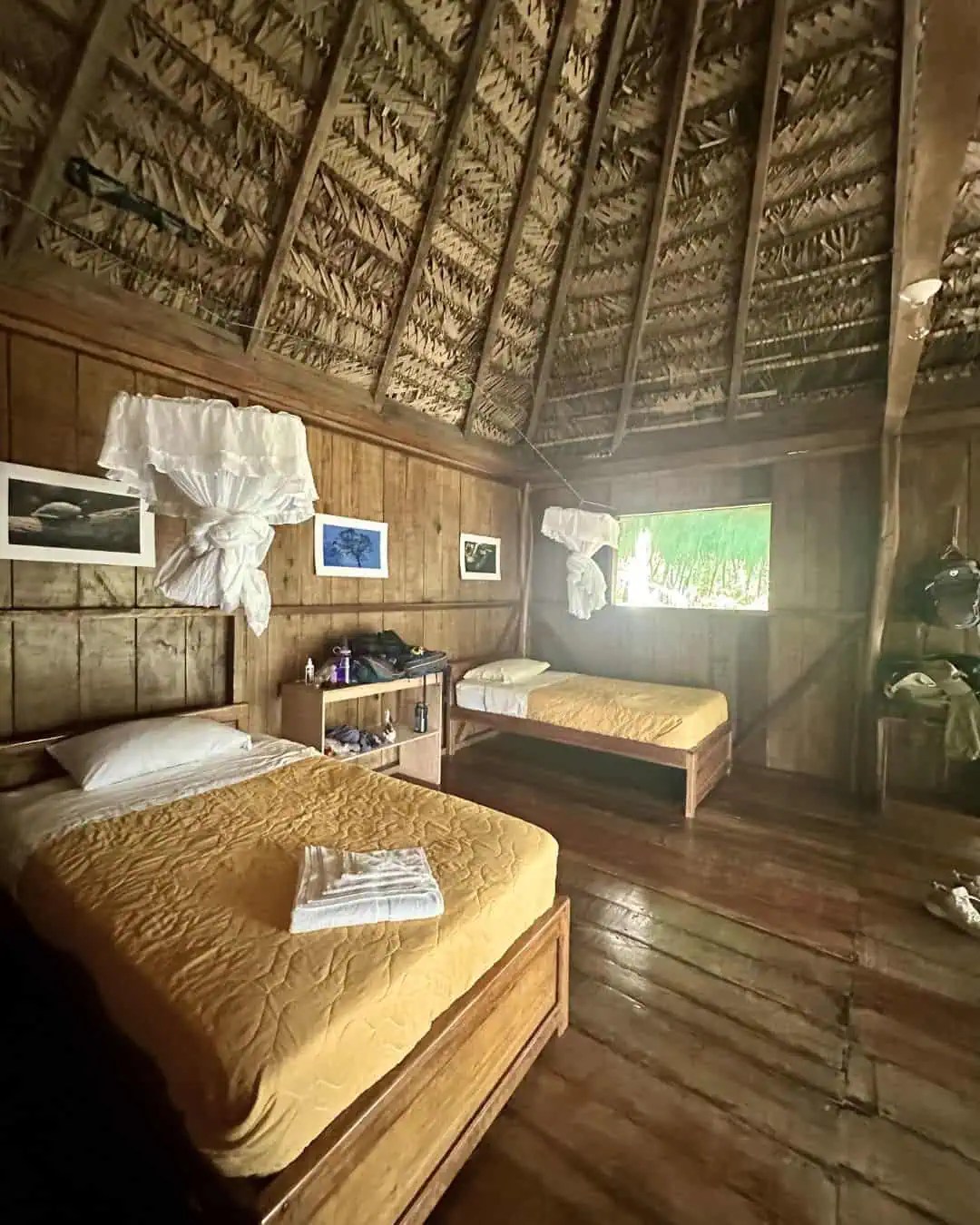
While our lodge was beautiful — especially considering it was hours away from the nearest town — adjusting to the environment itself was hard. The heat and humidity were relentless, and without fans or air conditioning, sleeping at night was challenging. There were bugs everywhere, no matter how careful you were.
I tried not to think too hard about how many nighttime roommates I had sharing the room with me. But that’s also part of what made the experience so memorable.
The Amazon doesn’t let you stay away from nature. You are immersed in it at all times. You hear the rainforest constantly — frogs croaking, insects humming, birds calling, branches cracking somewhere in the darkness. The sounds become their own kind of symphony, reminding you that you are just one tiny piece of a much larger ecosystem.
It pushed me far outside my comfort zone, but I’m incredibly grateful for the experience.
Would I rush to do it again? No.
But do I think people should experience the Amazon rainforest at least once in their life if possible? 100 percent!
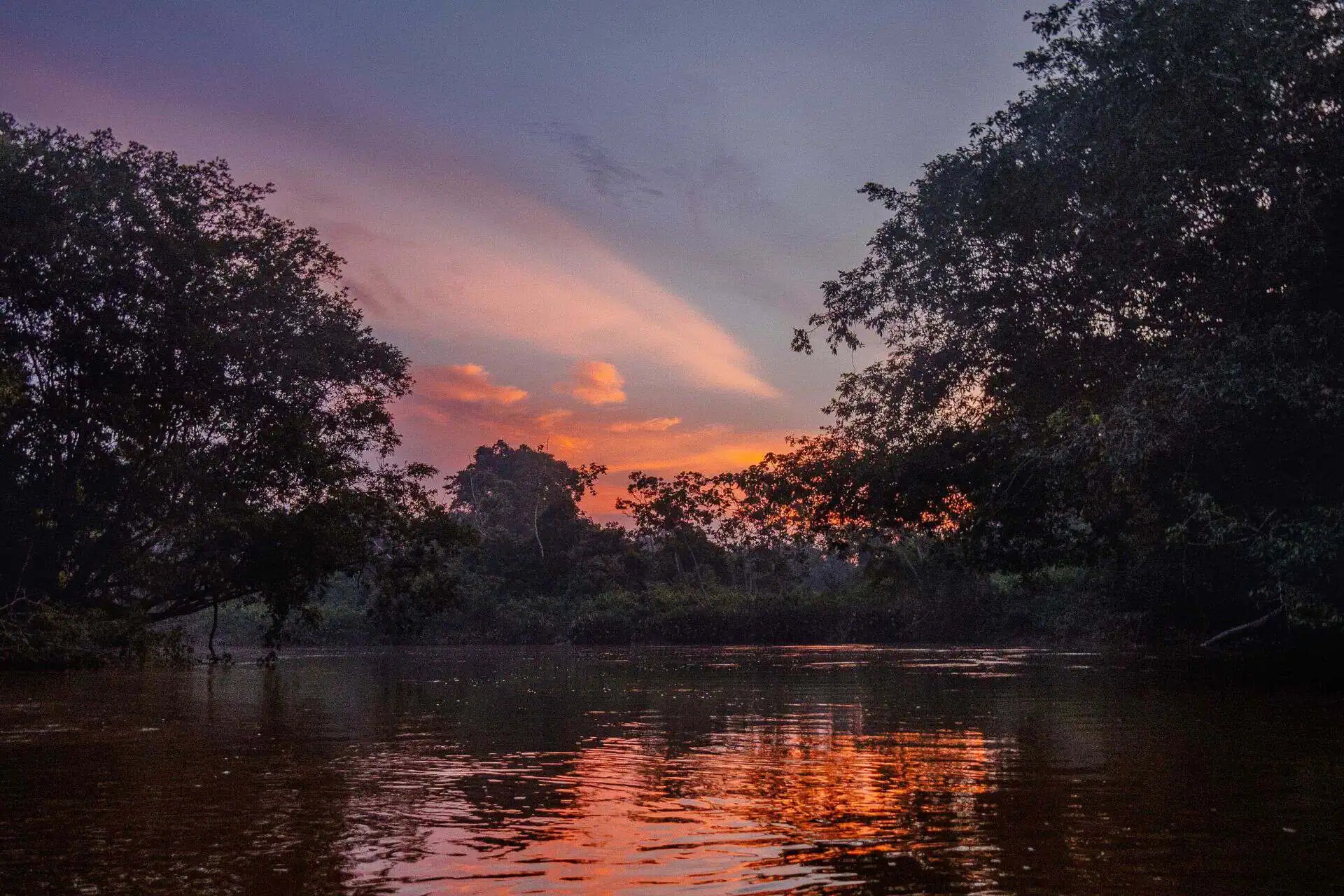
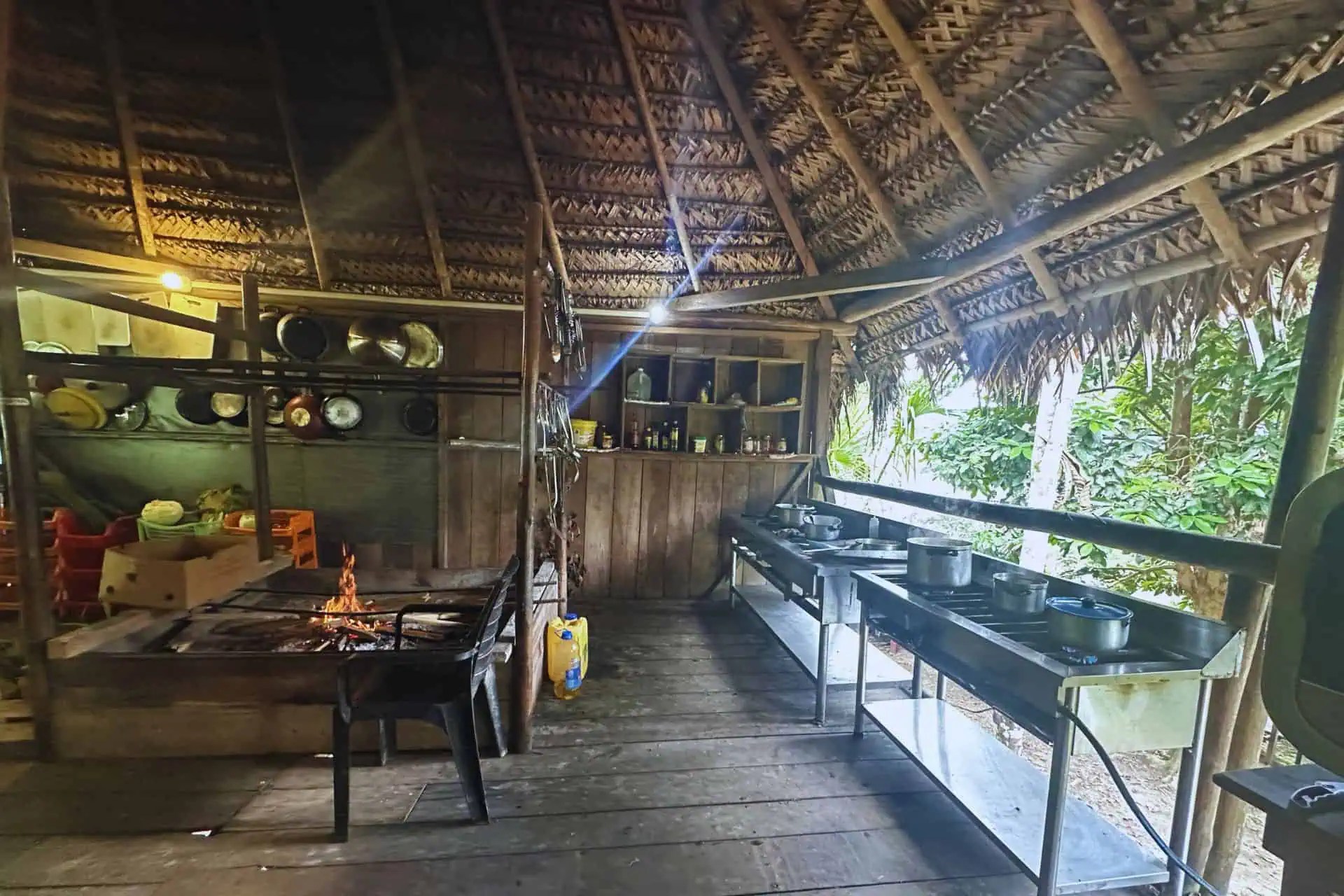
Staying at a Community-Run Amazon Lodge in Ecuador
For our trip, we stayed with a local community lodge called Wild Mandari in the Ecuadorian Amazon.
There are several lodges throughout the Yasuní National Park region, but one thing that was important to us was choosing a lodge run directly by local Indigenous communities. Knowing that tourism dollars are going back to the people who live there and protect the land made the experience feel much more meaningful.
I highly recommend looking into community-run lodges if you’re planning any Amazon rainforest trip!
How to Get to the Ecuador Amazon from Quito
We used Quito as our base for exploring Ecuador before heading into the Amazon.
To reach the jungle, we took the only daily flight from Quito to Coca, which lasted around 40 minutes. The flight was very scenic — watching the towering Andes mountains slowly transform into endless flat rainforest and winding rivers was incredible from above.
After landing, our guide picked us up from the airport and took us into town for a short briefing and lunch at a local restaurant owned by community members.
From there, the real journey began.
We spent about two hours driving down rough dirt roads deeper into the Amazon region, passing oil refineries along the way. Seeing the oil sites cutting through the rainforest was jarring and gave us a firsthand look at the environmental issues facing Ecuador.
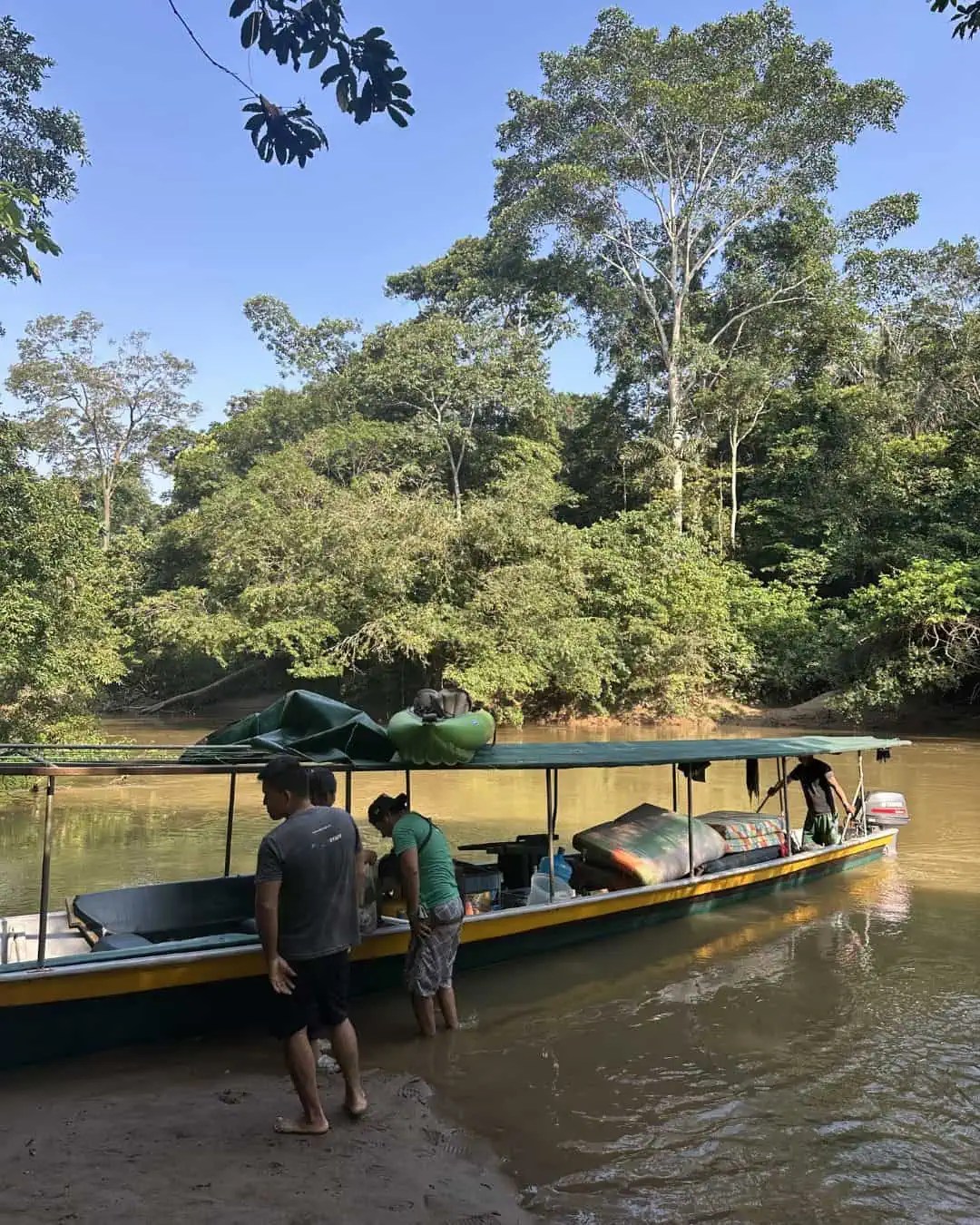
After the drive, we hopped into a motorized canoe for another hour-long journey down the river before finally arriving at the lodge.
By the time we reached Wild Mandari, it felt like we arrived into another world.


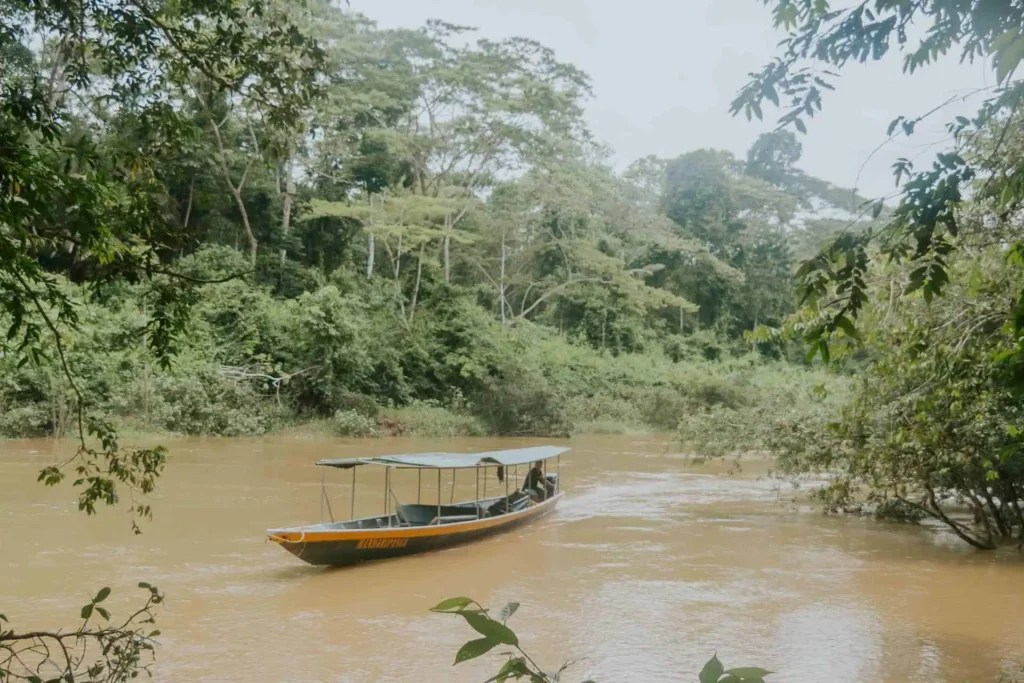
Exploring Yasuní National Park
Yasuni National Park is one of the most biodiverse places on Earth, and after spending a week there I get why. The park is a UNESCO Biosphere Reserve and home to an insane amount of wildlife — hundreds of mammals, reptiles, amphibians, fish, over 600 bird species, and thousands of plants.
For birders, this place is a dream destination. Species like the Harpy eagle and the colorful Wire-tailed manakin live here among hundreds of others hidden throughout the canopy.
The region is also home to the Waorani people and some of the last uncontacted Indigenous groups living in voluntary isolation.
Every excursion felt like a nature documentary. So many of the animals I saw here were species I had only seen on nature shows growing up, and suddenly they were right there in the wild.


One morning we watched monkeys leaping through the canopy overhead. Another evening we drifted along the riverbanks after dark searching for caimans by flashlight while fireflies flickered through the trees around us.
It was my first time seeing fireflies.
And somehow it happened in the Amazon.
That first night at the lodge, a massive thunderstorm rolled over the rainforest. Rain poured for hours while lightning lit up the entire sky, followed instantly by deep thunder rolling across the river. I got out of bed to watch the river light up with every flash.
Then a single firefly drifted into the hut and lit up near the roof.
I remember staring at it as reality set in:
I’m in the Amazon.
Our Amazon Rainforest Lodge Experience
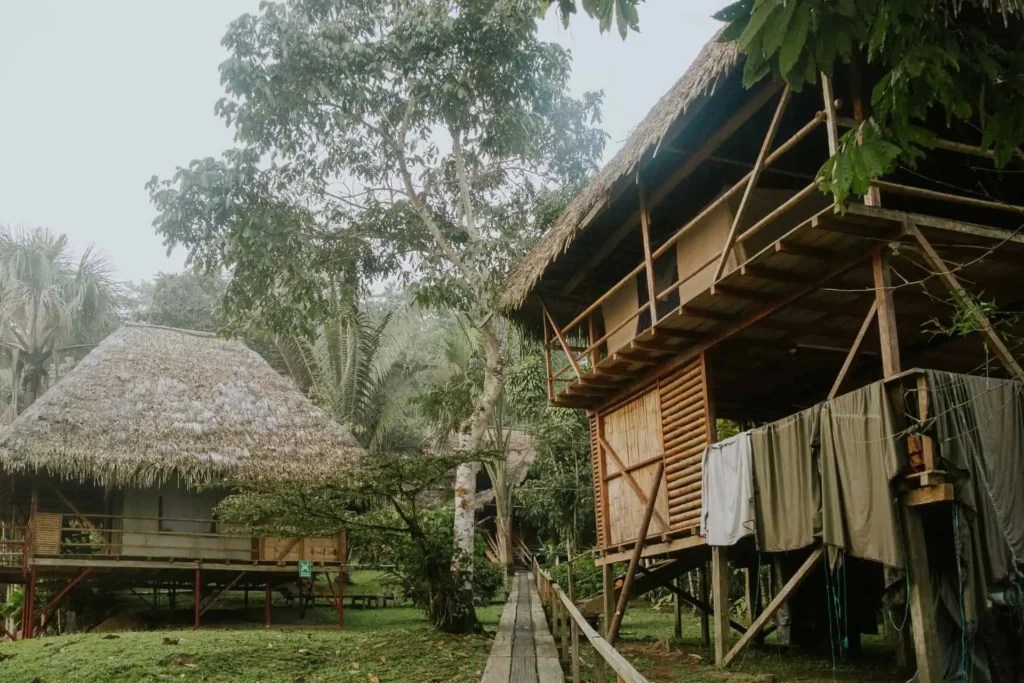
Wild Mandari had a few different hut options available. Since we were the only guests there during our stay, we were lucky enough to stay in one of the larger huts with electricity and an ensuite bathroom.
Even with those comforts, it still felt very much like living in the jungle — thatched roofs, mosquito nets draped around the bed, nighttime storms echoing through the forest, and wildlife surrounding you.
Some of the other huts were more primitive, with simple cots, candlelight, and shared pit toilets and showers. They sat closer to the river though, which meant beautiful views… and even more bugs.
The main communal hut became one of my favorite places to relax during downtime. It had a small sitting area stocked with nature books about the surrounding jungle, covering everything from birds and reptiles to butterflies and medicinal plants. I found myself flipping through them constantly while waiting for activities to start, trying to identify all the wildlife we had been seeing during the week. Above the common area was a cozy loft with a hammock, lounge chair, and small desk with a view of the river.
It’s also the only place at the lodge with WiFi.
Electricity and internet were powered by a small generator that only ran during certain hours of the day, usually in the mornings and evenings before or after excursions. The WiFi itself ran through Starlink and honestly worked far better than I expected. I was still able to keep in touch with friends back home and even get a bit of work done during the trip.


Slowing Down to the Rhythm of the Jungle
One thing I didn’t expect was just how much downtime there would be.
Most activities happened early in the morning or later in the evening when temperatures were cooler and wildlife was more active. During the middle of the day, the heat and humidity became intense enough that everyone naturally slowed down. Lunch was usually followed by resting in hammocks, reading, journaling, or simply listening to the sounds of the rainforest.
The Amazon operates on its own rhythm, and after a few days, you start adapting to it too.
Mornings were usually spent birdwatching or slowly floating down the river searching for wildlife. Other excursions included jungle hikes, kayaking through blackwater lagoons, visiting a parrot clay lick, fishing, cooking demonstrations, and learning traditional crafts from community members.
One thing I appreciated was how flexible the guides were. They adjusted activities depending on what the group was most interested in. Since we loved quietly drifting along the river looking for animals, we ended up doing a lot more of that throughout the week.


Hiking Through the Amazon Rainforest
Hiking through the Amazon rainforest is intense.
The jungle was so dense and alive that it honestly felt like stepping into a movie where everything around you could either camouflage perfectly… or potentially kill you.
There were spiders dangling from branches overhead, army ants marching across the forest floor, bullet ants crawling along certain trees, tiny frogs hopping through the undergrowth.


Meanwhile, birds called overhead, monkeys crashed through the canopy, butterflies drifted past, and somewhere nearby we even heard the heavy rustling of a jaguar moving through the forest.
Naturally, our guide immediately started moving toward the sound in hopes of spotting it.
Which raised the very important question in my mind: Why would you go towards the top predator in the Amazon rainforest?
I was out of my element the entire time — stomping through the mud, flinching at sounds, constantly checking myself for bugs, and realizing just how oblivious I would be on my own in a place like this.
That’s also what made me appreciate our guide so much. The amount of knowledge they had was unbelievable. They could identify animal calls instantly, spot hidden wildlife I never would have noticed, and even mimic bird and monkey sounds to draw animals closer.
Luckily there were only two of us with one guide. I can’t imagine doing hikes in a large group because the jungle is so sensitive to noise. Any wildlife nearby would probably disappear long before you ever saw it.
The Amazon at Night Is a Completely Different World
Little did I know that the jungle becomes even more active after dark.
The Amazon is highly nocturnal, especially when it comes to reptiles, amphibians, and insects. The moment the sun disappeared, the rainforest seemed to wake up all over again.
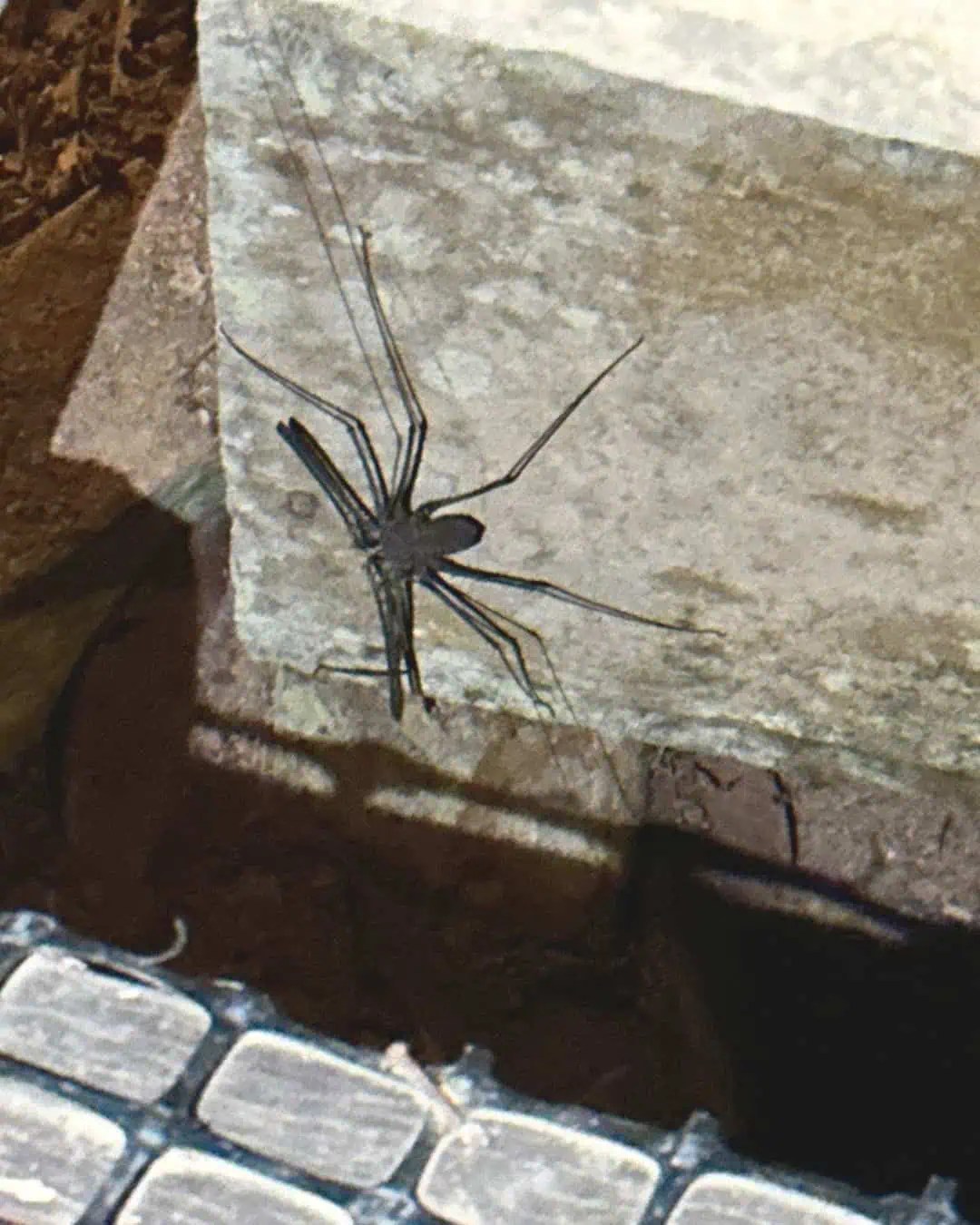
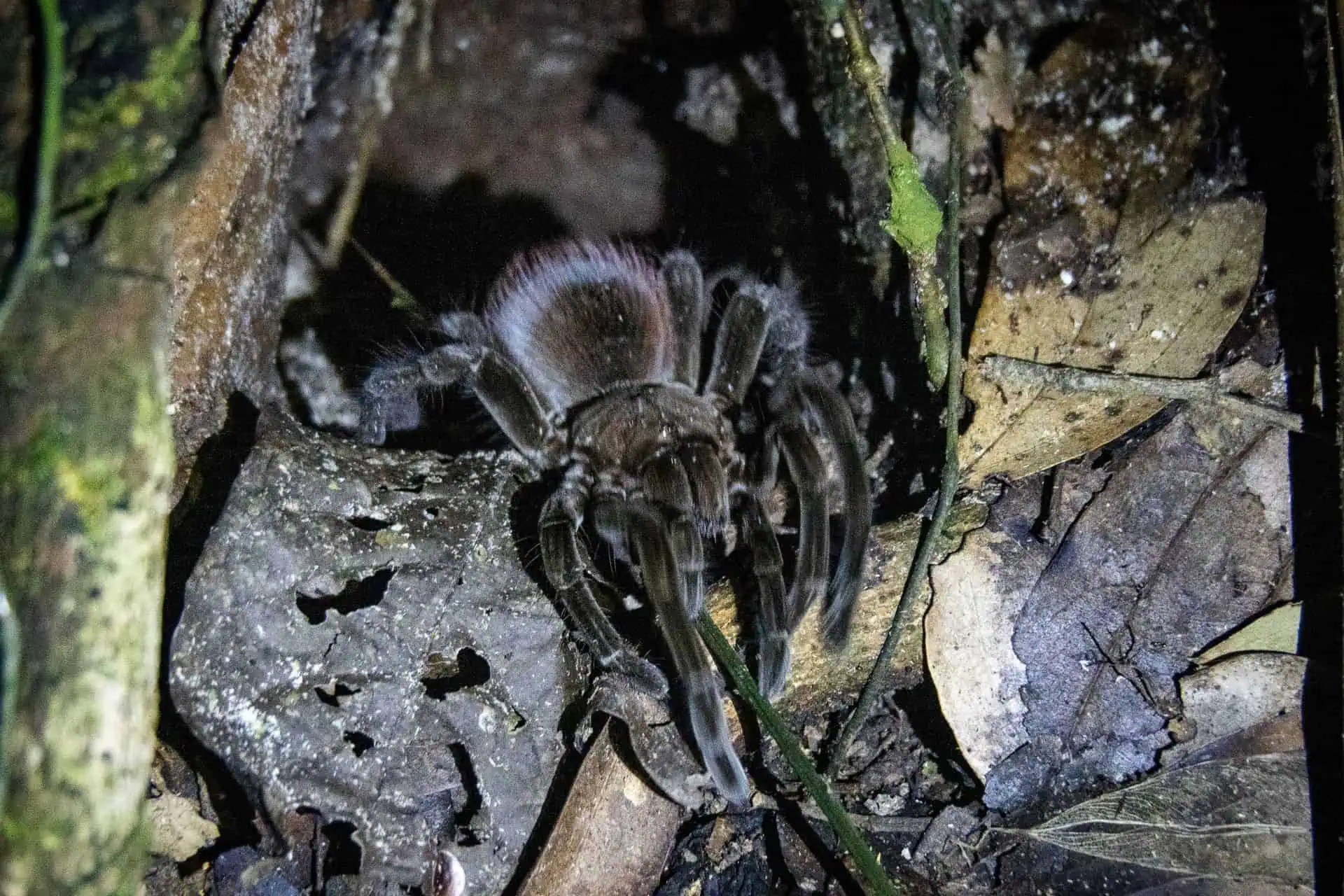
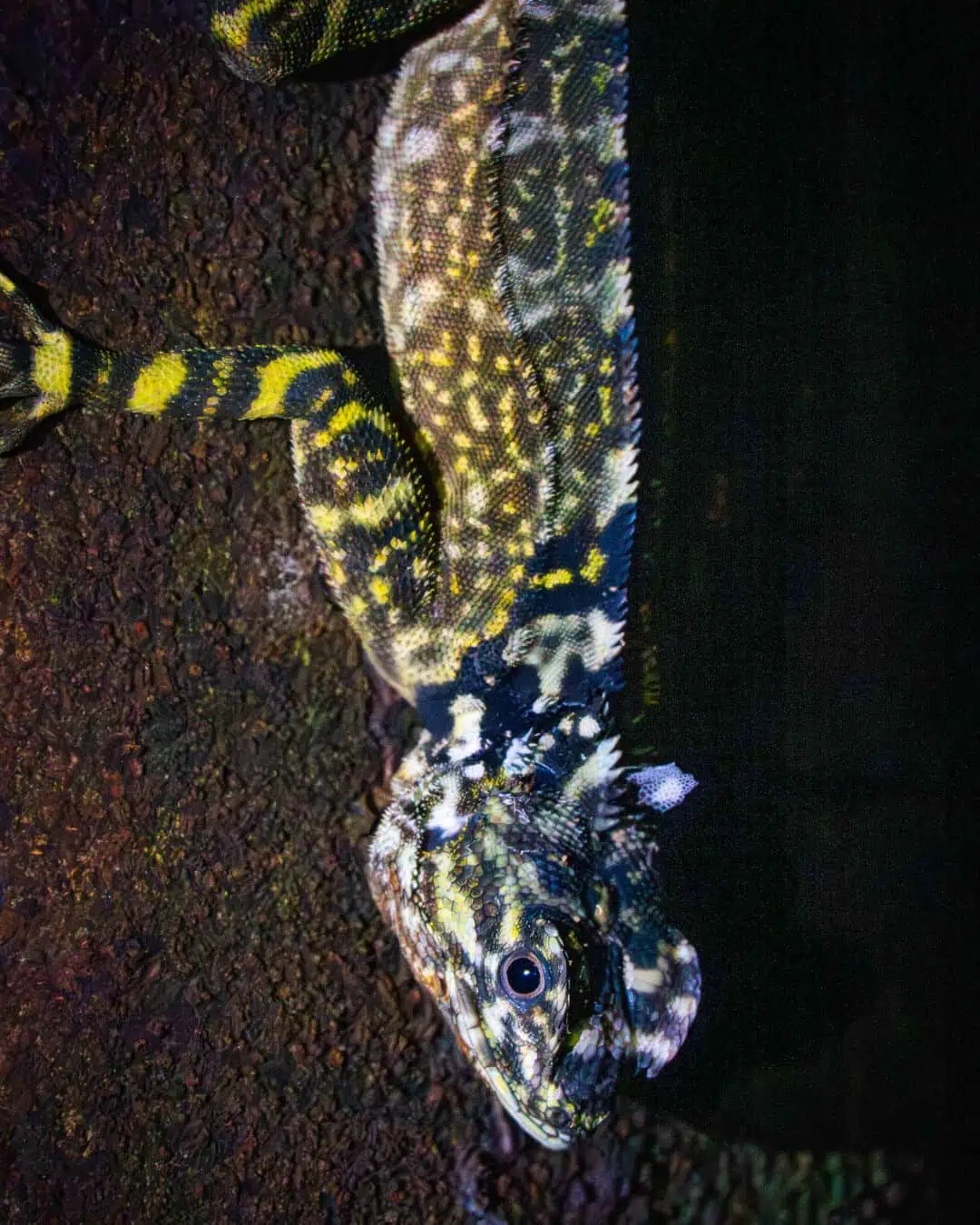
During one short nighttime walk around the lodge, we spotted three tarantulas within about twenty minutes, along with a giant lizard and a vine snake crawling along the railing.
Kayaking Through a Blackwater Lagoon
One of my favorite excursions during the trip was kayaking through a blackwater lagoon deep in the rainforest.
To be honest, before this trip my only association with “black lagoons” came from horror movies and childhood monster stories. But it turns out there are thousands of these lagoons throughout the Amazon, especially during the rainy season.
The dark color comes from decomposing plant matter and organic material in the still water, creating an ecosystem rich with nutrients and wildlife. These lagoons are home to river otters, bats, birds, caimans, fish, and even anacondas, which use the shallow waters as ideal ambush hunting grounds.
Which, naturally, our guide informed us about while we were floating through one in an inflatable kayak.
There were three of us squeezed into this unstable little double kayak, trying not to shift our weight too much, while our guide casually paddled towards a prime anaconda hunting spot.
At that point I fully accepted that I was not built for the Amazon.
Still, it ended up being one of my favorite days of the trip. We saw an incredible amount of wildlife, including a pygmy kingfisher up close and even a baby caiman hiding near the water’s edge.


Camping in the Amazon Jungle
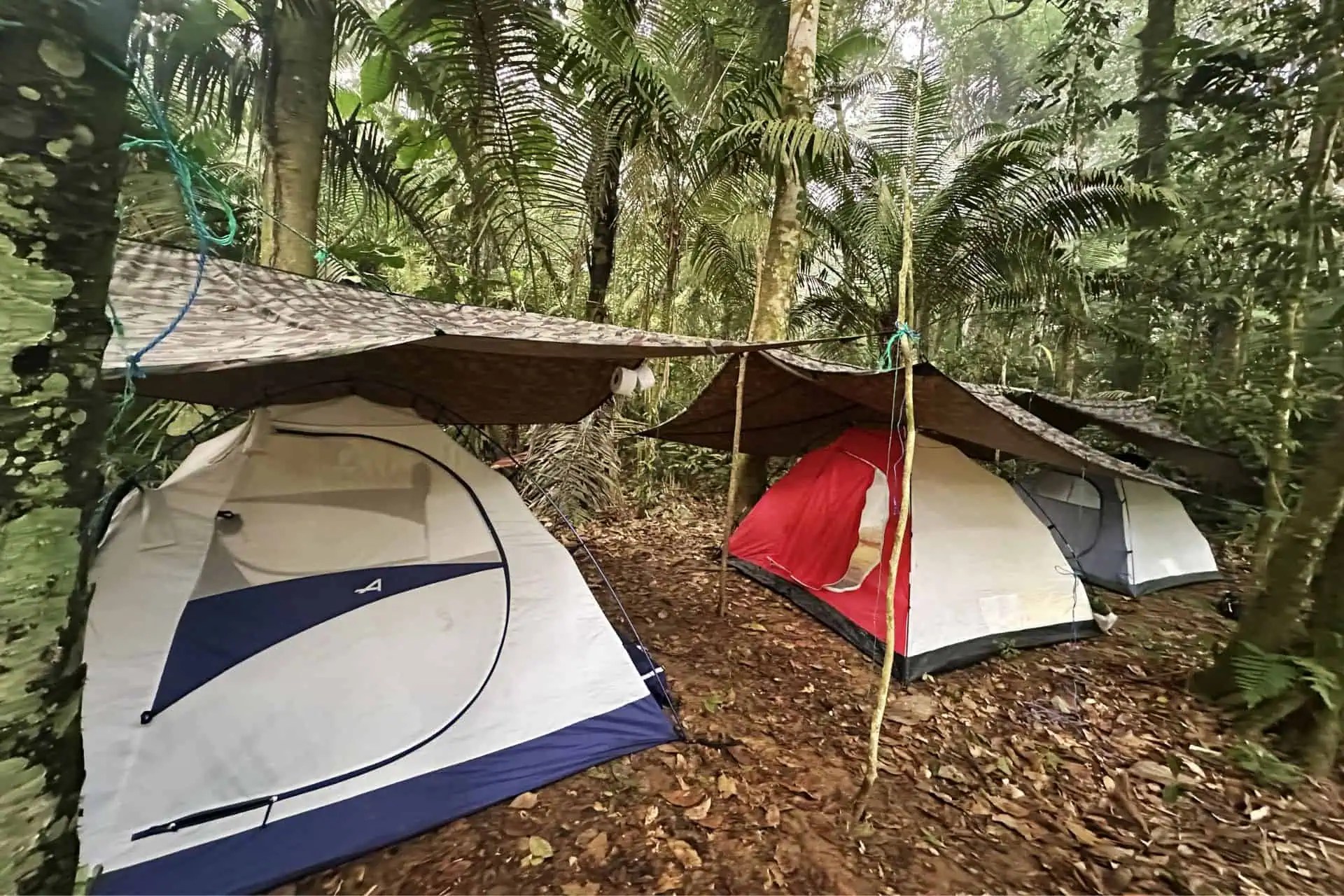
As part of the 7-day tour, we spent two nights camping deeper in the rainforest.
It was one of the most memorable parts of the trip… and also one of the hardest nights of sleep I’ve ever had.
If I thought the jungle sounds loud from inside the lodge, it became ten times louder inside a tent.
Every rustle felt amplified. Throughout the night you could hear insects, frogs, distant calls, and the footsteps of tapirs and other animals moving through the darkness nearby. The jungle never sleeps.
And yes — despite being inside a tent, spiders and other tiny visitors still found their way in.
Funny enough, the tents actually had fewer bugs than the huts in some ways because the mesh zippered walls kept most of the larger insects out. The gaps in the huts felt more like an invitation where anything could wander in if it wanted to.
But one of the best parts of camping wasn’t actually the jungle itself — it was the people.
Smaller community lodges create a much more personal experience and give you time to interact with the local staff who keep everything running behind the scenes. Our tour included all meals, activities, and transportation, and for just the two of us there were four people helping run the lodge: a boat driver, guide, cook, and assistant.
Normally guests mostly interact with the guide, but because it was such a small group, we spent more time around everyone.
There was a language barrier — we don’t speak Spanish and most of the staff didn’t speak English — but some of the sweetest moments happen when you can’t fully understand each other. Shared laughs, gestures, and little interactions become more than enough.
For the camping trip, all four of them came with us.
We floated downriver for half a day in the same inflatable kayak (which I still have mixed feelings about), while the staff took the motorized canoe ahead loaded with supplies to set up camp.
And I have to say… they went all out.
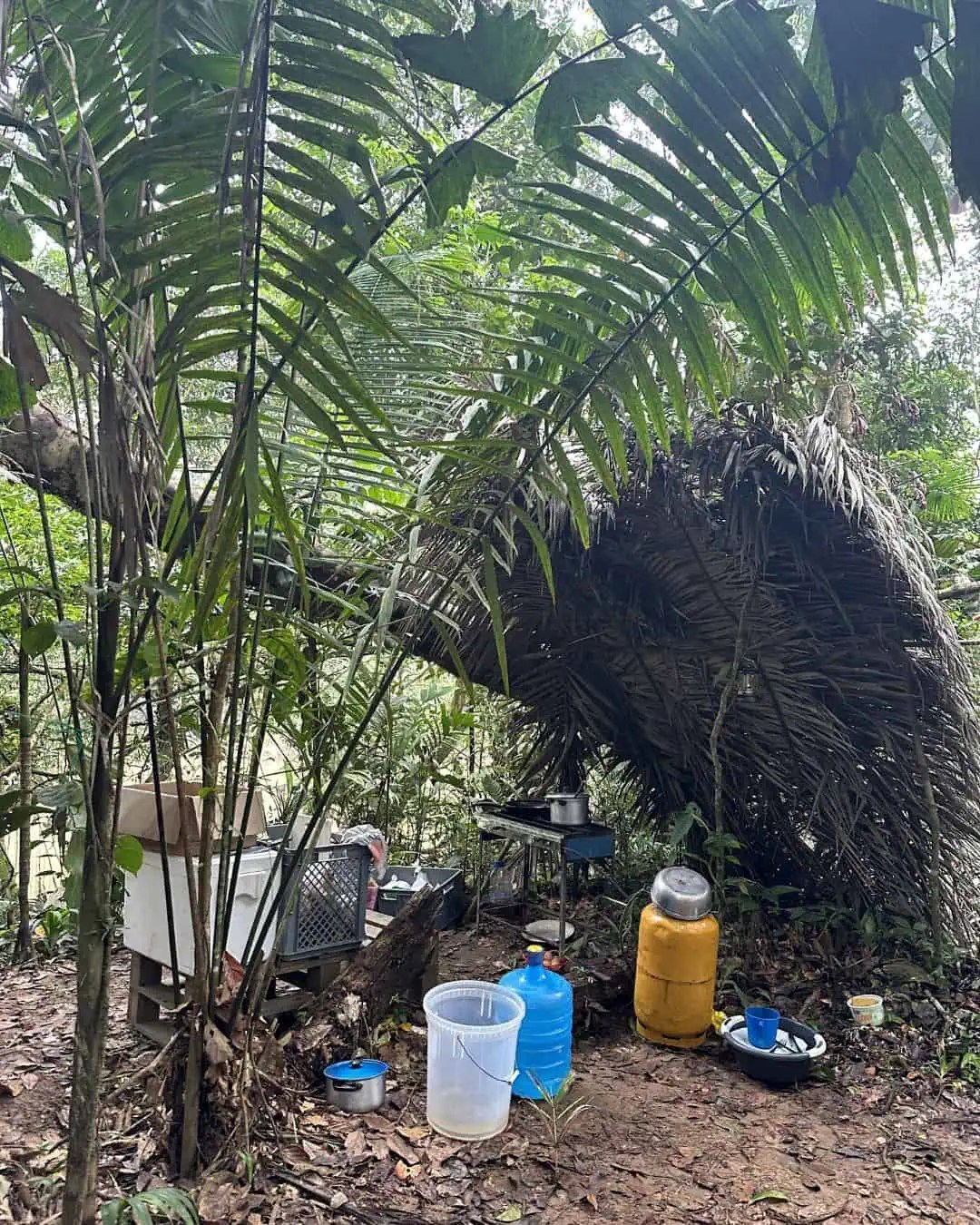
The tents had foam mattresses, sheets, towels, and tarps overhead for shelter. They even brought a full camp kitchen and prepared meals out in the middle of the rainforest.
It ended up being one of the fanciest camping experiences I’ve ever had.
The next day everyone went fishing together.
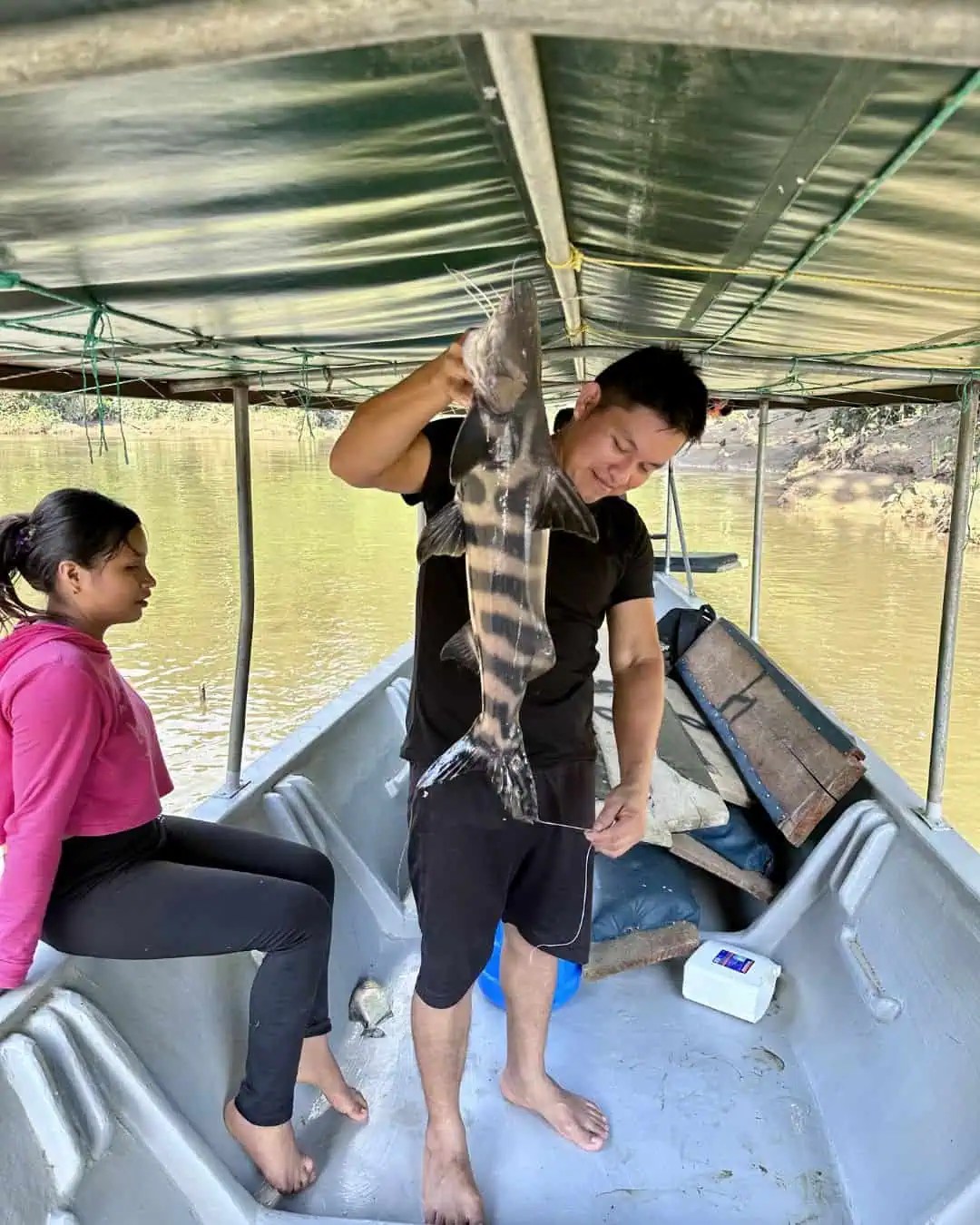
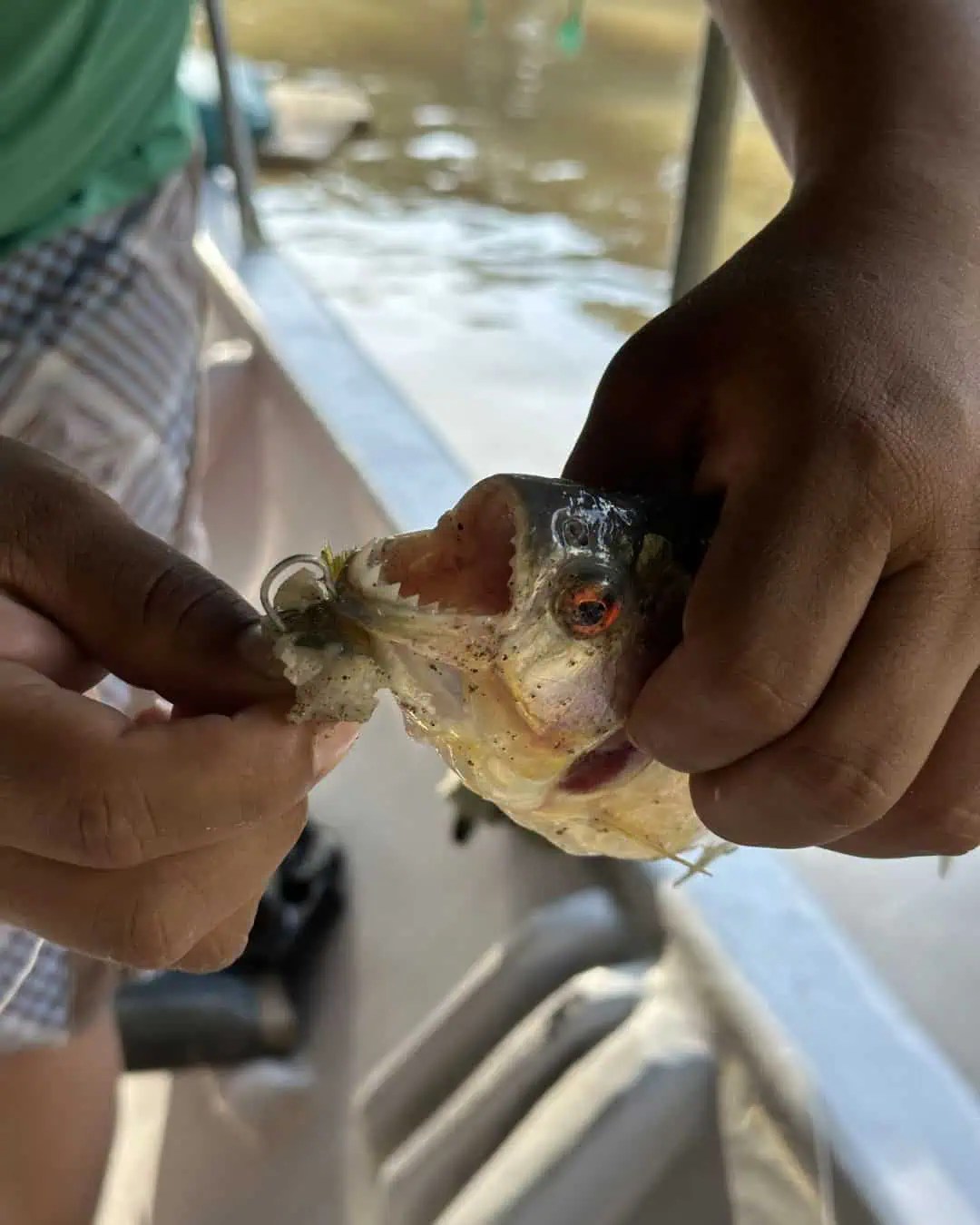
The locals immediately started catching fish — catfish, piranha, even a turtle and what they called an “Amazon shark” (which was released along with the turtle). We kept some of the catfish and piranha for dinner later that evening.
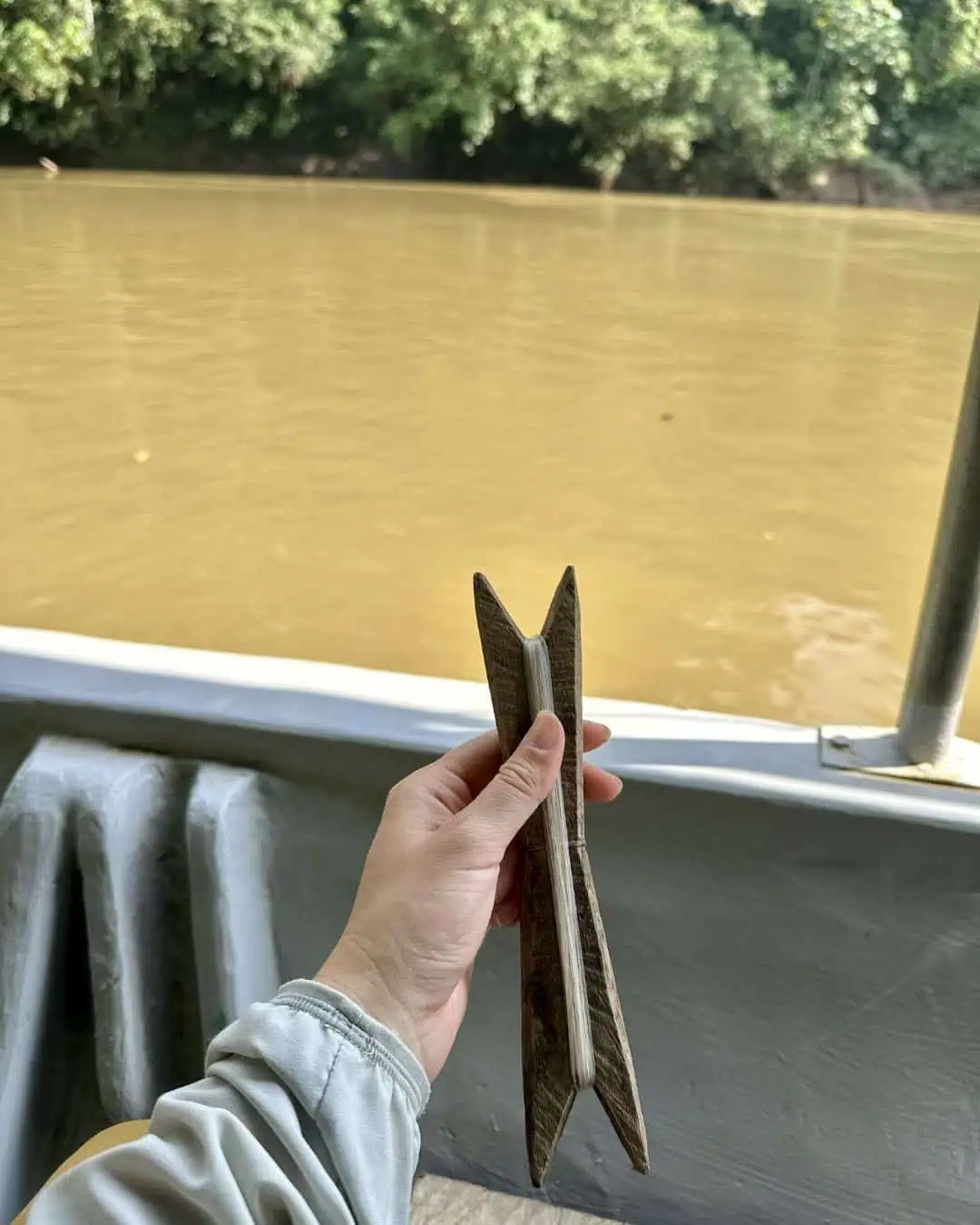
Watching everyone fish was fascinating because they used a completely different technique than I was used to. No fishing rods — just a small wooden handle wrapped with line, a hook, bait, and a weighted bead. You swing it a few times for momentum and throw it into the river by hand.
The second you feel movement, you have to pull fast. Especially with piranhas. If you hesitate too long, they can unhook themselves and disappear.
Our hands, meanwhile, were not prepared for hand-line fishing and we ended up feeding the fish all afternoon and provided moral support.
Still, it was one of my favorite memories — just sitting by the river watching everyone move so naturally through this environment while we fumbled our way through it.
After two nights though, I will admit…
I was very happy to see the lodge again.
What to Pack for the Amazon Rainforest
Packing for the Amazon rainforest is all about preparing for three things: heat, humidity, and bugs.
Everything feels damp all the time. Quick-dry, moisture-wicking clothing is absolutely essential. Lightweight long sleeves and pants are especially helpful — not only for sun protection, but also to help protect against mosquitoes and other insects while hiking through the jungle.
A hat also ended up being more useful than I expected, both for the intense sun out on the river and for the occasional bugs that come from above.
If you have space, bring extra clothes.
We learned fast that laundry is very difficult to dry in the Amazon. Between the high humidity, rain showers, and cloud cover, clothes stay damp for a long time. Items we thought had dried still felt wet the next morning.
One of the best things we did before the trip was spray our clothes, backpacks, and hats with permethrin insect treatment ahead of time. It made a huge difference with bugs throughout the week, especially during hikes and nighttime excursions.
And finally: bring strong bug spray.
Not the weak “natural” stuff that smells nice. You’ll want something with DEET or picaridin because the mosquitoes here are relentless.
Is Visiting the Amazon Rainforest Worth It?
Despite the bugs, humidity, rough sleeping conditions, and moments where I questioning why I signed up for this… visiting the Amazon rainforest was one of my best experiences.
Spending a full week there made all the difference.
At first the jungle feels overwhelming. The heat is intense, the sounds never stop, and your brain is constantly trying to process the life happening around you. But after a few days, something shifts. You start slowing down with the rhythm of the rainforest. You notice more. The sounds become familiar instead of chaotic. You stop focusing so much on the discomfort and start appreciating where you actually are.
A short trip does not do the Amazon justice.
The rainforest deserves time.
Time to adjust. Time to sit quietly on the river and watch the wildlife come alive around you. Time to experience the afternoon storms, the humid mornings, the nighttime sounds, and the feeling of being completely immersed in nature.
Of course… after seven days, I was also very happy to return to the cool mountain air of Quito.
But this is one of those trips that stays with you long after you leave.
The Amazon isn’t a polished vacation destination. It’s raw, loud, muddy, unpredictable, and completely alive. And that’s what makes it so special.
I’ll always remember waking up every morning to the sounds of the rainforest.
This trip also gave us a much more personal understanding of environmental issues like deforestation, oil extraction, and climate change. Driving past oil facilities on the way into the rainforest and then seeing the incredible biodiversity of Yasuní firsthand really puts things into perspective.
Since coming home, we’ve become more conscious about the environmental impact of our everyday lives — trying to reduce plastic consumption, waste less food, and support organizations working to protect rainforests and Indigenous communities.
If you’re considering visiting the Ecuadorian Amazon, especially around Yasuní National Park, I absolutely recommend it — especially through a community-run lodge where your visit directly supports local families and conservation efforts.
Just maybe bring significantly more bug spray than you think you’ll need.
Trust me on that one.


More Ecuador Travel Blogs
Planning a bigger trip through Ecuador? After leaving the Amazon, we headed back into the cool mountain air before continuing on to two completely different ecosystems that felt like entirely different worlds.
You can also read my blogs about exploring the incredible wildlife of the Galápagos Islands and hiking through the misty cloud forests of Mindo — one of the best places in Ecuador for birdwatching, waterfalls, and seeing hummingbirds up close.


